



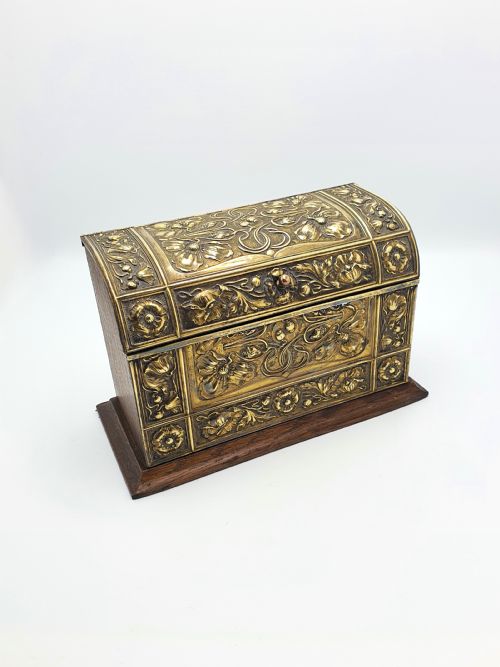


English Document Chest
An English document chest offers compact, secure storage for papers and valuables, combining period timber work with robust hardware.
English Document Chest
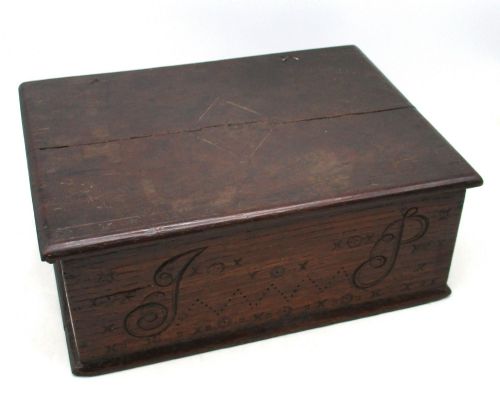
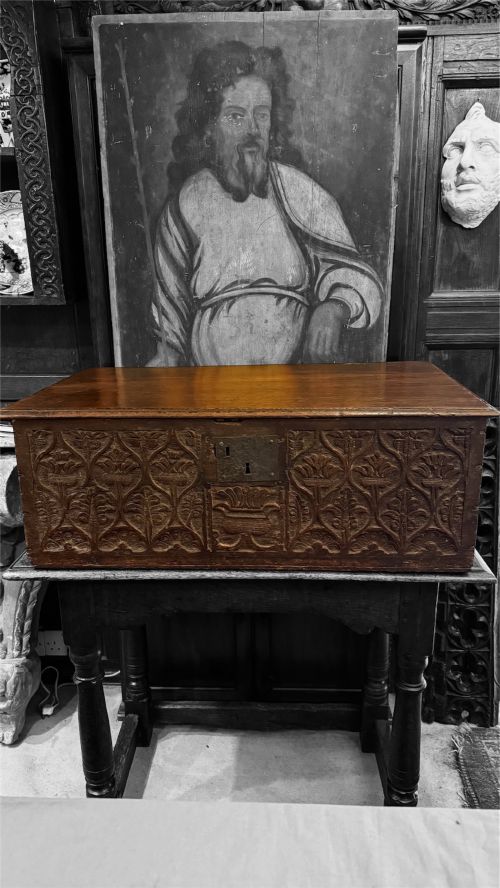
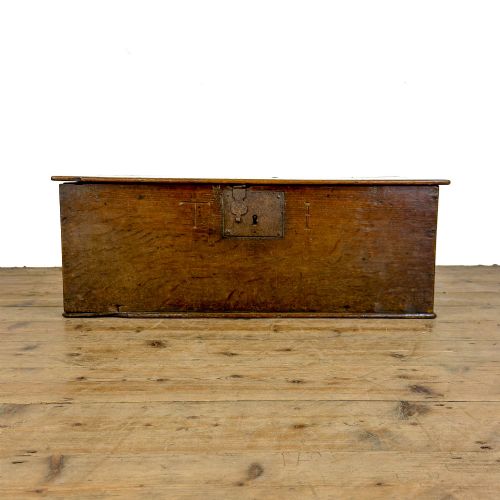
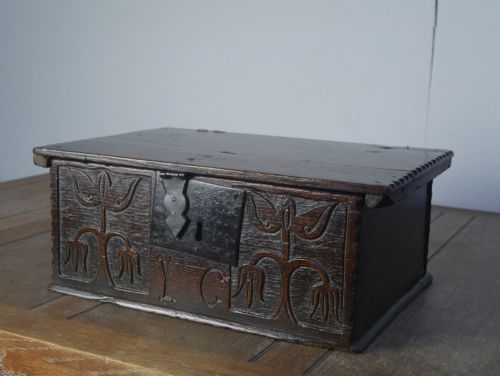
An English document chest encompasses compact desktop containers, deed boxes, bible boxes, and small floor chests used for securing papers and valuables across several centuries. The pieces on this page span from the seventeenth century through the Victorian and Edwardian eras, meeting domestic and business storage needs.
Early examples incline toward sturdy seventeenth-century oak construction with hinged lids and carved panels, sometimes functioning as bible or deed repositories. Later nineteenth-century iterations bring heavy cast iron safe boxes, satinwood desktop collector cases, and brass-mounted strongboxes into private studies and offices.
Materials and Construction
Makers relied heavily on solid oak for seventeenth and early eighteenth-century pieces, utilising heavy timber boards joined with traditional methods to withstand daily handling. Decorative elements on these early pieces often involved simple carved detailing or initials.
Later nineteenth and early twentieth-century examples incorporate ferrous metals, cast iron, steel, and brass for secure locking mechanisms and fire-resistant safes. Finer nineteenth-century desk and trinket boxes frequently employ exotic veneers such as satinwood, rosewood, and walnut, complemented by Tunbridge Ware or marquetry inlay.
English Document Chest Retail Price Guide 2026
Typical asking prices for english document chest among the pieces listed under this phrase on Sellingantiques today, from the lower quarter to the upper quarter. They describe what is for sale here now, not the wider market.
One unexpected nineteenth-century box combines traditional English joinery with an inlaid motif depicting American Indians and a lion.
Assessing Craftsmanship
Quality rests upon the integrity of the timber framing, the survival of original surface patination, and the complexity of the locking mechanisms. Early oak boxes show superior joinery when pegged tenons remain tight and lids retain their original hinges without extensive timber replacement.
In later iron and steel strongboxes, excellence is determined by the sophistication of the original complex steel lock and the clarity of maker markings. Satinwood and mahogany tabletop specimens gain distinction through precise veneer matching, functional internal drawers, and intact key furniture.
Milners of Liverpool·Maple and Co
The English Document Chest Glossary
- Bible box
- A small tabletop chest originally designed to hold a family bible, frequently repurposed as a document or deed box in seventeenth-century homes. These pieces often feature sloping lids and carved front panels.
- Deed box
- A secure container built to store legal papers, land indentures, and important family documents. They appear in robust oak for early periods and in sheet steel or heavy cast iron for later Victorian iterations.
- Tunbridge Ware
- A type of decorative woodwork characterised by intricate mosaic patterns formed from tiny coloured wood prisms. This technique adorns Victorian trinket boxes and small personal containers.
- Strongbox
- A heavily reinforced metal or iron box fitted with a complex locking mechanism designed to deter theft and fire. Victorian examples often incorporate patented levers and heavy-duty iron handles.
English Document Chest: Frequently Asked Questions
What was an English document chest used for?
These chests secured important household papers, legal deeds, correspondence, and family bibles before modern filing systems existed. Their compact size allowed owners to keep sensitive documents close at hand.
Later Victorian versions evolved into heavy iron safe boxes and desktop specimen cabinets designed to protect currency, jewellery, and collector items from theft and fire.
How do I date an early oak document box?
Dating relies on construction methods, timber choice, and decorative carving styles. Seventeenth-century examples typically display hand-split oak boards, pegged joints, and simple geometric or foliate carved panels.
Later eighteenth and nineteenth-century boxes introduce machine-sawn timber, different hinge types, and interior partitions that reflect the changing stationery formats of the period.
Are the locks on these boxes usually original?
Many early seventeenth and eighteenth-century oak boxes retain their original wrought iron lock plates and internal mechanisms, though keys are sometimes modern replacements. Complex steel and brass locks from the Victorian era often survive with working original keys.
When a box retains its intricate original locking mechanism, it adds significantly to the historical integrity of the piece.
Where should I place a document chest in my home?
Tabletop oak bible boxes and satinwood desk cases sit well on side tables, desks, or chests of drawers where their top surfaces can be seen. Their compact proportions make them versatile for displaying in studies or living spaces.
Heavier cast iron or steel strongboxes require sturdy placement due to their weight, often serving as sculptural accent pieces in a library or hallway.