

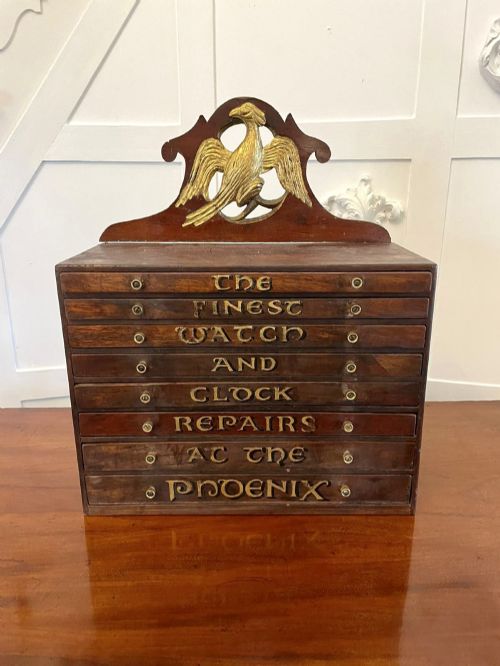


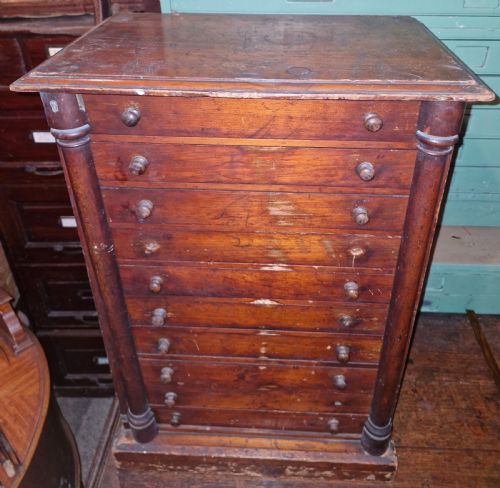


Shallow Drawer Specimen Cabinet
A shallow drawer specimen cabinet is built for serious ordering, offering neat rows of shallow bays designed to protect and display fragile collections.
Shallow Drawer Specimen Cabinet
A shallow drawer specimen cabinet is designed to hold small, delicate objects such as insects, minerals, microscope slides, or watch parts in orderly tiers. Buyers searching for a shallow drawer specimen cabinet typically find forms ranging from compact six-drawer chests to monumental multi-drawer cabinets housing forty individual shallow trays.
The pieces seen here stem predominantly from the Victorian period, alongside Georgian examples and Edwardian pieces, utilising object types designated as collectors cabinets, specimen chests, and small cabinets. Woods vary from mahogany and burr walnut to satin walnut, pitch pine, and plain pine.
Makers such as Brady, J.T. Crockett, Charles William Schofield, and Standish appear in the records, demonstrating the calibre of workshop production common to these items. Collectors utilise these cabinets today much as their original owners did, sorting tangible studies in timber, glass, and brass.
Materials and Construction
Cabinet makers relied heavily on solid mahogany and walnut timbers, sometimes pairing figured burr walnut and satinwood with secondary pine frames to build robust carcases. Drawers are built shallow to prevent items from shifting, often fitted with glass panels or fine internal linings suited to delicate contents.
Shallow Drawer Specimen Cabinet Retail Price Guide 2026
Typical asking prices for shallow drawer specimen cabinet among the pieces listed under this phrase on Sellingantiques today, from the lower quarter to the upper quarter. They describe what is for sale here now, not the wider market.
One extraordinary cabinet managed to squeeze in two extra bonus drawers, proving that even Victorian naturalists suffered from sudden over-collecting.
Judging Quality and Craftsmanship
Quality rests primarily on the scale of the piece and the ambition of the workshop, distinguishing a modest six-drawer pine chest from a forty-drawer mahogany cabinet by a known maker. The density and figure of the timber, such as burr walnut or rich mahogany, separate utilitarian storage from grand library furniture.
Provenance and maker attribution elevate certain examples significantly, particularly those bearing the stamps or signatures of specialists like Brady or J.T. Crockett. The precision of the drawer joinery and the survival of original glass or brass elements dictate the standing of any individual specimen chest.
Brady of Edmonton·J.T. Crockett·Charles William Schofield·Standish
The Shallow Drawer Specimen Cabinet Glossary
- Specimen cabinet
- A piece of furniture constructed with numerous shallow drawers specifically for housing natural history collections or scientific items. These cabinets protect fragile items from dust and light.
- Microscope slide cabinet
- A specialised small cabinet featuring very thin slots designed explicitly to store glass microscope slides flat. They often include numbered drawer indexes.
- Burr walnut
- A prized veneer taken from the warted growth of a walnut tree, exhibiting intricate swirling grain patterns. It was favoured for high-status Victorian cabinet facades.
- Collector chest
- An alternative descriptor for a cabinet housing multiple shallow drawers used by naturalists and antiquarians. These chests organise diverse items systematically.
Shallow Drawer Specimen Cabinet: Frequently Asked Questions
What were shallow drawer specimen cabinets originally used for?
These cabinets housed systematic collections of natural history, including insects, fossils, eggs, and botanical samples gathered by Victorian and Georgian naturalists. Specialists also utilised them for microscope slides, watch parts, and dentist tools.
The shallow depth of each drawer prevented specimens from piling on top of one another, ensuring every item remained visible and secure during study.
How do I date a specimen cabinet?
Dating relies on timber choices, construction methods, and stylistic cues aligning with Victorian, Georgian, or Edwardian periods. Mahogany and heavy brass hardware point toward the nineteenth century, while maker signatures often provide a precise year.
Secondary woods like pine and specific drawer configurations help separate mid-Victorian pieces from later Edwardian workshop production.
Can I use these cabinets for modern collections?
Modern collectors frequently repurpose these pieces to store jewellery, fountain pens, coins, stamps, or small crafts. The shallow drawer design suits flat, delicate objects perfectly.
Placing the cabinet away from direct sunlight and excessive humidity protects both the antique timber and any modern items stored inside.
Who were Brady and J.T. Crockett?
Brady and J.T. Crockett were prominent nineteenth-century makers and suppliers of natural history equipment, known for constructing large, multi-drawer cabinets. Their workshops supplied museums, institutions, and serious private collectors.
Cabinets bearing their names represent the highest tier of specimen storage craftsmanship from the period.