
English Countryside Landscape Artwork
English countryside landscape artwork captures rural life and scenery through Victorian and twentieth-century paintings.
English Countryside Landscape Artwork
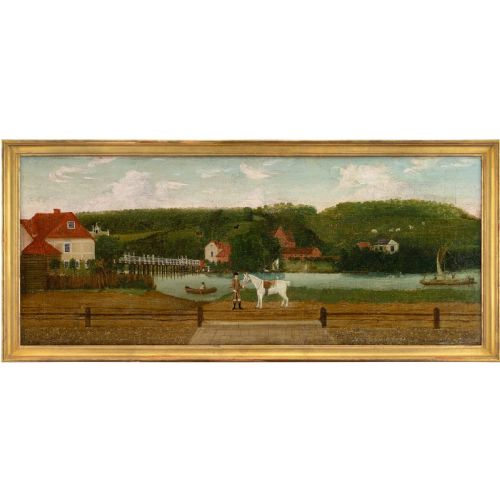
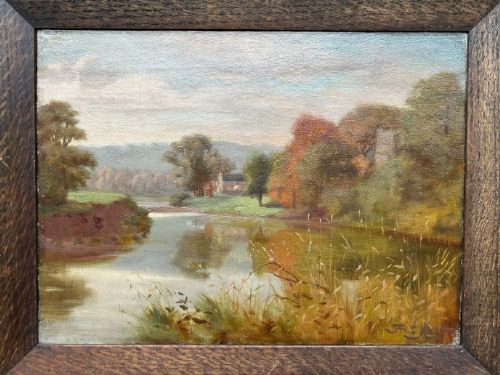
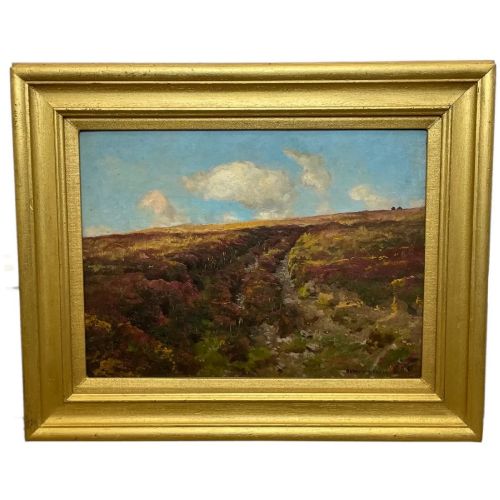
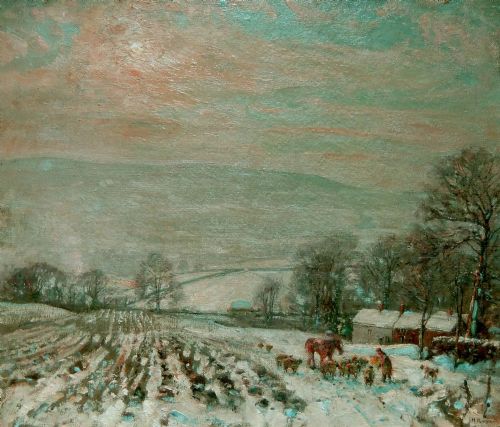
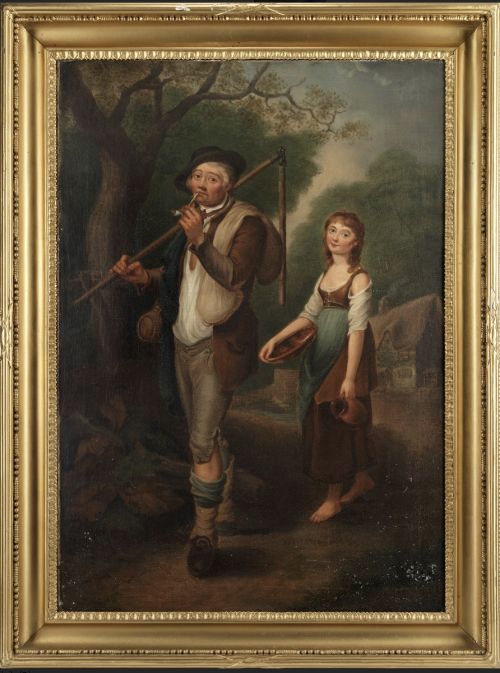
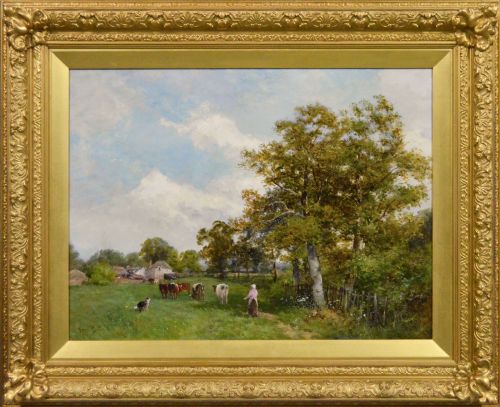
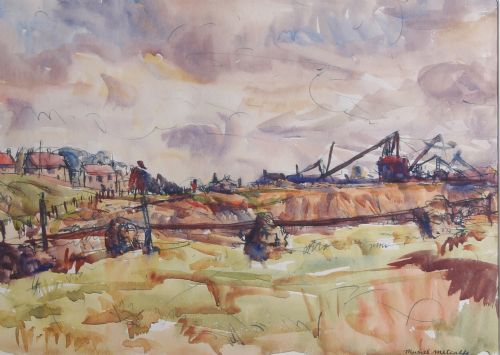
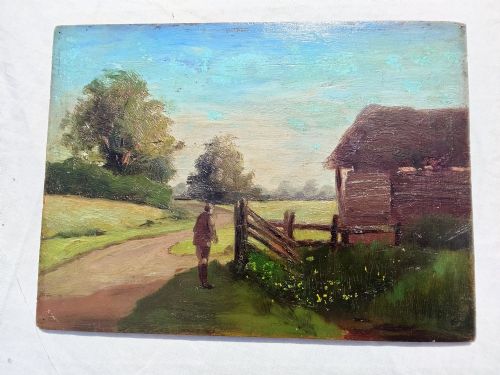
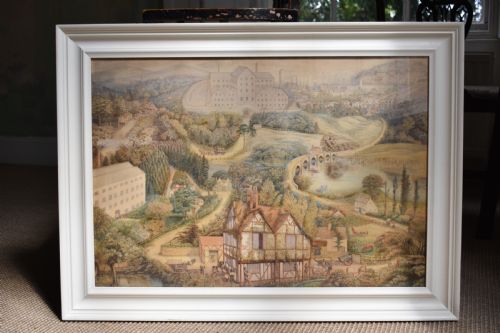
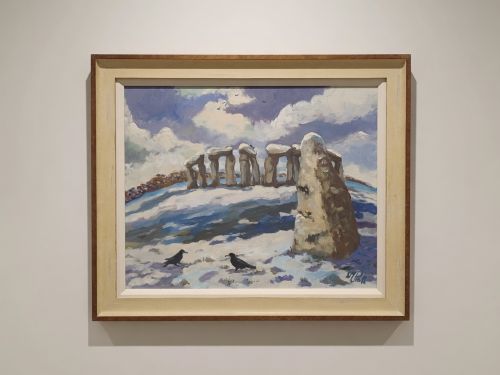
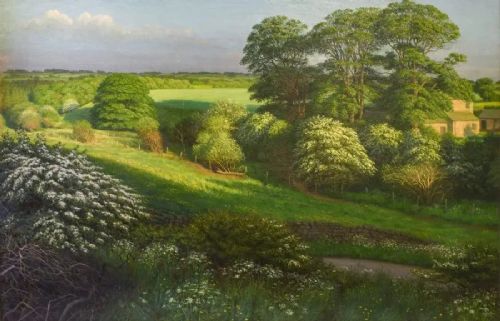
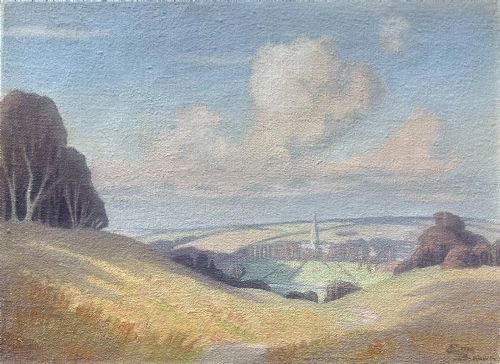
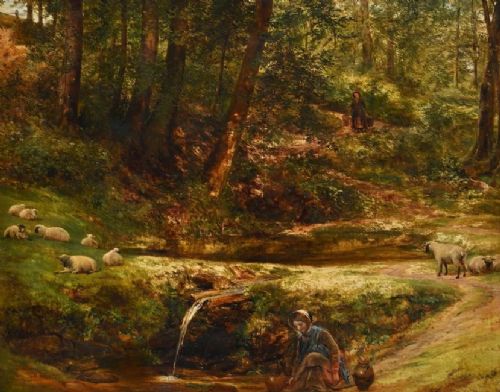
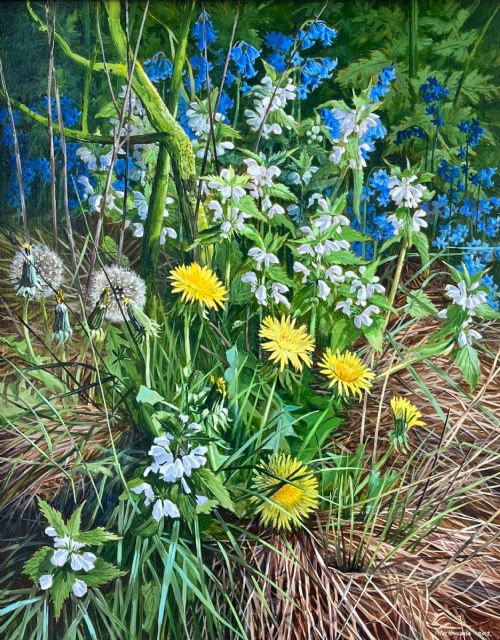
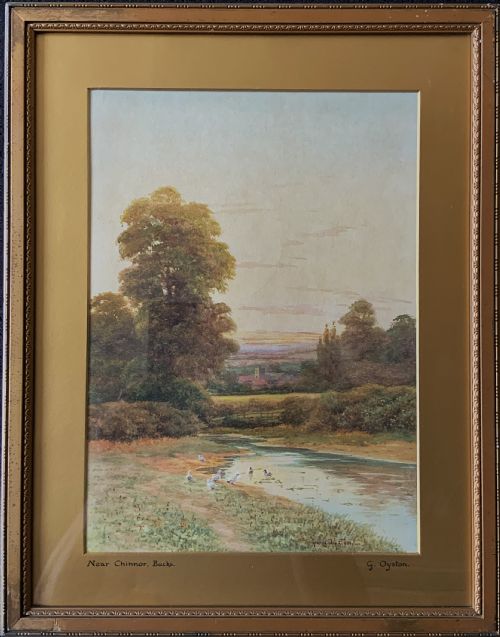
English countryside landscape artwork captures rural views, rivers, villages, and coastal settings across various periods. A buyer browsing this selection will encounter original oil and watercolour paintings depicting pastoral life and natural scenery. The pieces range from nineteenth-century pastoral scenes to twentieth-century depictions of regional topography.
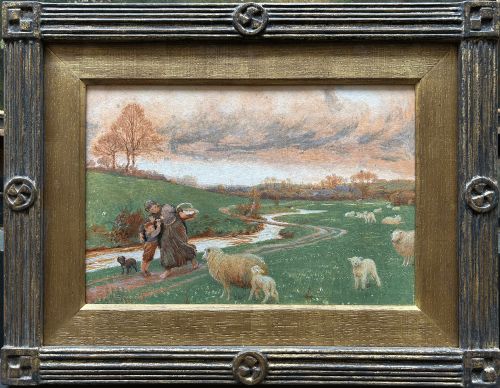
Most examples originate from the Victorian era, the Edwardian period, and the interwar decades. These works often include figures, farm buildings, livestock, or remote country lanes within British settings. The tradition spans traditional oil on canvas and delicate paper watercolours framed in wood and glass.
Materials and methods
Artists painted primarily with oil on canvas, oil on wooden board or panel, and watercolour on paper. Canvas supports provide a textured ground for heavy paint applications, while wooden panels offer a rigid surface for detailed brushwork. Watercolours utilise fluid pigments on paper to capture light and atmosphere in rural views.
Frames typically consist of gilded or plain wood, sometimes retaining their original construction. Pigments were applied by hand using brushes or palette knives, resulting in varied surface textures from smooth glazes to impasto strokes.
Listings feature works spanning the nineteenth century through the 1960s, executed in oil and watercolour on canvas, wood, and paper.
Distinctions in quality
Quality rests on the skill of the brushwork, the handling of natural light, and the accuracy of composition. Stronger examples demonstrate confident handling of atmospheric depth and convincing proportions in figures, animals, and foliage.
Condition of the medium and the presence of original framing contribute to the integrity of each piece. Works that retain stable paint layers or well-preserved paper without excessive fading or discoloration represent higher standards of survival.
Frederick Marriott·Arthur Wardle·Herbert Royle·Thomas Barker of Bath·David Bates·Muriel Metcalfe·Lucy Pratt·Raymond Booth·Frederick Walker·Eric Brown·Richard Redgrave·Peter Newcombe·George Oyston·Russell Sidney Reeves·Florence Adelina Hess·John Horace Hooper·Hubert Wellington·Alfred George Morgan·Edgar Woollatt·Joseph Edward Hennah·Charles Walter Simpson·Charles Gregory·Helen Layfield Bradley·Henry Charles Fox·Cuthbert Crossley
The English Countryside Landscape Artwork Glossary
- Impasto
- Paint applied thickly to a canvas or panel so that it stands out from the surface. This technique allows brush or knife marks to retain a three-dimensional texture.
- Watercolour
- A painting method in which the paints are made of pigments suspended in a water-based solution. It is typically applied to paper to create translucent washes of colour.
- Oil on canvas
- Pigments bound in a drying oil applied to a stretched woven fabric support. This combination allows for rich colour blending and durability.
- British School
- A term used to describe artists working within Britain who shared stylistic traditions rather than a formal academy. It often denotes anonymous or provincial works from specific centuries.
- Pastoral
- A genre of art depicting the rural countryside, farms, and shepherd life in an idealized manner. These scenes emphasise tranquility and traditional agricultural labour.
English Countryside Landscape Artwork: Frequently Asked Questions
What subjects appear in these landscapes?
These artworks depict rivers, coastal villages, farmland, and rural paths across Britain. Scenes frequently feature everyday country life, including farm animals, cottages, and figures working outdoors.
The settings span multiple regions, from Yorkshire valleys and Dartmoor to the South Downs and the Cotswolds. Each piece records specific local geography through the distinct viewpoint of the artist.
How do I date an oil painting?
Dating relies on stylistic clues, framing materials, and recorded biographical dates of the artist. Victorian and Edwardian works often display specific brushwork conventions and subject matter typical of their decade.
Inscribed signatures, dates on the reverse of the canvas, or exhibition labels provide further chronological evidence. Comparing the technique to known dated works helps narrow the period of creation.
Are watercolours as durable as oils?
Watercolours require careful placement away from direct sunlight to prevent the pigments from fading on paper. Glazing with glass protects the fragile paper surface from atmospheric moisture and dust.
When properly framed and housed indoors, watercolours survive for centuries in stable condition. They offer a lighter aesthetic compared to heavy oil paintings.
How should I display landscape art?
Hang paintings on interior walls away from direct heat sources and strong sunlight to protect the pigments. Stable indoor humidity prevents warping in wooden panels and canvas stretchers.
Match the frame style to the period of the artwork to maintain a cohesive appearance. Adequate wall lighting enhances the tonal range and brushwork detail.