





English Country Potboard Table
An English country potboard table brings robust domestic utility and honest craftsmanship straight from historical kitchens into modern living spaces.
English Country Potboard Table
An English country potboard table stands as a foundational piece of furniture, serving primarily as a sturdy dresser base or serving table within domestic settings. When exploring this category, a buyer encounters pieces originating from the eighteenth and nineteenth centuries, spanning periods such as Georgian and George III alongside rustic farmhouse expressions.
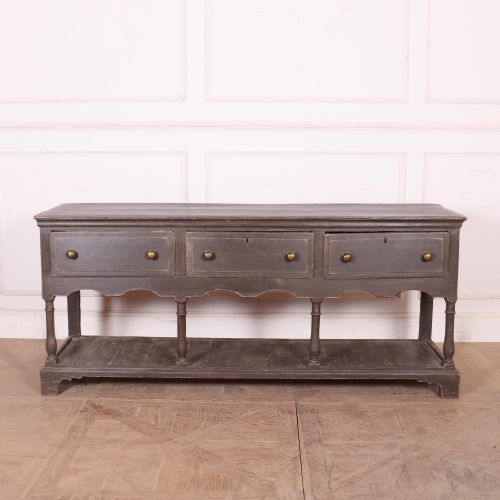
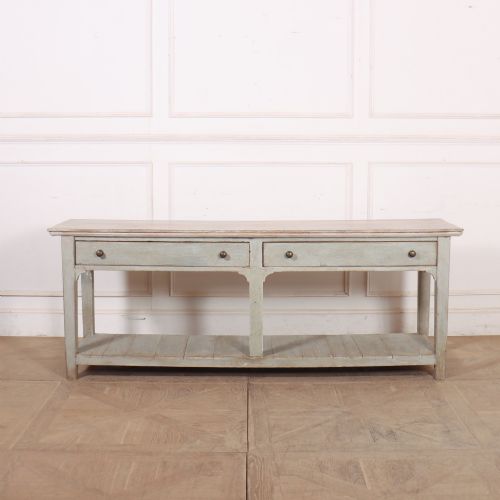
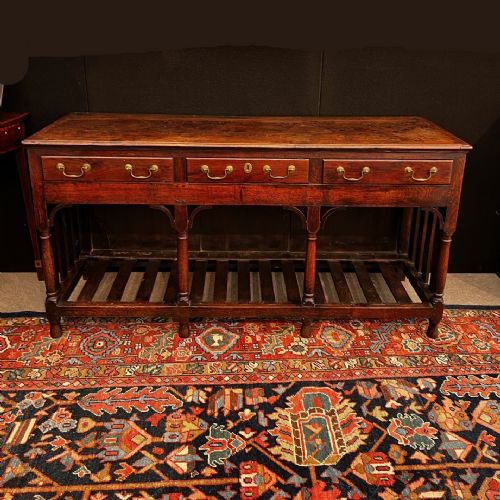
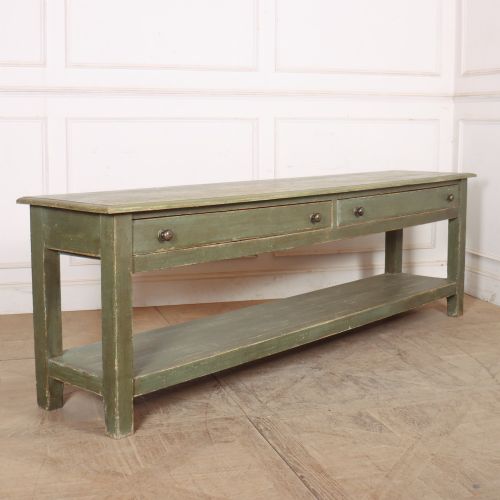
These forms predominantly manifest as dresser bases and serving tables designed with a characteristic lower shelf, known as a potboard, positioned close to the floor. The examples available on this page reflect this heritage through substantial timber construction and utilitarian proportions suited for everyday household service.
Originating across English country houses and farmhouses, these tables display a direct link to historic culinary and storage practices. The versions most frequently met here combine straightforward rectangular tops with open lower tiers, embodying the practical needs of past domestic interiors.
Materials and construction methods
Makers relied heavily on native timbers, predominantly selecting oak and elm for their durability and strength in daily use, supplemented by pine for secondary components. These hardwoods provided the structural integrity required for heavy kitchen tasks and sustained household labour.
Surface treatments frequently involve historical applications of paint or the preservation of bare wood surfaces that showcase natural grain development over centuries. Metal elements such as brass occasionally appear on hardware fittings, while painted timber provides an alternative aesthetic finish seen across several examples.
Materials documented across these listings include oak, elm, pine, painted timber, and brass fittings.
Assessing quality in country furniture
Quality rests upon the selection of timber and the harmony of proportions, where dense oak and well-figured elm command greater appreciation than softer woods. The structural relationship between the upper work surface and the lower potboard dictates the visual balance of the piece.
The integrity of historical surfaces - whether an undisturbed painted finish or an aged timber patina - distinguishes finer examples from heavily altered ones. Superior pieces maintain their original joinery and structural components without unnecessary intervention.
The English Country Potboard Table Glossary
- Potboard
- The lower open shelf fixed near the floor of a dresser base or serving table, traditionally used for storing pots and pans. This defining architectural feature separates these tables from standard sideboards.
- Dresser base
- The lower section of a kitchen dresser, functioning independently as a serving table or sideboard with drawers above and open storage below. It forms the primary body of the furniture piece.
- George III period
- The stylistic era spanning the reign of King George III from seventeen sixty to eighteen twenty, noted for refined vernacular adaptations of classical furniture forms. Pieces from this time often exhibit balanced proportions.
- Elm
- A tough, interlocking native timber utilised by vernacular makers for components requiring resistance to splitting, such as chair seats and table tops. Its distinctive grain adds character to rustic furniture.
English Country Potboard Table: Frequently Asked Questions
What is a potboard table?
A potboard table is a sturdy vernacular furnishing featuring a flat top surface for serving or preparation, combined with a low open shelf near the floor. These pieces originated in English country houses and farmhouses.
They served as functional workhorses in historical kitchens before transitioning into decorative and practical dining room or hallway furniture today.
How were these tables used historically?
Historically, these tables acted as central work stations for food preparation and serving within domestic kitchens and sculleries. The lower potboard provided convenient storage space for heavy cookware and earthenware.
Over time, as kitchen layouts evolved, many of these surfaces moved from working spaces into dining rooms and living areas.
How do I style a potboard table at home?
Living with these pieces involves utilising the generous top surface for display or serving, while the lower potboard accommodates baskets, ceramics, or books. Their rustic character anchors both traditional and contemporary interiors.
Placing them in hallways, kitchens, or dining spaces allows their historical utility to complement modern household routines.
How do I distinguish eighteenth-century from nineteenth-century examples?
Distinguishing between these centuries involves examining timber characteristics, joinery techniques, and the natural wear accumulated across the surfaces. Eighteenth-century pieces often display earlier Georgian vernacular traits.
Nineteenth-century examples continue these traditions while sometimes incorporating softer woods or different paint applications typical of later country house aesthetics.