





Long Painted Server Table
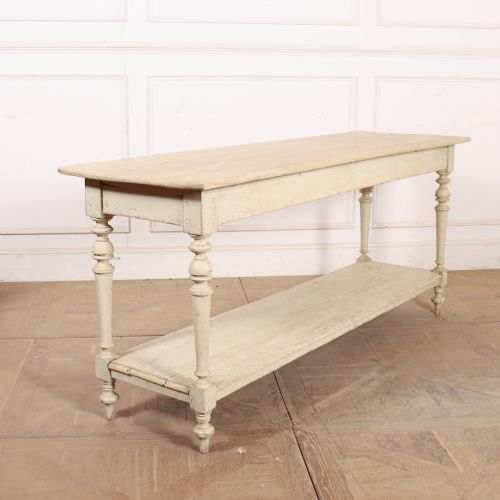
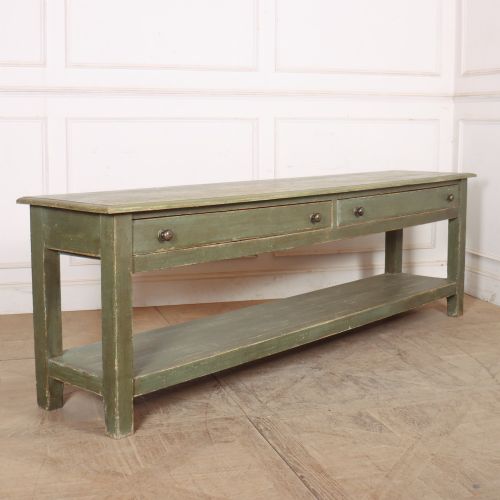
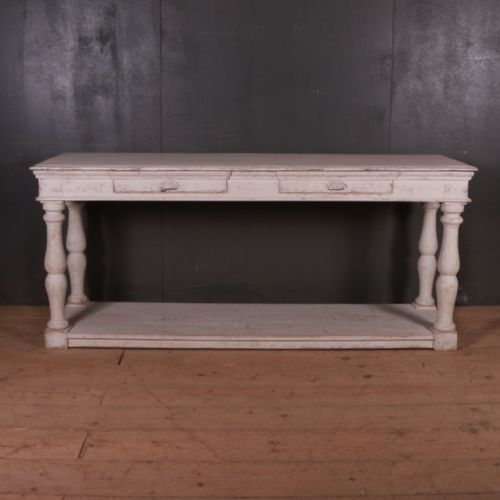
A long painted server table brings practical surface area and regional character into a room through generous proportions and painted timber surfaces.
Long Painted Server Table
When you search for a long painted server table, you are looking at substantial utility furniture designed for storage and preparation. The selections here span the nineteenth century, including specific dates such as 1880 and 1890, showing origins across English, French, and Scandinavian traditions.
The forms on this page include serving tables, dresser bases, drapers tables, preparation tables, and consoles with potboards or multiple drawers. These pieces share an extended footprint suited to dining rooms, kitchens, and hallways where length is required.
You are most likely to meet pieces in English country, French provincial, rustic farmhouse, and Scandinavian country styles. They combine timber frameworks with painted finishes that reflect regional domestic history.
How they were made
Construction relies primarily on pine and softwood timbers, occasionally supported by oak for heavier structural elements. These woods provide the stable framework necessary for long serving surfaces and deep drawer bases.
Surfaces receive traditional paint applications alongside metal or brass hardware details. The integration of lower pot-shelves and multiple drawers demonstrates the practical carpentry methods of nineteenth-century workshops.
Materials documented across the pieces include pine, oak, softwood, paint, brass, and metal hardware.
What varies in quality
The distinction between tiers of quality rests on the integrity of the timber framing and the preservation of the original painted surface. Pieces showing cohesive proportion across length, depth, and drawer configuration demonstrate superior workshop design.
Quality also shows in the integration of functional elements such as potboards and functional drawers operating smoothly within pine carcasses. The handling of the painted finish, whether patinated by age or remaining consistent, defines the visual weight of each piece.
The Long Painted Server Table Glossary
- Potboard
- An open lower shelf beneath a serving table or dresser base designed for storing heavy crockery and kitchen utensils. This timber platform runs parallel to the floor.
- Dresser base
- A low cabinetry form featuring drawers and occasionally a potboard, built for storage and surface preparation in domestic interiors. It serves as the lower section of a traditional kitchen dresser.
- Drapers table
- A long, narrow table traditionally utilised in textile shops for folding cloth, distinguished by its extended rectangular proportions. These tables translate well into modern domestic hallways and dining spaces.
- Preparation table
- A heavy-use utility table built for food or material preparation, typically constructed from robust softwoods with scrubbed or painted wooden tops.
Long Painted Server Table: Frequently Asked Questions
What is a long painted server table used for?
These tables provide long surface areas for serving food, displaying objects, or organising items in dining rooms and kitchens. Lower potboards and drawers offer additional storage for tableware and provisions.
Their substantial length also makes them suitable for use as console tables in grand hallways or as preparation surfaces in domestic spaces.
How do I identify a nineteenth century piece?
Nineteenth century pieces exhibit construction methods typical of the period, utilising solid pine, softwood, and occasionally oak timbers. Look for hand-cut joinery and traditional hardware fittings.
Stylistic cues such as French provincial or English country forms help place the furniture within this broader historical window.
What styles are available?
The selection includes English country, French provincial, rustic farmhouse, and Scandinavian country variants. Each style reflects the domestic vernacular of its region of origin.
Forms range from drapers tables to potboard serving tables and dresser bases, all sharing extended proportions.
How do I care for painted timber furniture?
Dust surfaces regularly with a soft, dry cloth to protect the painted finish and underlying timber. Avoid placing these tables in direct sunlight or near heat sources to prevent wood movement.
Use coasters and placemats to protect the painted and wooden surfaces from moisture and heat damage during everyday use.