

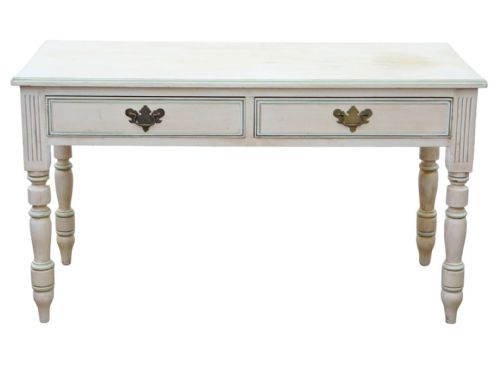


Painted Kitchen Prep Table
A painted kitchen prep table brings working utility and weathered surface character into a modern interior.
Painted Kitchen Prep Table
When searching for a painted kitchen prep table, you encounter heavy functional furniture designed originally for food preparation, baking, and commercial trade. These surfaces served in bakeries, dairies, and country houses where practical utility mattered above fine cabinet making.
You meet diverse regional forms on this page, spanning English farmhouse tables, French drapers and charcuterie boards, and Scandinavian bakers or work tables. Most examples date from the nineteenth century through the early twentieth century and rely primarily on solid pine construction.
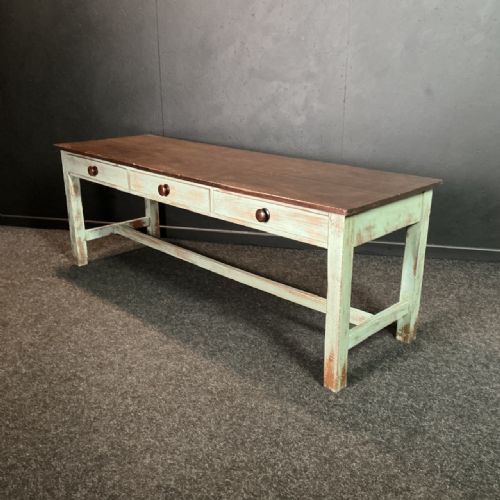
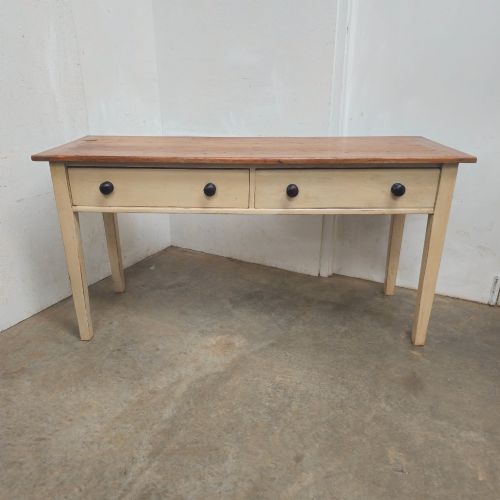
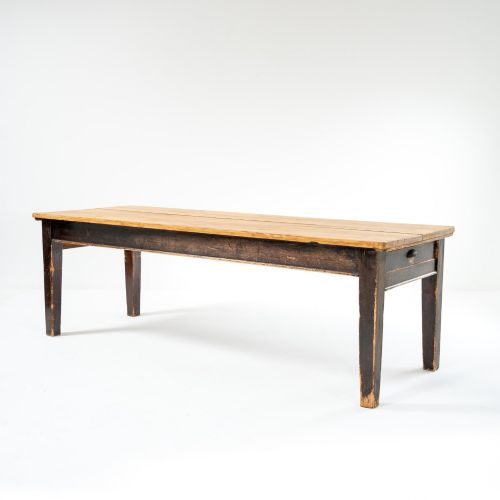
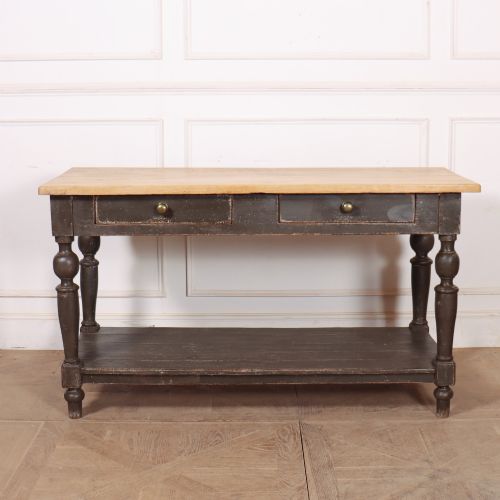
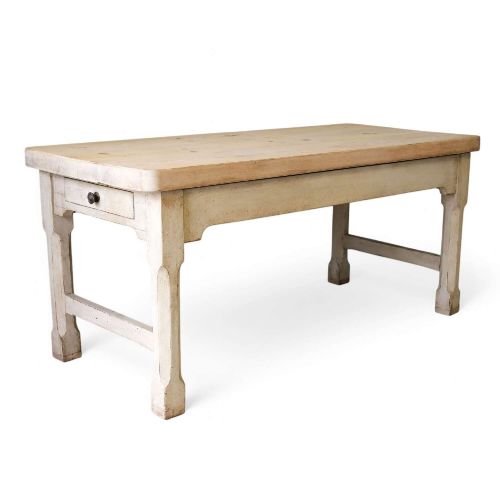
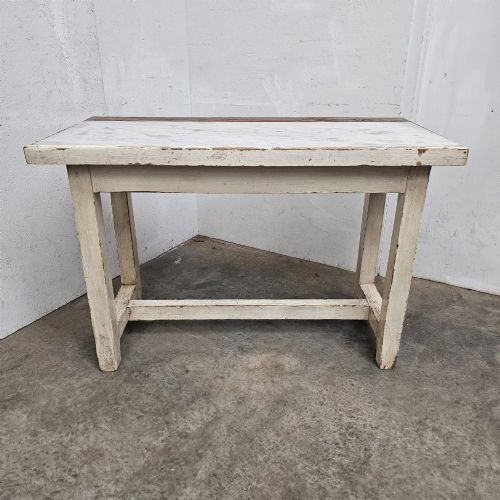
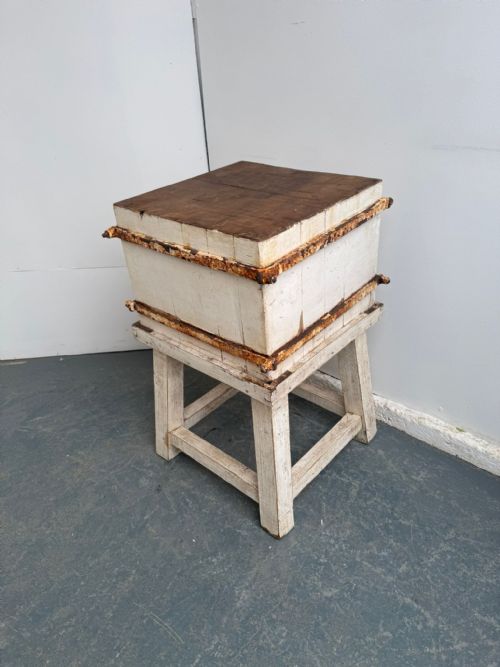
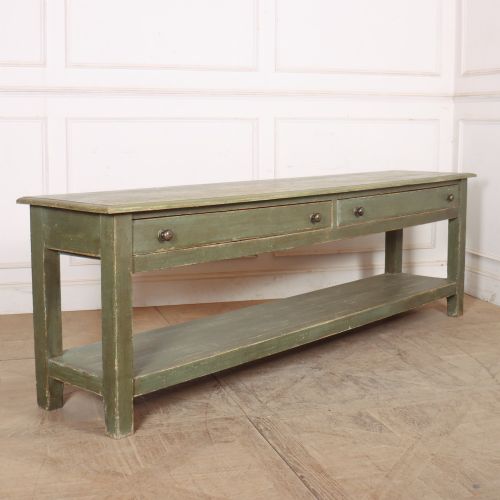
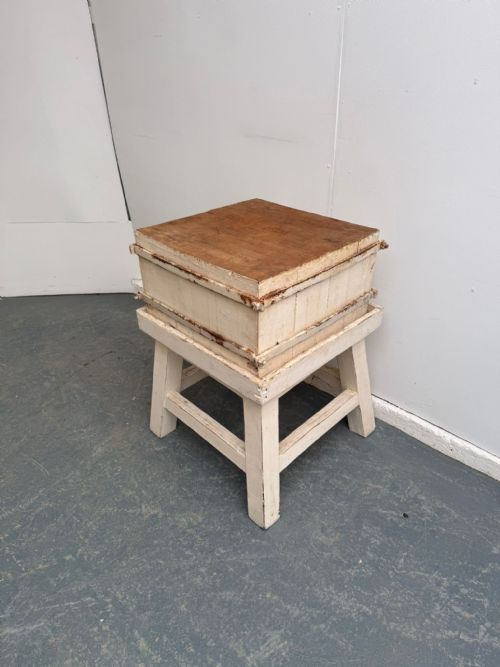
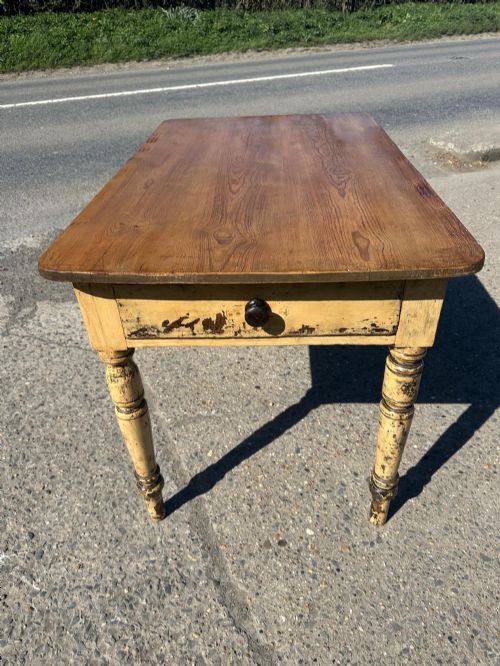
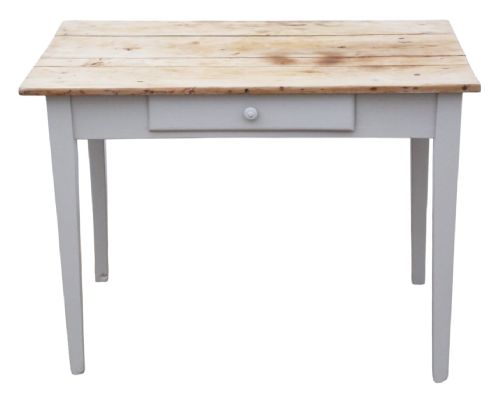
The category encompasses diverse utilitarian objects, including scrub-top kitchen tables, potboard serving tables, butchers blocks, and long harvest tables. Many pieces feature original or later layers of paint on the base and legs, leaving the working top exposed as bare wood or marble.
How They Were Made
Joiners built these tables from durable native softwoods and hardwoods, predominantly pine and oak, joined with sturdy stretchers and cleated ends to withstand daily culinary labour. Iron, brass, and marble appear on specific workshop variants like charcuterie prep counters and butchers blocks.
Makers applied traditional surface treatments including oil-based pigments and historical regional finishes such as Swedish Falu red paint. Many pieces display subsequent layers of old paint accumulated through decades of working life in domestic and commercial kitchens.
Listings feature eighteenth to mid-twentieth century forms, predominantly in pine, oak, and marble.
What Varies in Quality
Proportion and structural integrity set the better examples apart from standard utility furniture. Timber selection dictates the strength of the top boards, while the survival of original painted surfaces on the base determines historical intactness.
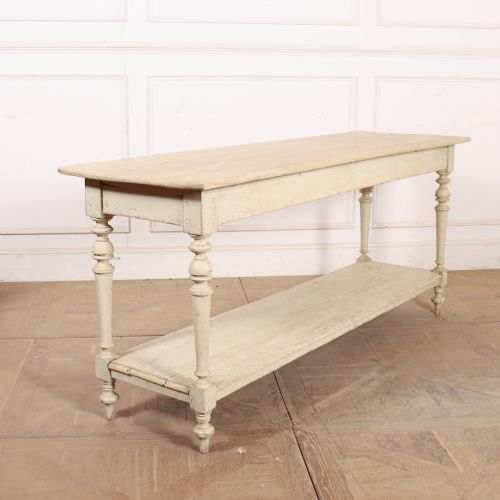
Well-balanced scaling and functional additions such as drawers, potboards, and two-tier lower shelves elevate a piece beyond basic work tables. The character of the scrubbed wooden top relative to the remaining paintwork creates the visual balance collectors seek.
The Painted Kitchen Prep Table Glossary
- Scrub-top
- A solid wooden table top left bare and regularly washed with water and scrubbing brushes to maintain hygiene for food preparation. This treatment leaves the grain raised and pale.
- Potboard
- A low slatted or solid lower shelf fitted between the legs of a serving table or dresser base for storing pots and pans. It provides structural stability to the frame.
- Drapers table
- A long utility table traditionally used in textile shops for measuring and folding cloth, featuring a generous surface and useful lower storage shelves. They translate well into domestic kitchen settings.
- Falu paint
- A traditional Swedish matte red or earth-coloured paint derived from copper mine waste, valued for its preservative qualities on timber work furniture. It yields a distinctive flat finish.
- Cleated ends
- Wooden battens fixed across the ends of a plank table top to prevent warping and movement. This technique accommodates the natural expansion of solid timber boards.
Painted Kitchen Prep Table: Frequently Asked Questions
What is a painted kitchen prep table?
A painted kitchen prep table is a heavy utility bench originally built for food preparation in nineteenth and early twentieth century homes and trade workshops. They combine robust timber frames with practical working tops.
Most surviving examples feature solid pine construction with painted bases and either scrubbed wood or marble surfaces. Their simple proportions suit contemporary kitchens as central islands or side workstations.
How were these tables used originally?
These tables served as the primary work surfaces for kneading bread, chopping meat, and preparing dairy or pastry in large country houses and commercial establishments. Their sturdy frames absorbed the daily force of heavy kitchen labour.
Lower shelves and drawers held mixing bowls, baking equipment, and ingredients close to hand. They functioned purely as tools before finding a place in modern domestic dining rooms.
How do I maintain a scrubbed wood top?
Maintain scrubbed pine or timber tops by cleaning them with mild soap and warm water when necessary, avoiding harsh chemical detergents that dry the grain. Regular light oiling can help protect the surface from stubborn food stains.
Embrace natural marks and knife scars as evidence of the piece's working history. The timber responds well to traditional gentle cleaning methods used by generations past.
How can I tell original paint from later coats?
Original paint typically shows authentic wear patterns, subtle fading, and natural integration with the underlying timber structure. Layers of old paint often build up unevenly around edges and joints through decades of use.
Later repainting can sometimes conceal repairs or smooth out the texture of the wood beneath. Inspecting the surface closely reveals the transitions between historical pigment layers.