




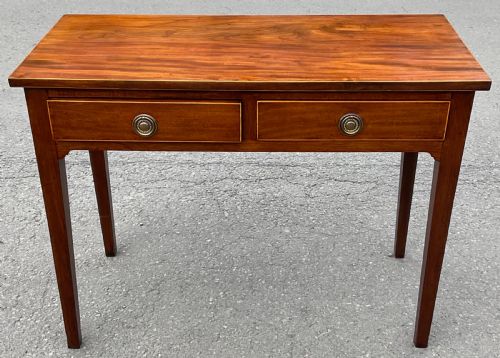


Two Drawer Serving Table
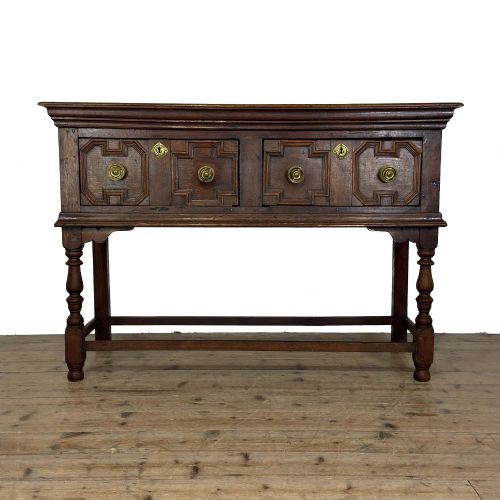
These two drawer serving table examples are substantial dining and hall furniture pieces designed to hold food, silver, and linen.
Two Drawer Serving Table
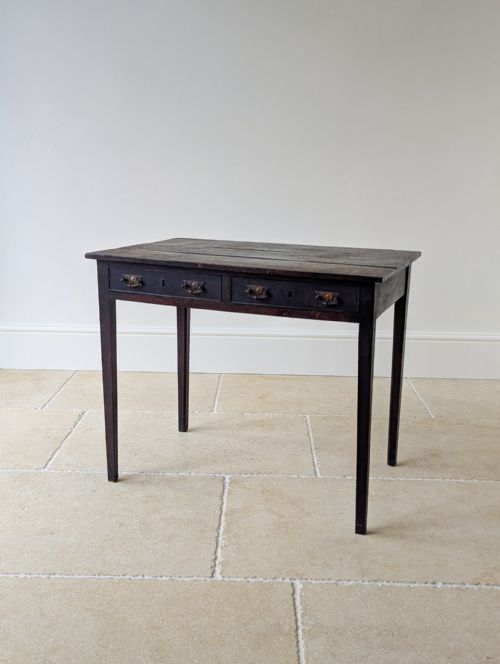
When you search for a two drawer serving table, you encounter robust timber furniture spanning several centuries of dining room history. These pieces generally feature a pair of frieze drawers set beneath a generous top surface, serving both domestic and entertaining needs.
The selections available here range from formal Georgian mahogany designs to rustic farmhouse oak and walnut iterations. You will frequently find pieces that double as side tables, buffet servers, or dresser bases depending on their regional origin and period.
Earlier examples lean towards understated Georgian and George III proportions, whilst later nineteenth century and Edwardian variants introduce richer timbers like burr walnut and inlaid mahogany. Each piece fulfils the traditional requirement of offering surface space alongside concealed storage.
How they were made
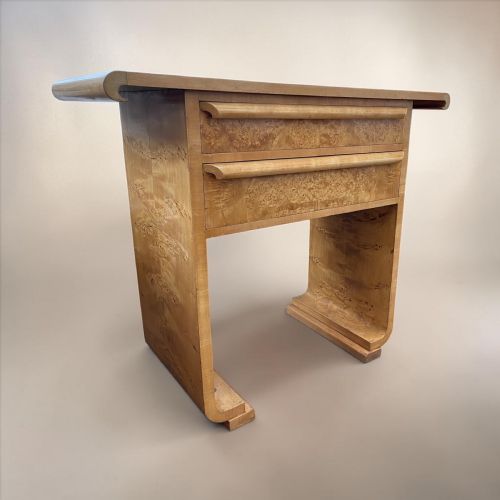
Cabinetmakers constructed these tables using solid hardwoods such as mahogany, oak, and walnut, frequently selecting figured veneers like burr maple for primary display surfaces. Secondary timbers were employed for drawer linings and internal framing, demonstrating traditional joinery methods suited to heavy daily use.
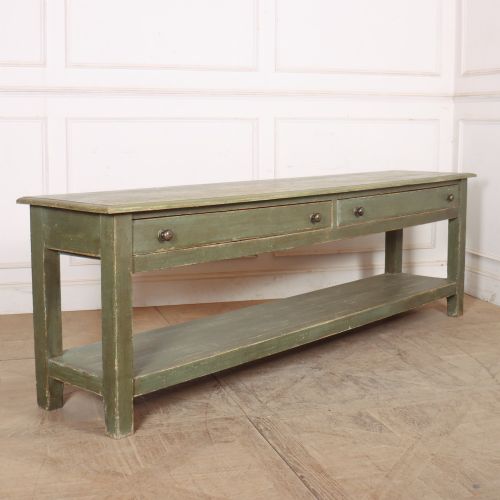
Surface treatments varied from plain waxed finishes and French polish to painted pine and bleached oak, depending on the prevailing style of the maker. Brass drop handles and escutcheons secured to the drawer fronts provided both functional utility and decorative accent.
Listings feature mahogany, oak, walnut, and pine across periods from the Georgian era through to Art Deco.
What varies in quality
The distinction between standard examples and finer items lies in the selection of timber grain and the precision of the construction. Superior pieces display carefully matched veneers, hand-cut dovetails on the drawer carcasses, and well-proportioned legs that balance the weight of the top.
Hardware integrity and the retention of original brass fittings significantly influence the character of the piece. Tables that maintain their authentic timber patination without excessive modern intervention represent the more desirable examples on the market.
Fortnum and Mason
The Two Drawer Serving Table Glossary
- Frieze
- The horizontal band situated directly beneath the top surface of the table where the drawers are housed. It often receives decorative carving or inlay.
- Dovetail
- A traditional interlocking joint used at the corners of the drawers to ensure structural strength and longevity. Fine, narrow pins indicate careful hand craftsmanship.
- Patina
- The surface sheen and coloration developed by timber over decades of use and polishing. It signals age and proper maintenance.
- Banche
- A curved or bowed front profile seen on certain revival serving tables which softens the rectangular outline. This shape required advanced joinery skills to execute properly.
Two Drawer Serving Table: Frequently Asked Questions
Where should a two drawer serving table go?
These tables sit comfortably in a dining room, large hallway, or spacious kitchen where extra surface area is useful. Their two drawers provide convenient storage for cutlery, napery, or household items.
Because they are shallower than standard dining tables, they line walls and passageways without obstructing movement through the room.
How do I clean antique timber?
Dust the surface regularly with a soft, dry cloth to prevent grit accumulation. Apply a quality beeswax periodically to nourish the wood and maintain the natural sheen.
Avoid placing these tables in direct sunlight or near heat sources to prevent the timber from drying out and splitting.
Can I use a serving table as a desk?
The generous surface area and two drawers make many of these tables suitable for use as a writing desk in a study. Ensure the height of the frieze allows adequate knee clearance before placing a chair beneath it.
Adding a protective glass top safeguards the historic timber surface if the table experiences daily clerical work.
What is the difference between a server and a side table?
Serving tables traditionally functioned as auxiliary surfaces for food and drink during large meals in dining rooms. Side tables generally feature lighter proportions and served a broader decorative or functional role in parlours and halls.
Over time, makers and owners used the terms interchangeably, particularly for pieces fitted with drawers.