




English Country Oak Dresser
An English country oak dresser brings substantial domestic timber and practical tiered display into a room.
English Country Oak Dresser
When you search for an english country oak dresser, you are looking at sturdy utilitarian storage furniture designed for farmhouse and country house kitchens from the seventeenth century onwards. These pieces typically combine a lower storage cabinet or dresser base with an upper plate rack for displaying ceramics.
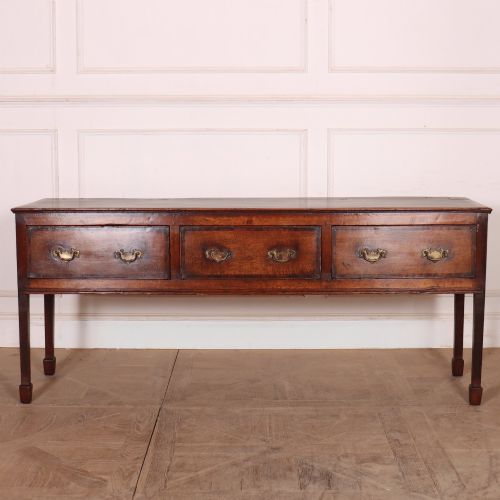
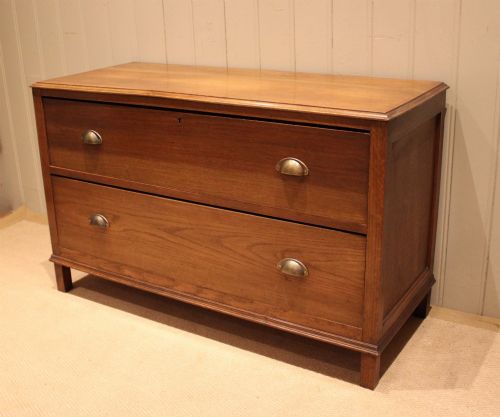
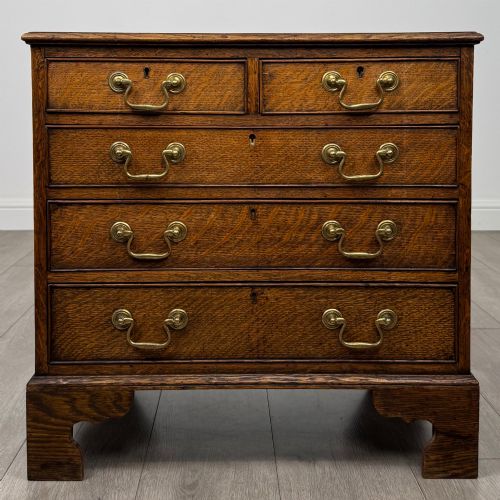
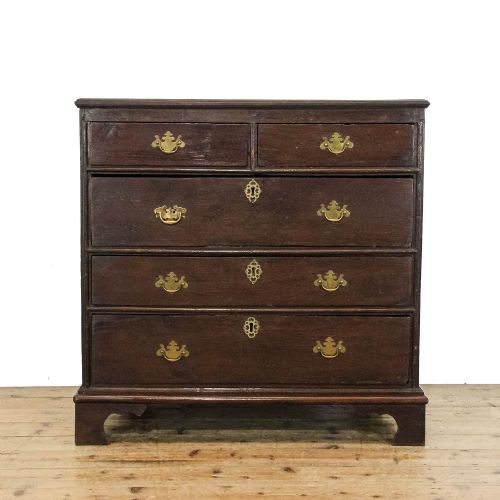
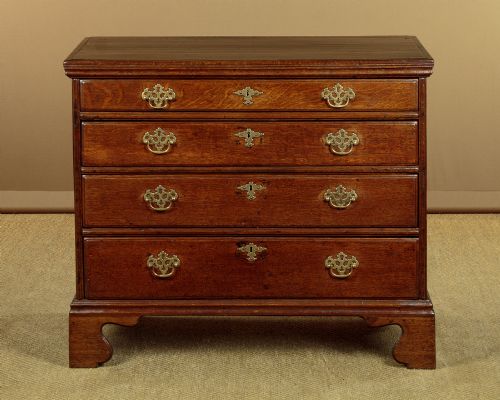
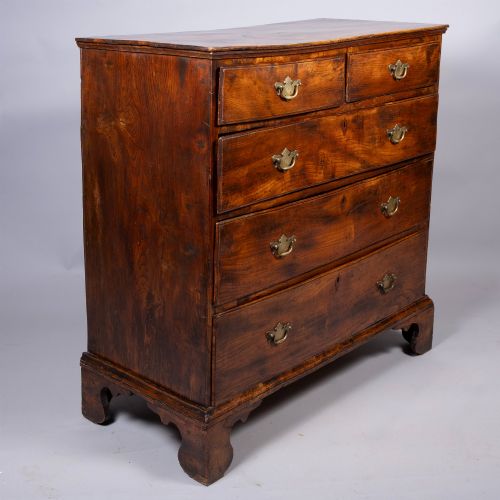
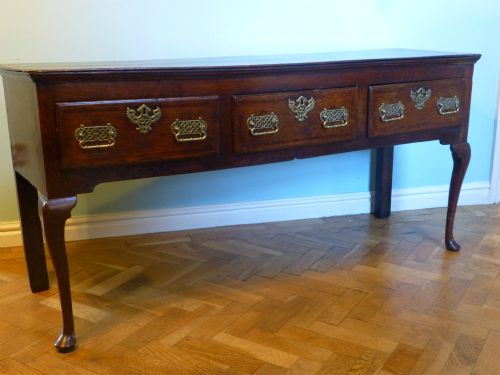
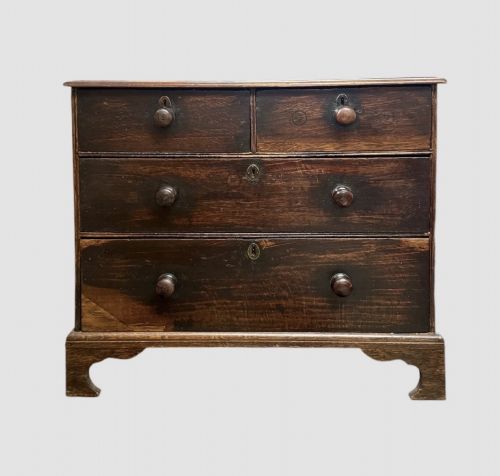
The versions you are most likely to meet on this page span the 17th, 18th, and 19th centuries, appearing primarily as dresser bases, complete dressers with racks, or related oak chests of drawers. Regional variations include West Country kitchens and George III formal country styles.
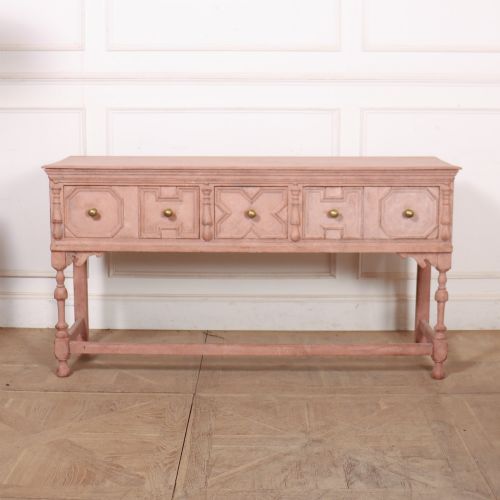
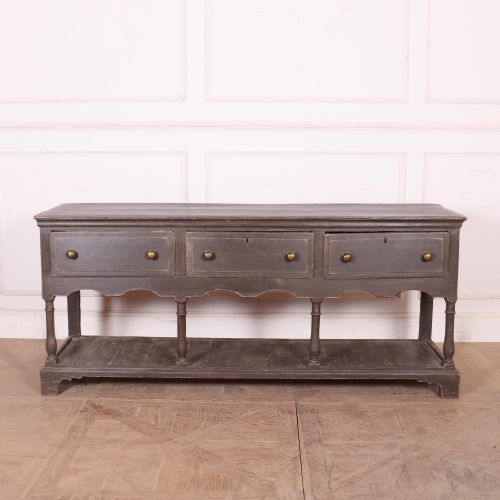
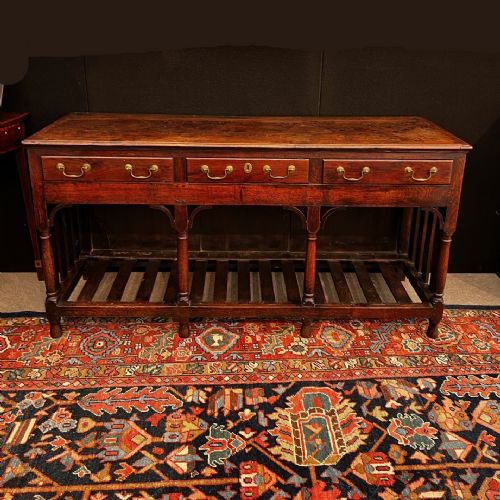
Many examples incorporate potboards beneath the main counter or feature banks of drawers designed for household linens and kitchen implements. Painted finishes and bleached timbers also appear among the traditional honey-coloured and dark oak surfaces.
How they were made
Makers built these items primarily from solid native oak, frequently supplemented with elm, pine, and painted wood for internal or secondary sections. Traditional joinery methods such as mortise and tenon frames provided the structural strength required for heavy daily kitchen use.
Hardware consists of forged iron and brass pulls, handles, and hinges fitted to drawers and cupboard doors. Surfaces were hand-planed and left bare, waxed, or treated with early paint finishes that developed deep patinas over centuries of service.
Object forms span dresser bases, complete plate rack dressers, sideboards, chests of drawers, and library bookcases.
What varies in quality
The standard of a piece depends on the integrity of its timber, the crispness of its mouldings, and whether the upper plate rack matches the base in timber and age. Untouched surfaces retain their original texture and tone, whereas heavy past restoration alters the visual balance.
Proportion and regional character distinguish finer examples from standard utility pieces. Well-balanced drawer arrangements, original brassware, and sound potboard structures elevate the standing of an item within its period.
The English Country Oak Dresser Glossary
- Dresser base
- The lower sideboard portion of a dresser, featuring cupboards and drawers without the upper plate rack. These served as main food preparation and storage surfaces in country kitchens.
- Potboard
- An open slatted lower shelf fitted between the legs of a dresser base. It was traditionally used for storing pots, pans, and heavy earthenware.
- Delft rack
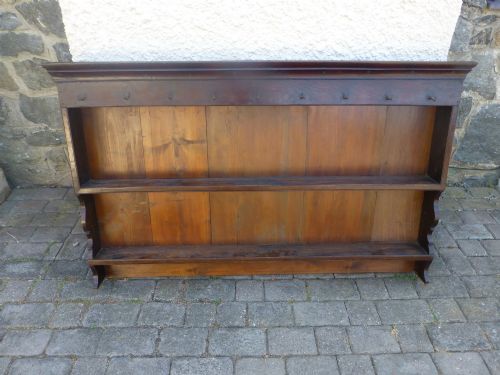
- The wooden plate shelf mounted above a dresser base to display ceramic plates and platters. These racks often feature shaped friezes and plate grooves.
- George III
- The stylistic period spanning the mid to late eighteenth century, characterised by refined proportions and classical restraint in country furniture. Pieces from this era often show lighter framing.
- Patina
- The surface sheen and colour acquired by wood and metal through decades of handling, polishing, and environmental exposure. It serves as a visual indicator of age.
English Country Oak Dresser: Frequently Asked Questions
How do I date an oak dresser?
Dating relies on construction methods, timber selection, and handle styles. Hand-cut dovetails and pegged frame joints usually point to earlier periods.
Secondary woods like pine or elm can also help narrow down the manufacturing decade when compared against known regional formats.
Did all dressers come with racks?
Many dresser bases were made and used entirely without plate racks for everyday kitchen tasks. Racks were frequently added, removed, or separated over centuries of domestic use.
Matching an upper rack to a base requires careful observation of timber grain, wear patterns, and fixing marks.
Where were country dressers used?
These pieces formed the functional centrepiece of farmhouse kitchens and country house sculleries. They held tableware, cooking ingredients, and linens close to hand.
Today, they transfer easily into modern dining rooms and kitchens for tableware display and storage.