



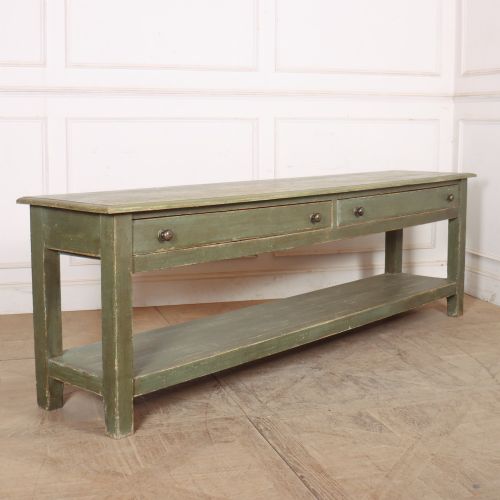


English Country House Sideboard
An english country house sideboard brings honest utility and vernacular character to a room, built to serve rather than simply to show.
English Country House Sideboard
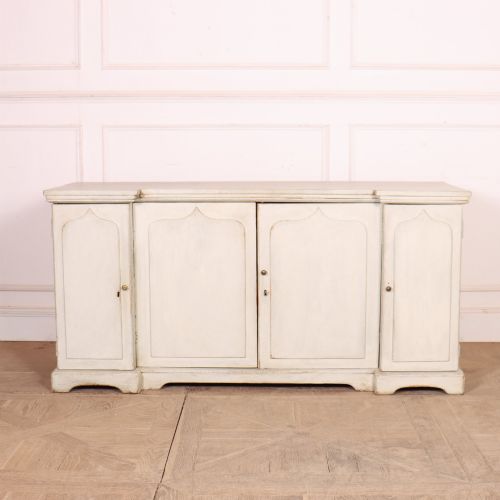
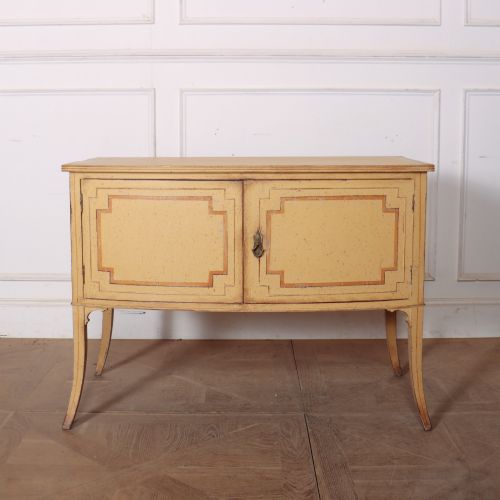
The versions you meet most frequently on this page belong to the nineteenth and eighteenth centuries, often presenting as painted timber or unadorned oak. These forms developed in kitchens, morning rooms, and hallways where sturdy surface area and storage mattered above all else.
Regional variations emerge clearly through vernacular details, connecting specific pieces to West Country traditions or broader rural workshops. Their presence in a modern interior grounds the space with tangible history and straightforward, functional design.
How they were made
Construction relies upon honest timbers such as oak, pine, and elm, selected for strength and local availability. Carpenters utilised mortise and tenon joints to ensure these hardworking carcases withstood daily domestic demands over generations.
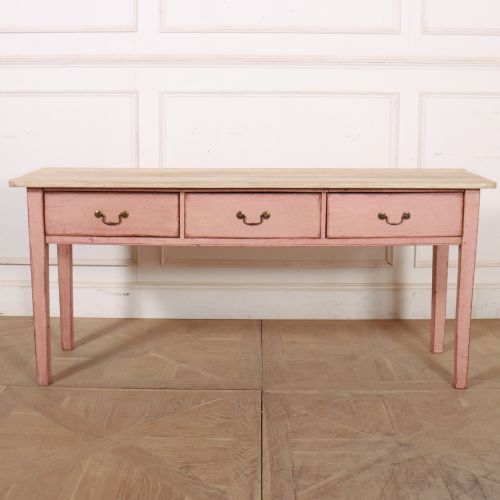
Surfaces frequently reveal layers of historic paint or the natural grain of bleached oak, reflecting both original workshop finishes and subsequent domestic upkeep. Brass hardware, where present, secures doors and drawers with simple, utilitarian fastening.
Listings span from the seventeenth century through the Victorian era, utilising pine, oak, elm, and painted timber.
What varies in quality
The distinction between ordinary and exceptional pieces rests upon the integrity of the timber and the honesty of its patina. Original surfaces, whether unpainted oak or early layers of paint, carry far more authority than later cosmetic interventions.
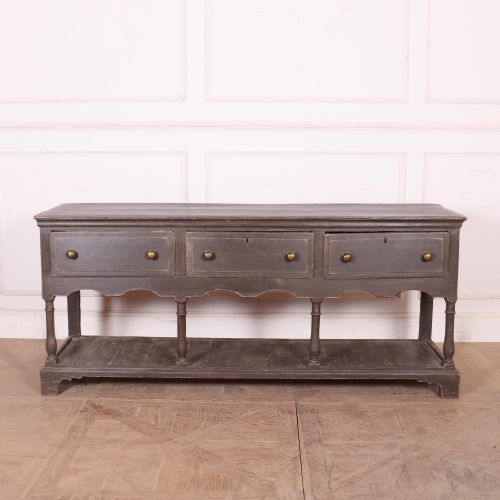
Proportion and scale dictate the visual weight of each piece within a room, with balanced proportions commanding greater appreciation. Structural survival - such as unaltered potboards, sturdy legs, and tight joints - separates items that endured hard service from those heavily rebuilt.
The English Country House Sideboard Glossary
- Dresser base
- A low utilitarian table or cabinet featuring drawers and sometimes a lower shelf, designed for food preparation and storage.
- Potboard
- An open slatted lower shelf beneath a dresser base or serving table, originally intended for storing heavy pots and pans.
- Breakfront
- A piece of furniture featuring a central section that projects forward from the flanking outer sections.
- Vernacular
- Architectural or furniture styles created in local traditions using local materials, independent of formal academic design.
- Bleached oak
- Oak timber that has been lightened in tone, either through natural exposure to sunlight and scrubbing or later chemical processes.
English Country House Sideboard: Frequently Asked Questions
What is an english country house sideboard?
These pieces are functional domestic furnishings originating from rural and country estates, encompassing dresser bases, serving tables, and side cabinets built for daily utility.
They provide durable surface space and generous storage, reflecting the practical requirements of large country kitchens and morning rooms.
How were these sideboards used originally?
Historically, these items served as practical workspaces for food preparation, plating meals, and storing household utensils or linens.
Positioned in kitchens, dining spaces, and morning rooms, they managed the heavy demands of running a traditional domestic household.
How do I live with one today?
Integrate these substantial pieces into modern dining rooms, kitchens, or hallways where their generous surfaces and storage compartments can be put to active use.
Allow their honest wooden textures and historic paint finishes to anchor the room without competing against overly formal surrounding decor.
How can I tell the periods apart?
Earlier pieces from the seventeenth and eighteenth centuries often display heavier oak construction, hand-cut joinery, and simpler vernacular proportions.
Nineteenth-century examples frequently incorporate softer woods, painted finishes, or broader stylistic influences ranging from Victorian formality to rustic farmhouse traditions.