
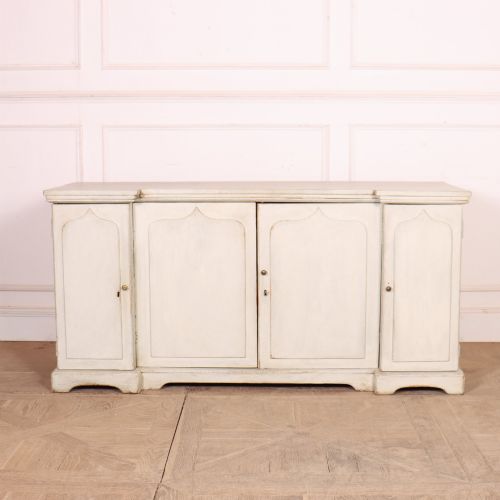
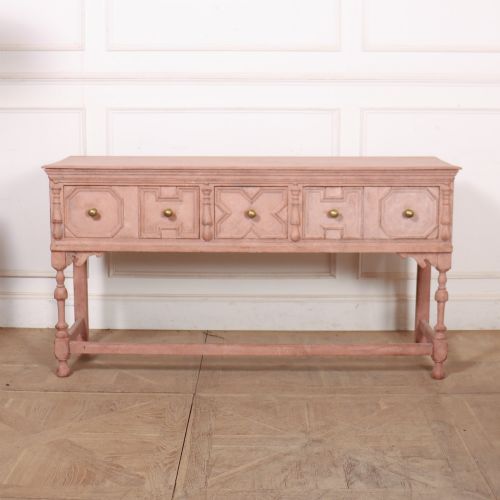
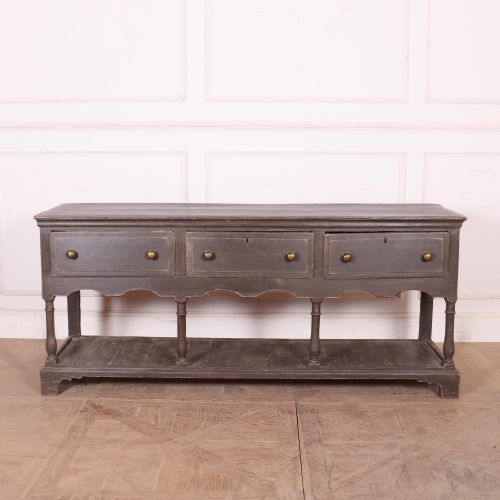

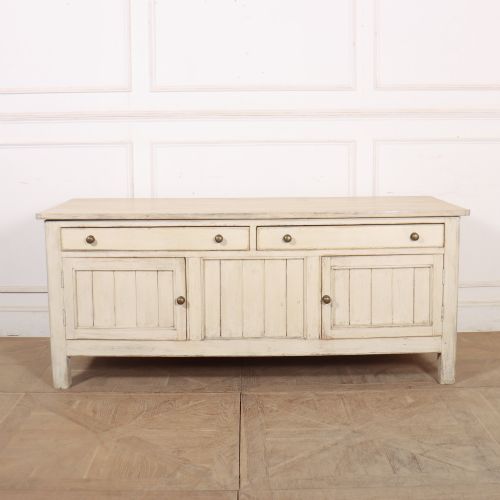
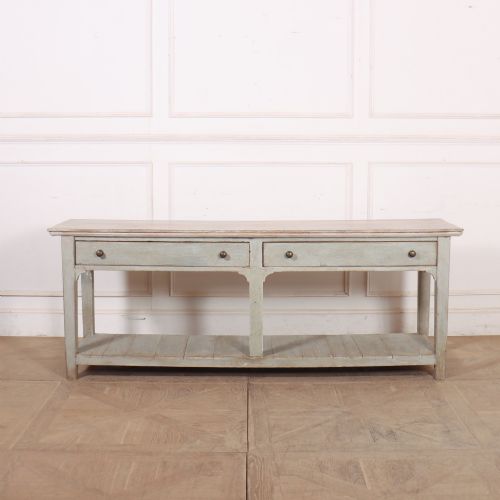


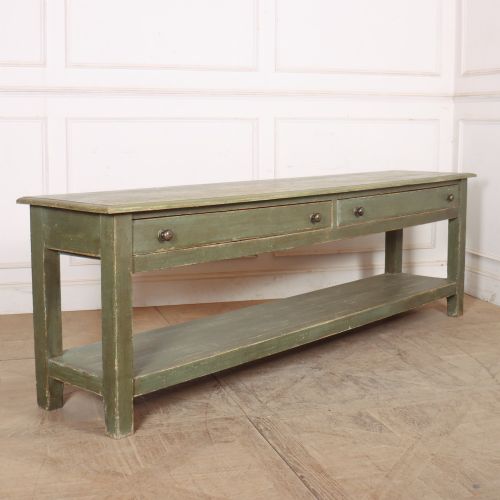


Painted English Dresser Base
A painted english dresser base brings practical surface space and historic character to a room, offering deep storage below.
Painted English Dresser Base
A painted english dresser base is a substantial utilitarian furniture form designed for domestic service, combining drawers, cupboards, and open lower shelves.
The version most frequently met on this page dates from the nineteenth century, though earlier examples stretch back into the seventeenth century.
Constructed as low storage units rather than tall kitchen dressers, these pieces appear in formats ranging from simple three drawer configurations to breakfront styles and potboard designs.
Materials and construction methods
Carpenters built these sturdy frames primarily in oak and pine, applying layers of paint directly onto the timber surfaces.
Metal fittings such as brass handles and hardware appear alongside wooden construction, securing drawers and doors built for heavy household use.
Many pieces carry centuries of kitchen dust trapped beneath thick layers of historic paint.
Evaluating the standard of a piece
Quality rests upon the integrity of the timber frame and the survival of early or original painted surfaces, which show varying degrees of patination and wear.
Proportion and structural complexity set certain examples apart, particularly breakfront layouts and potboard designs that require more intricate joinery.
The Painted English Dresser Base Glossary
- Potboard
- An open lower shelf built into the base of a dresser to store heavy crockery and pots. This practical platform sits just above the floor.
- Breakfront
- A cabinet design where the central section projects forward from the flanking wings. This configuration creates architectural depth in larger furniture.
- Pine
- A softwood commonly utilised for carcass construction and drawer linings in country furniture. It accepts paint readily and provides a stable base.
- Oak
- A durable hardwood chosen for robust framing and structural longevity in early examples. Its dense grain supports heavy daily use.
Painted English Dresser Base: Frequently Asked Questions
What is a dresser base used for?
These low units functioned historically as practical work surfaces and storage hubs in domestic kitchens and dining rooms. They held tableware, linens, and provisions while providing a flat top for food preparation.
Today, they serve well as sideboards, media consoles, or hallway storage cabinets. Their generous drawers and cupboards keep modern household items neatly concealed.
How do I date an antique dresser?
Dating relies on observing construction methods, timber choice, and stylistic cues from periods such as the Georgian or Victorian eras. Hand-cut joints and original fixings offer clear clues to a piece's age.
The presence of early paint finishes and the specific configuration of drawers also help narrow down the century of manufacture.
Are these pieces made of solid wood?
Makers constructed these sturdy items from solid timber throughout, utilising durable woods like oak and pine. These natural materials provided the necessary strength for heavy domestic service.
Subsequent layers of paint were applied directly to the timber, creating a protective coating that has aged with character over the centuries.
How do I care for a painted surface?
Preserving historic paint requires gentle dusting with a dry, soft cloth to prevent surface scratching. Avoid harsh chemical cleaners and excessive moisture that could lift or damage the finish.
Keeping the furniture away from direct heat sources and strong sunlight protects the timber underneath from drying and warping.