
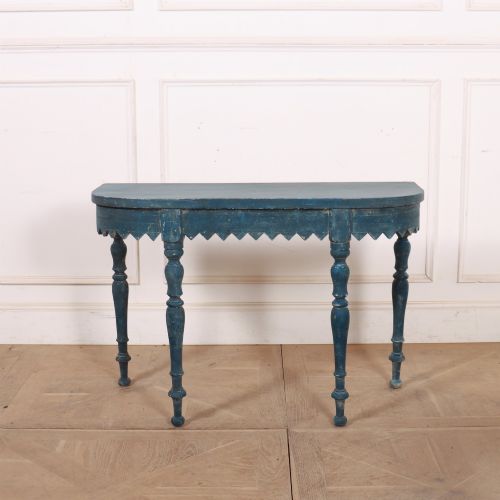
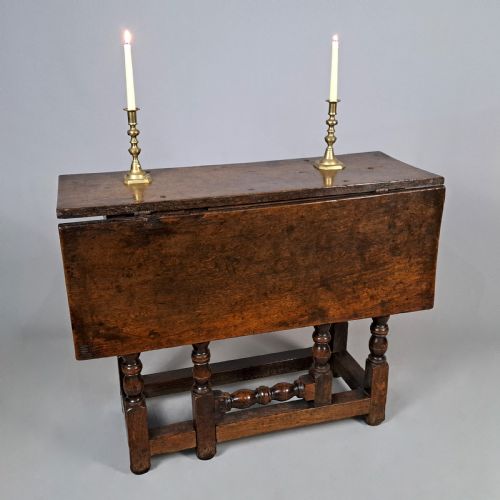
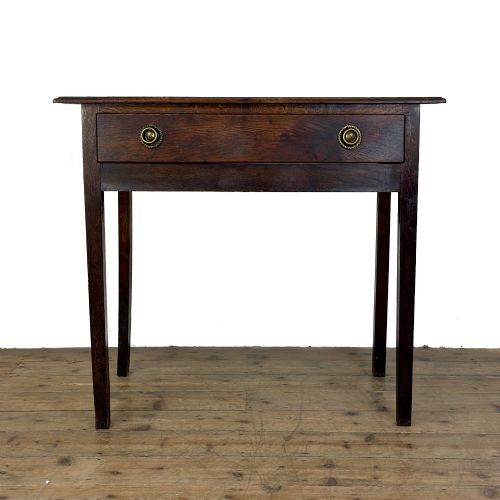


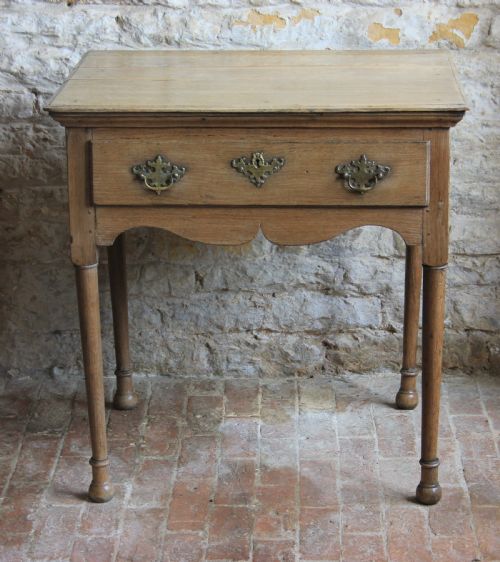



English Country Hall Table
An English country hall table provides practical surface space while anchoring a hallway with sturdy vernacular character.
English Country Hall Table
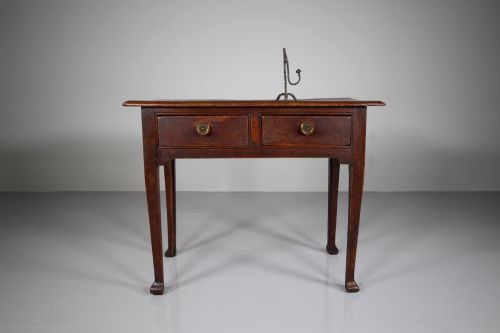
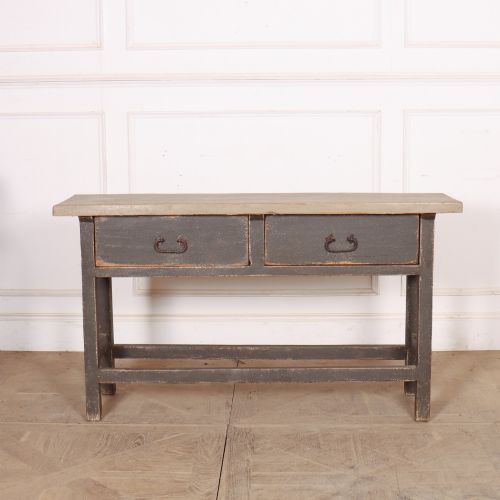
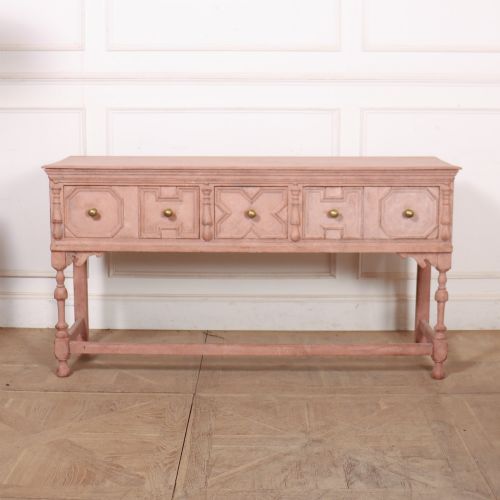
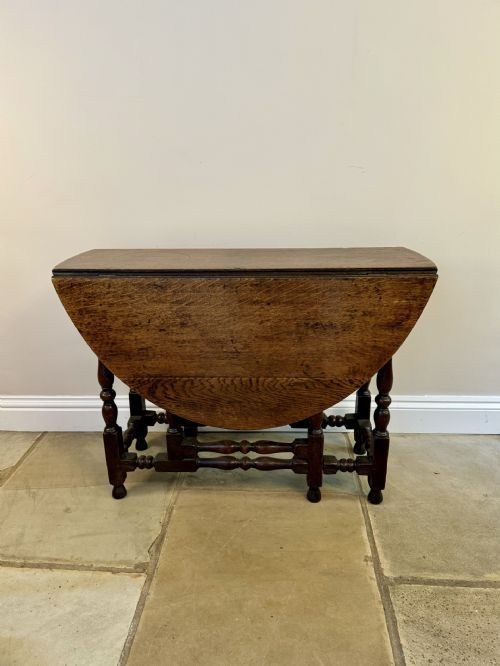
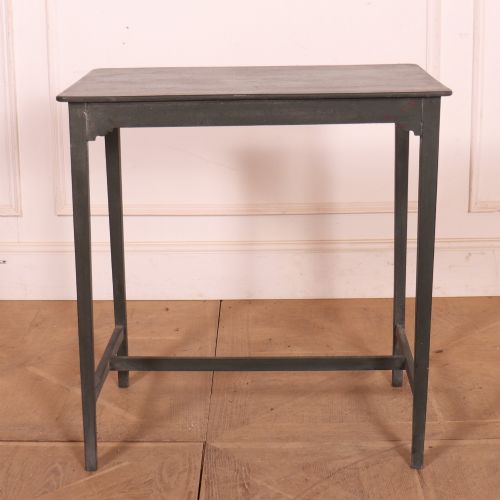
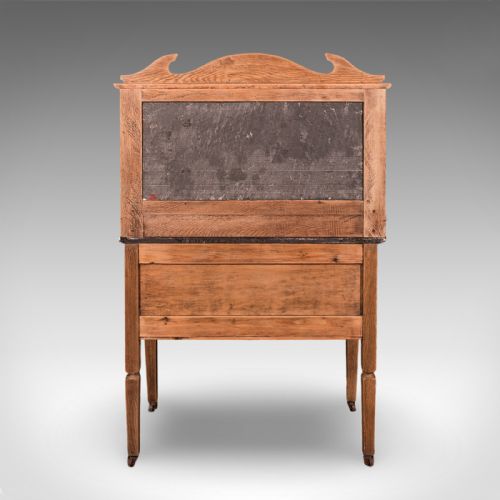
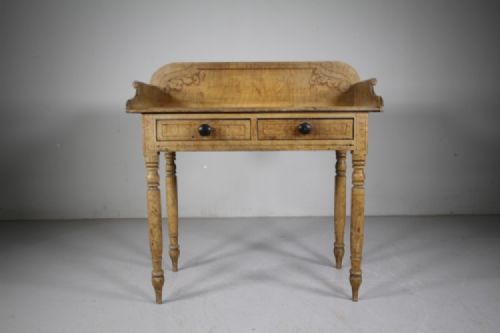
When searching for an english country hall table, buyers encounter functional side tables, lowboys, and dresser bases designed for domestic spaces. These pieces span from the seventeenth century through the Victorian era, reflecting the utilitarian needs of English homes.
Oak, pine, and elm form the backbone of these furnishings, often finished with old paint or left as raw timber. The selection ranges from compact lamp tables to long dresser bases intended for hallway placement.
How They Were Made
Joiners built these tables using solid native timbers like oak, elm, and fruitwood, joined with traditional pegged mortise and tenon construction. Many surfaces bear layers of historic paint or retain natural waxed grain developed over centuries of use.
Turned legs, side stretchers, and board tops define the structural approach of these utilitarian items. Iron and brass hardware appears selectively on drawers and drop-leaf mechanisms.
Listings feature periods spanning from the seventeenth century through the Edwardian era, constructed primarily in oak, pine, and elm.
What Varies In Quality
The integrity of the timber and the honesty of the surface finish dictate the standing of a piece. Original painted surfaces and untouched patinated oak command attention above heavily restored examples.
Proportion and structural survival matter greatly. Tables retaining their original tops, timber thickness, and minimal structural alteration represent the stronger end of the range.
The English Country Hall Table Glossary
- Lowboy
- A small oak or fruitwood table with drawers, typically standing on four legs and functioning historically as a dressing or side table.
- Dresser Base
- A heavy lower sideboard unit featuring drawers or cupboards, often utilised in hallways and kitchens for storage and display.
- Side Table
- A versatile rectangular furnishing designed to stand against a wall in a hallway or living space.
- Turned
- Timber shaped on a lathe to create decorative cylindrical or bulbous vertical supports and legs.
- Potboard
- An open lower shelf built into the base of a table or dresser, historically used for storing earthenware vessels.
English Country Hall Table: Frequently Asked Questions
How were these tables used historically?
These tables served practical daily functions in farmhouses and country houses as surfaces for holding lighting, hats, and household goods. Dresser bases and lowboys provided enclosed or open storage for domestic items.
Placed in hallways and corridors, they managed the traffic and storage needs of busy households.
How do I style a hall table?
A hall table works best placed flat against an entryway wall to anchor the space. Pairing the surface with a lamp or simple ceramic dish maintains the functional character.
Allowing the natural grain or historic paint finish to remain visible keeps the focus on the age and material of the timber.
How do I identify the period?
Period identification relies on observing timber choices, construction techniques, and hardware types. Seventeenth century examples often feature heavier oak framing and geometric mouldings.
Later nineteenth century pieces introduce softer pine constructions, turned supports, and different paint applications.