
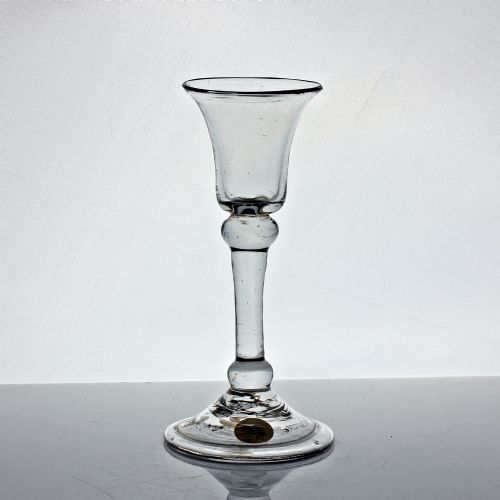
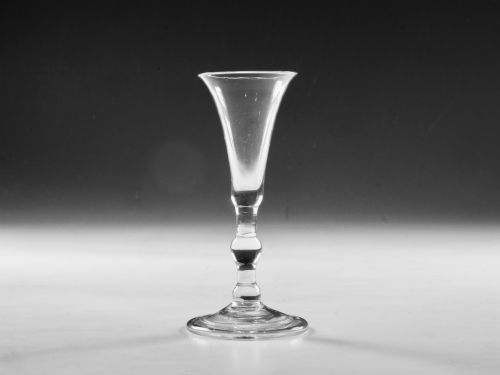
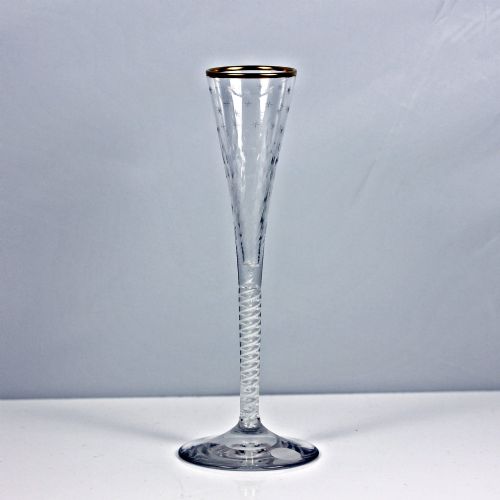
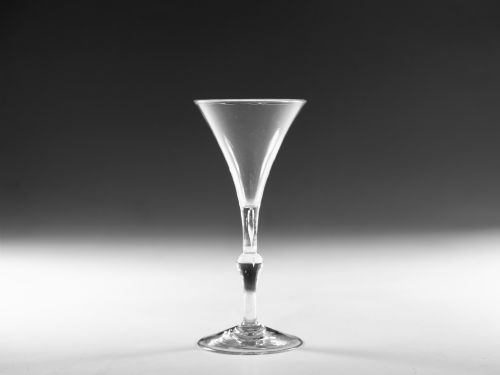

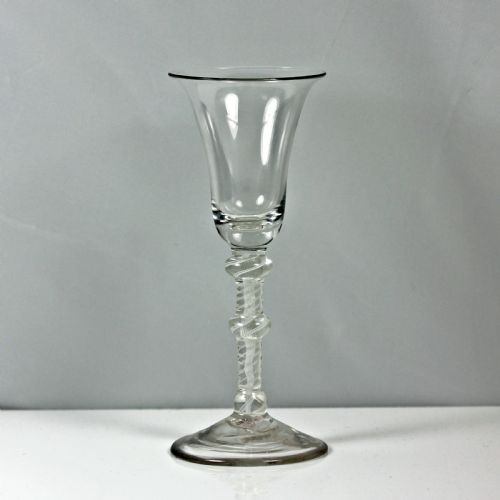


English Cordial Glass
An English cordial glass holds small quantities of potent spirits, combining delicate stems with narrow bowls for eighteenth-century tavern and parlour drinking.
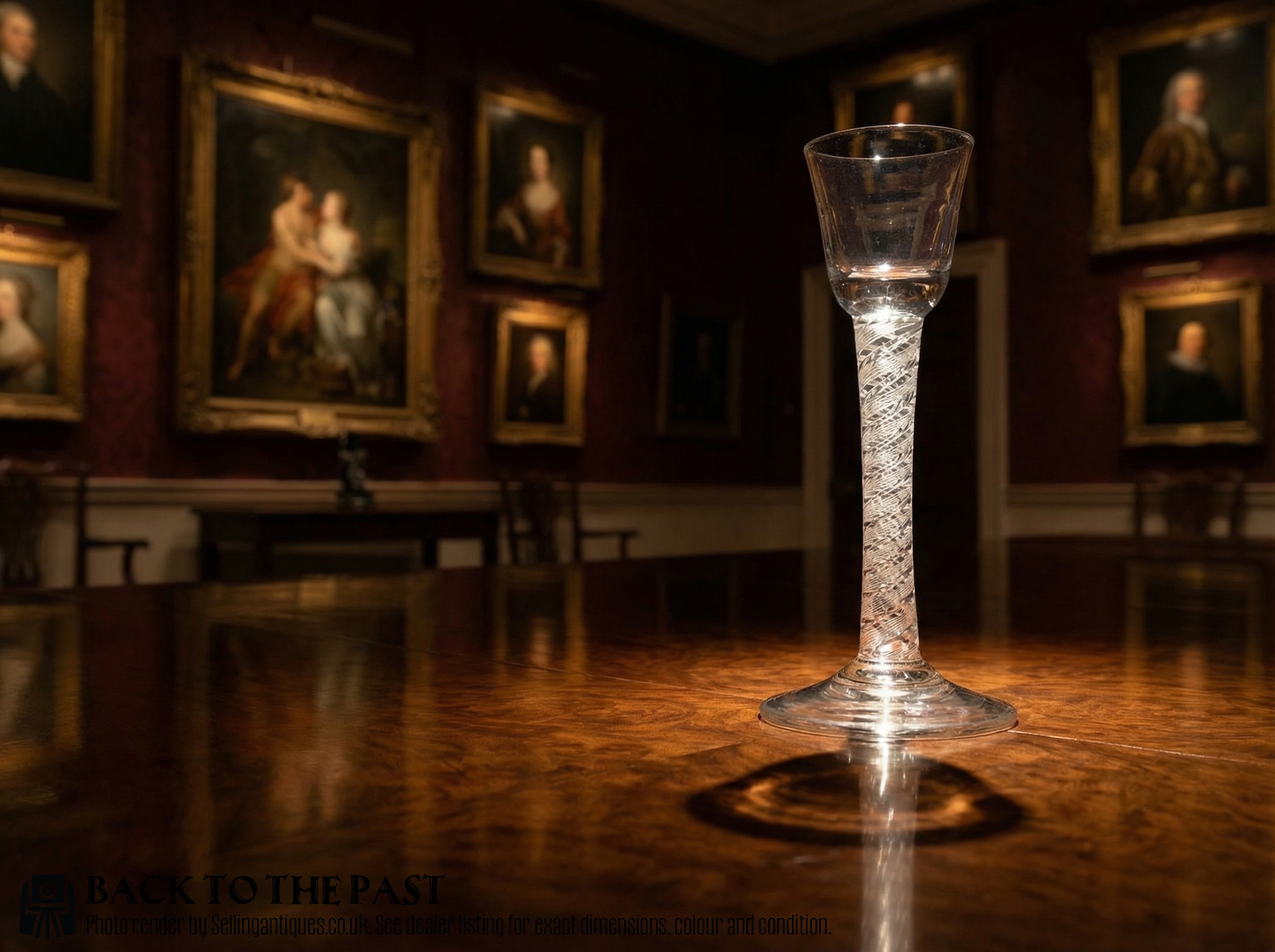
English Cordial Glass
When you search for an english cordial glass, you encounter small drinking vessels designed specifically for concentrated liqueurs and strong spirits during the eighteenth century. These pieces typically feature smaller bowls than standard wine glasses, concentrating aromas while limiting servings of expensive liquors.
The selection here draws primarily from eighteenth-century periods, ranging through Georgian reigns and George II formats up to Edwardian and Regency adaptations. You meet plain stems, folded feet, balustroid profiles, and faceted stems alongside various twist formations.
Alongside dedicated cordial shapes, the listings include related stemware such as dram glasses, gin glasses, and wine glasses from similar eras. These parallel forms share the heavy lead composition and domestic drinking customs of the period.
Materials and construction
Lead glass and flint glass provide the heavy, resonant foundation for these vessels, allowing makers to draw out slender stems and thin walls. This dense material takes light cleanly, accentuating internal optical effects.
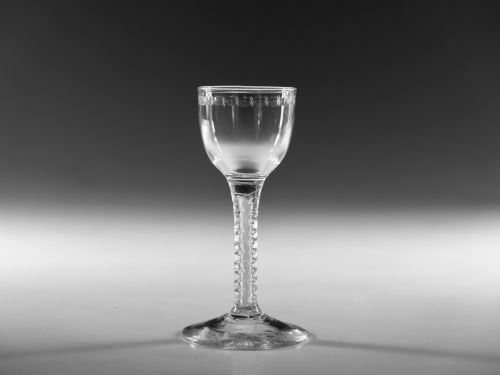
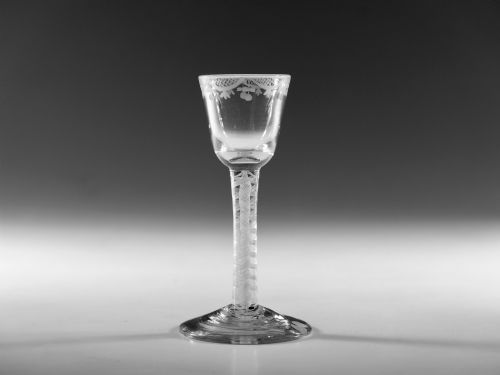
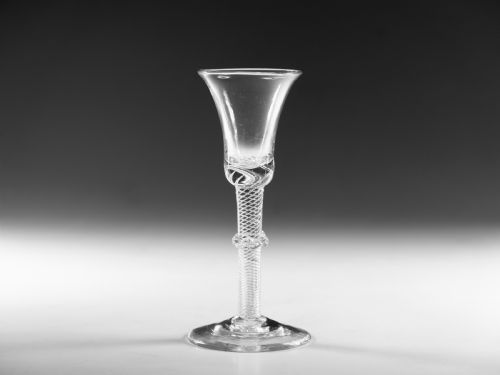
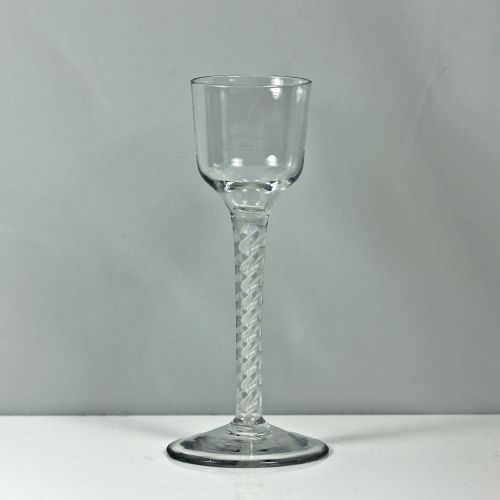
Techniques such as air twists, opaque twists, and mercury twists introduce intricate internal threads within the stems. Makers also applied facet cutting to stems and bowls, or incorporated basal bubbles and folded feet during initial blowing.
Listings feature eighteenth-century lead glass vessels utilising air twists, opaque twists, mercury twists, and facet-cut stems.
Evaluating quality and proportion
Proportion and weight dictate the balance of the piece, separating standard production from finer examples. A well-proportioned cordial glass maintains harmony between the small bowl, the stem formation, and the spread of the foot.
The clarity of the metal and the precision of internal stem formations determine the standard of craftsmanship. Crisp execution in air twists, double series opaque twists, or facet cutting distinguishes the work of skilled glasshouses.
The English Cordial Glass Glossary
- Air twist
- A stem formation containing elongated spiral bubbles trapped inside the glass during drawing. This optical effect creates shimmering threads running down the length of the stem.
- Opaque twist
- A stem containing white enamel rods twisted into complex internal threads. These threads appear singly or combined in double series patterns.
- Mercury twist
- A stem featuring a continuous spiral column resembling a thread of mercury or silver. It forms through a specific technique of trapping air channels.
- Folded foot
- A glass foot where the outer rim is doubled under to create a thickened, rounded edge. This technique added physical strength to vulnerable vessel bases.
- Basal bubble
- A small trapped air pocket located right at the bottom of the bowl where it meets the stem. Eighteenth-century glassmakers occasionally included this detail deliberately.
- Balustroid
- A heavy stem style bridging seventeenth-century baluster forms and later lighter Georgian shapes. It often incorporates multiple knops and swelling profiles.
English Cordial Glass: Frequently Asked Questions
What is an english cordial glass used for?
These vessels served high-proof spirits, liqueurs, and medicinal cordials in small quantities during social gatherings. Their narrow bowls kept the potent contents contained while matching the refined standards of the table.
Today, collectors appreciate them as display pieces or use them carefully for modern tastings of vintage fortified wines and spirits.
How do I date an antique glass?
Dating relies on observing stem construction, bowl shape, foot formation, and the composition of the metal itself. Early pieces often show heavy lead metal, folded feet, and thick balustroid stems.
Later eighteenth-century examples introduce lighter twist stems, facet cutting, and straighter bowl profiles that align with specific Georgian decades.
What is an opaque twist stem?
An opaque twist stem encloses one or more white enamel threads spiralling down through the clear glass. Makers formed these by twisting canes of white glass within the molten gather before drawing the stem.
Single series versions contain one set of twists, while double series examples combine multiple inner and outer twist patterns.
Are these glasses safe to use?
While eighteenth-century lead glass possesses great historical durability, these delicate vessels require careful handling and hand washing only. Sudden temperature changes can fracture the old metal.
Most owners choose to display them in cabinets or utilise them strictly for special occasions rather than everyday dining.