




English Coastal Seascape Painting
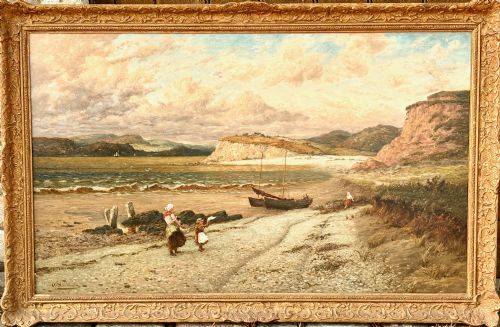
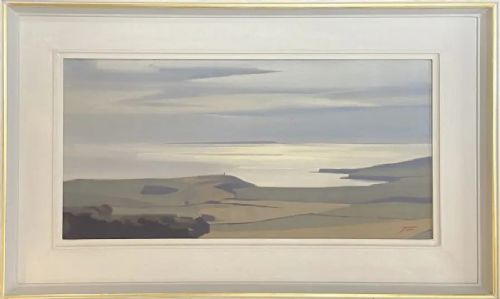
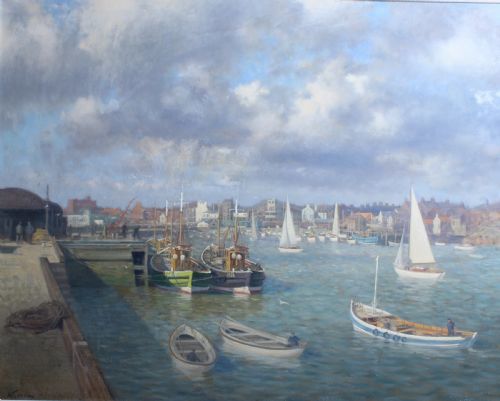
When you search for an english coastal seascape painting, you encounter works capturing the varied shores and harbours of Britain.
English Coastal Seascape Painting
An english coastal seascape painting captures the distinct character of Britain's shores, harbours, and fishing communities through the eyes of artists working across several generations.
The selections available here span from the nineteenth century into the mid-twentieth century, featuring framed artworks and wall art in oil and watercolour.
You will encounter depictions of specific locations, from Cornish ports and Yorkshire fishing villages to chalk cliffs and piers on the south coast.
How They Were Made
Artists captured these coastal scenes primarily using oil on canvas, oil on board, or watercolour on paper.
Works in oil offer rich textures, sometimes employing impasto to render the movement of stormy seas and crashing waves, while watercolours rely on fluid washes to capture atmospheric light.
Many surviving examples retain their period frames, constructed from materials such as giltwood, wood, and gesso.
Several canvases record the precise moment local fishing fleets made a desperate run for home ahead of incoming gales.
What Varies in Quality
Quality in these coastal works rests upon the artist's command of marine atmosphere, maritime architecture, and natural light.
Stronger pieces display a confident handling of water, shipping, and coastal topography that grounds the scene in a specific geographic reality.
The integration of the painting with its period frame also influences the overall presence of the piece.
James Orrock·William Banks Fortescue·James Fry·Walter Goodin·William Edward Webb·Charles Napier Hemy·Richard Harry Carter·Helen Layfield Bradley·George Morland·Frederick William Hattersley·Frederick William Booty·Alfred Henry Vickers·Stephen John Batchelder·Percy Brooke·Thomas Bush Hardy·Joseph Newington Carter·Lennard Lewis·Daniel Sherrin·Thomas Rose Miles·Robert Leslie Howey·William Shayer·Walter J Hall·George Marks·Alfred Egerton Cooper·Henry Bright
The English Coastal Seascape Painting Glossary
- Impasto
- Paint applied thickly to a canvas or board, leaving visible brush or palette knife marks that add physical texture.
- Giltwood
- Wood carved and coated with gold leaf, commonly used for traditional picture frames.
- Gesso
- A plaster-like mixture applied to frames as a base for gilding or painting.
- Coble
- A traditional type of open fishing boat with a flat bottom, frequently seen in northeastern coastal scenes.
- Lugger
- A small sailing vessel rigged with lugsails, common in West Country fishing fleets.
English Coastal Seascape Painting: Frequently Asked Questions
What subjects appear in these seascapes?
These works depict harbours, fishing boats, rocky cliffs, and sandy beaches around the British coastline.
Scenes frequently capture daily maritime activities, such as trawling luggers returning to port or figures gathering seaweed.
How do I date a coastal painting?
Dating relies on stylistic clues, framing materials, artist signatures, and sometimes inscriptions recording a specific year.
Clothing styles of figures on the shore and the type of vessels depicted also provide reliable chronological markers.
Where were these coastal scenes painted?
Artists painted locations all around the British Isles, with particular concentrations in Devon, Cornwall, Yorkshire, and East Anglia.
Many pieces explicitly record their exact setting, such as St Ives, Scarborough, or Whitby, within the title or signature.
How should I frame and display them?
Many of these paintings retain their original giltwood or wooden frames, which complement the period aesthetic of the artwork.
Display them away from direct sunlight and damp environments to protect the canvas, paper, and historic framing materials.