
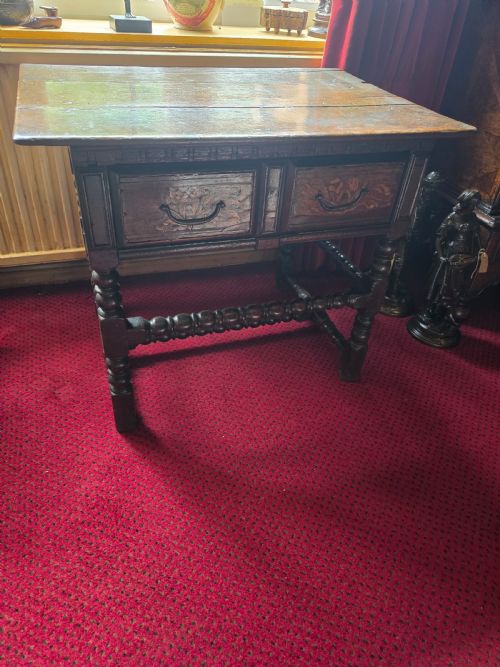
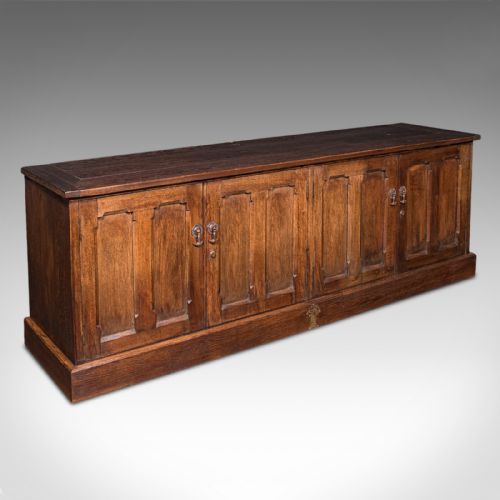


English Carved Oak Dresser
An english carved oak dresser brings centuries of sturdy utility and rich grain into a room, spanning rustic farmhouse forms to grand revival styles.
English Carved Oak Dresser
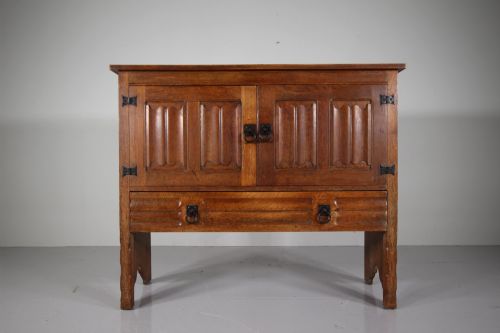
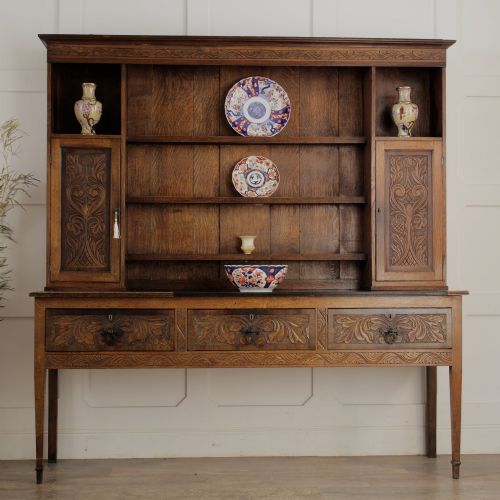
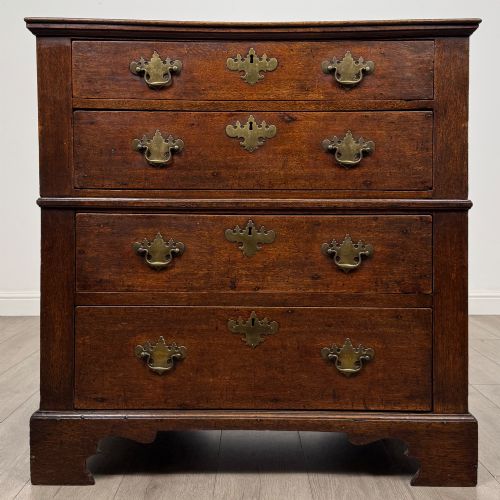
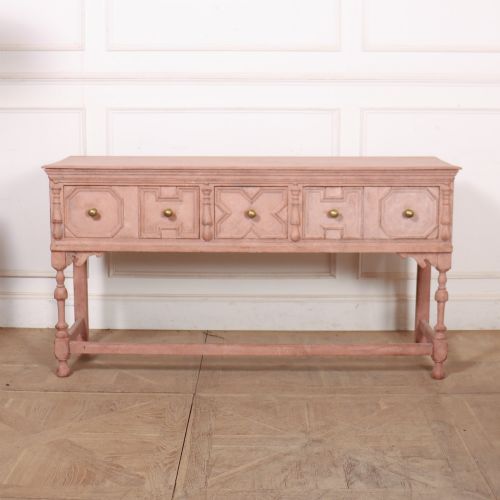
An english carved oak dresser serves as a substantial focal point in a dining space or kitchen, combining storage surfaces with display capacity. Buyers encounter everything from low dresser bases and servers to towering cupboards with integrated delft racks.
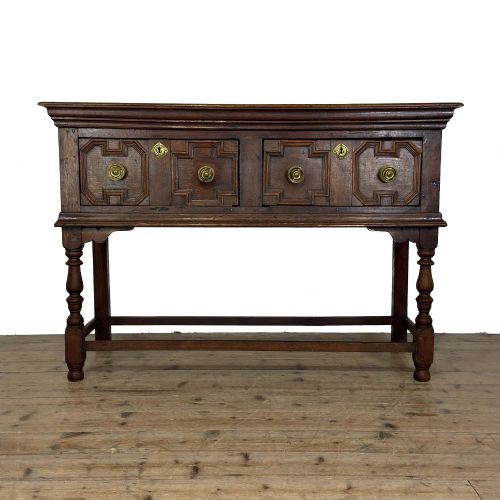
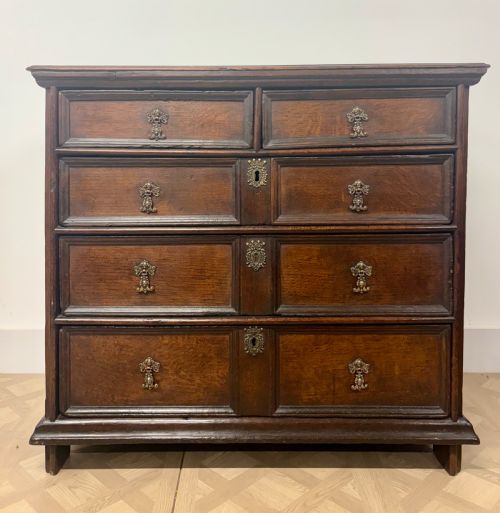
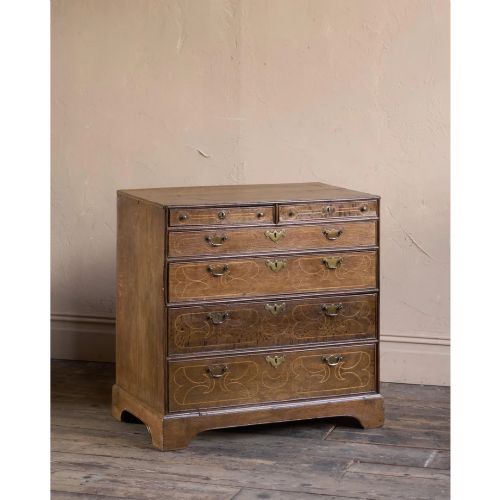
The pieces on this page range across centuries of domestic woodwork, encompassing early seventeenth-century examples, eighteenth-century country furniture, and later nineteenth-century revivals. Each variation reflects the changing storage needs and decorative tastes of English households over generations.
Form follows function closely in these designs, pairing deep drawers and enclosed cabinets with open plate shelves. Whether selecting a simple eighteenth-century farmhouse model or a heavily decorated Jacobean revival piece, the core purpose remains storing and displaying household ware.
Materials and Construction
Makers built these pieces primarily from solid oak, sometimes supplemented with fruitwood inlay, pine, and elm for secondary elements or decorative contrasts. Carpenters joined the heavy timbers using traditional methods that allowed the wood to expand and contract naturally with seasonal humidity.
Metalwork played a functional and decorative role through brass and iron handles, hinges, and escutcheons secured to the drawer fronts and doors. Surface treatments ranged from natural waxed finishes to painted applications, highlighting the deep grain and carved details.
Early makers occasionally incorporated secret compartments behind carved panels to hide family valuables from wandering guests.
Assessing Quality and Character
Quality rests in the crispness of the hand-carved ornamentation and the integrity of the structural joinery across drawers, panels, and cornices. Pieces retaining their original hardware, uncompromised timber patination, and unaltered bases command greater attention from collectors.
The depth of the relief carving and the sophistication of geometric mouldings separate standard utilitarian furniture from elite craftsmanship. Proportions and the harmonious integration of upper plate racks with lower cabinets also dictate the visual balance of the piece.
The English Carved Oak Dresser Glossary
- Dresser Base
- A low freestanding cabinet featuring rows of drawers above cupboards, designed for food preparation and storage.
- Delft Rack
- An open wooden shelving unit mounted to the wall or sitting atop a base to display ceramic plates and platters.
- Court Cupboard
- A traditional enclosed storage furniture piece featuring stacked recessed cabinets, often heavily carved with architectural motifs.
- Geometrically Moulded
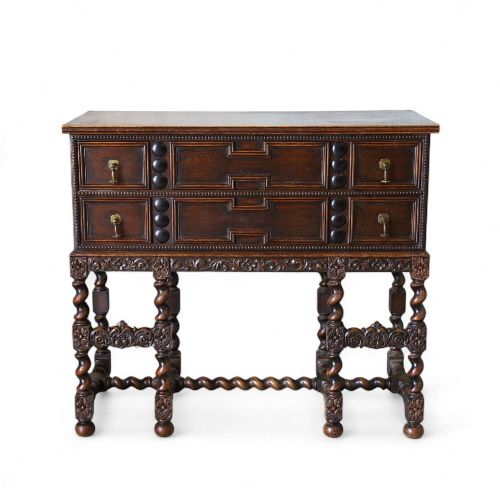
- A decorative technique using applied wooden strips on drawer fronts to create raised panel patterns typical of seventeenth-century joinery.
- Barley-Twist
- A turned structural support shaped like a spiralling rope, popular in Carolean and seventeenth-century revival furniture.
English Carved Oak Dresser: Frequently Asked Questions
What is an english carved oak dresser?
An english carved oak dresser is a traditional storage item combining drawers, cupboards, and frequently an open shelf rack for displaying ceramics.
These pieces developed over centuries in English homes as practical furniture for organising tableware and provisions in kitchens and dining rooms.
How do I date an antique oak dresser?
Dating relies on examining construction techniques, joinery marks, hardware types, and stylistic motifs such as geometric mouldings or revival carving.
Earlier pieces show hand-riven timbers and pegged joints, while nineteenth-century revivals incorporate mechanical saw marks and different stylistic interpretations of earlier eras.
Where were oak dressers used historically?
These pieces sat primarily in the working heart of the household, such as farmhouses, manor kitchens, and large dining spaces.
They stored everyday pewter, ceramic plates, and linens while providing a sturdy surface for food preparation and serving.
How do I care for antique oak furniture?
Maintain the wood by keeping it away from direct heat sources and sudden humidity shifts that can cause timber to split.
Apply a traditional beeswax polish sparingly to nourish the dry grain and preserve the natural patination built up over centuries.