



English Brass Umbrella Holder
These English brass umbrella holder pieces are hardworking hallway fixtures of brass, oak, and copper that keep wet days in order with utilitarian charm.
English Brass Umbrella Holder
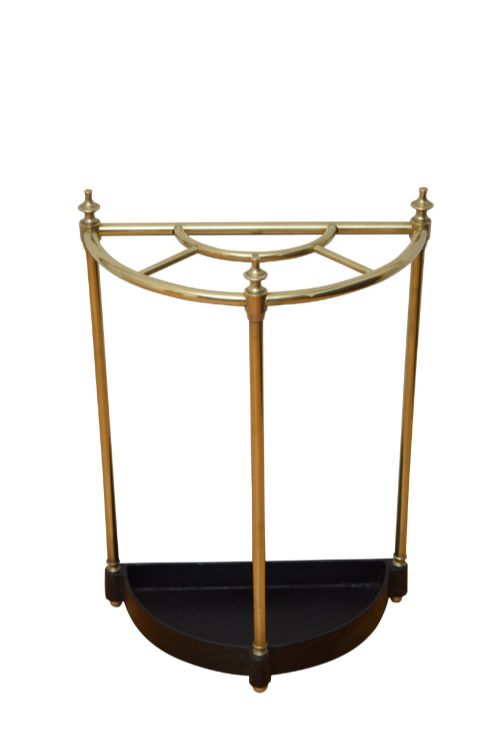
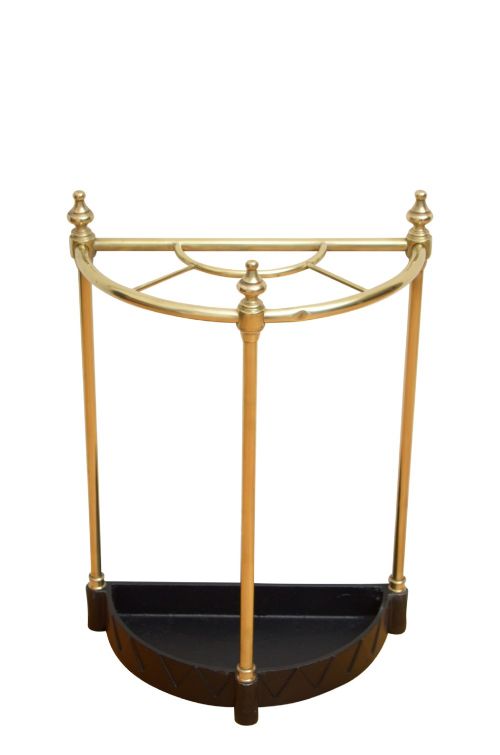
When you search for an english brass umbrella holder, you are looking at hallway storage designed to hold wet umbrellas and walking sticks off the floor. These pieces range from compact semi-lune forms to substantial barrel stands.
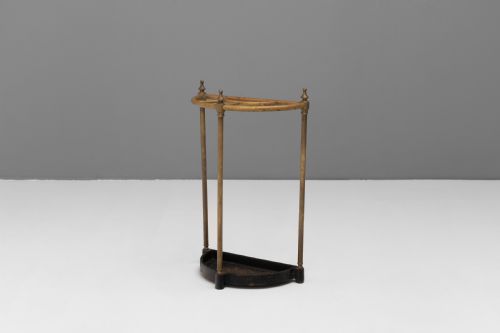
You are most likely to meet Victorian and Edwardian examples on this page, reflecting the peak era of domestic organisation. Forms vary from half-circle wall-fitting stands to freestanding oval and round buckets.
The materials span solid brass, cast iron, and copper alongside timber frames in oak and mahogany. Many pieces combine metal loops and trays with wooden staves or cast frames.
Construction and materials
Metal components rely on brass casting, sheet rolling, and copper working to create structural loops, drip trays, and decorative rims. Cast iron often forms the heavy bases needed to anchor tall umbrella stands securely.
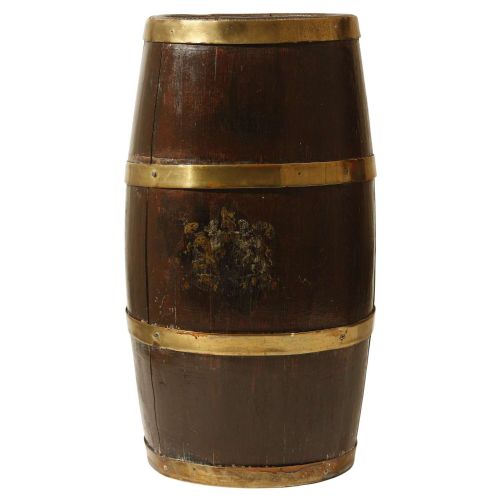
Wooden elements utilise traditional coopered barrel construction with brass braces, staves, and coats of arms. Mahogany and oak are shaped into solid frames and panelled bodies designed to withstand daily moisture.
Listings combine brass and copper with oak, mahogany, and cast iron across Victorian, Edwardian, and Art Nouveau periods.
Distinguishing quality
The distinction between standard utility items and finer pieces lies in the heft of the metalwork and the crispness of any applied decoration. Heavy gauge brass and solid cast iron bases provide structural integrity that lighter stamped metal lacks.
Timber quality shows in tight coopered joints, well-fitted metal bands, and the preservation of original drip trays. Pieces featuring distinct architectural shapes or decorative motifs like dog tooth trays sit at the upper end of the range.
The English Brass Umbrella Holder Glossary
- Demi-Lune
- Half-moon shape designed to sit flush against a hallway wall. This configuration saves valuable floor space in narrow entryways.
- Coopered
- Wood construction made from staves bound together with metal hoops, similar to barrel making. This technique keeps wooden umbrella buckets watertight.
- Stick Loop
- Metal frame or divider at the top of a stand that keeps individual walking sticks and umbrellas separated. It prevents wet handles from tangling.
- Dog Tooth Tray
- Drip pan featuring a serrated or zig-zag edge pattern along the border. These trays catch rainwater while adding decorative detail.
- Coat of Arms
- Heraldic emblem mounted onto the front of wooden barrel stands. It introduces a decorative focal point derived from institutional or family crests.
English Brass Umbrella Holder: Frequently Asked Questions
How are these umbrella stands used?
They stand in hallways and entrance passages to hold wet umbrellas, parasols, and walking sticks. The upper loops keep each stick upright while the lower base catches dripping rainwater.
Most feature integrated or removable trays at the bottom to protect hallway floors from moisture. They combine practical household management with formal entryway presentation.
What materials make up these stands?
The primary materials are brass, copper, and cast iron, frequently combined with oak or mahogany bodies. Metal provides the structural loops and protective drip trays.
Timber versions utilise coopered barrel construction held together by metal bands. Some pieces incorporate painted elements or cast iron framework for added weight.
How do I date an umbrella stand?
Dating relies on stylistic clues such as Victorian proportions, Edwardian lightness, or Art Nouveau linear details. The transition from heavy cast iron to lighter brass work helps indicate the manufacturing era.
Construction methods like hand-coopered wooden staves and cast brass components also point to nineteenth or early twentieth-century origins.
Where should I place one at home?
They suit entrance halls, boot rooms, and porches where wet weather gear is routinely stored. Semi-lune shapes work particularly well against narrow hallway walls.
Ensure the stand has an intact drip tray to protect wooden floorboards or carpets from lingering moisture.