
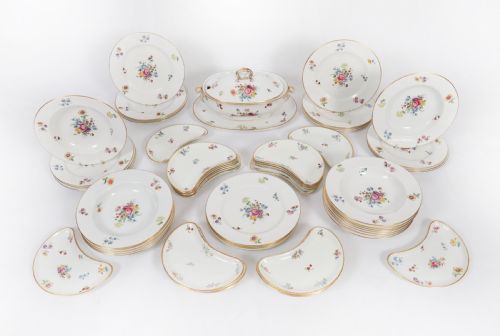


English Bone China Service
An English bone china service brings centuries of refined dining tradition directly to the table with delicate translucent porcelain and hand-painted detail.
English Bone China Service
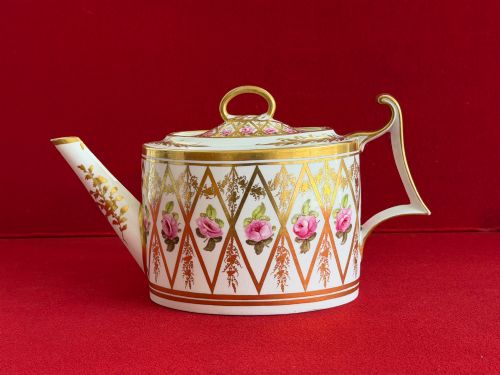
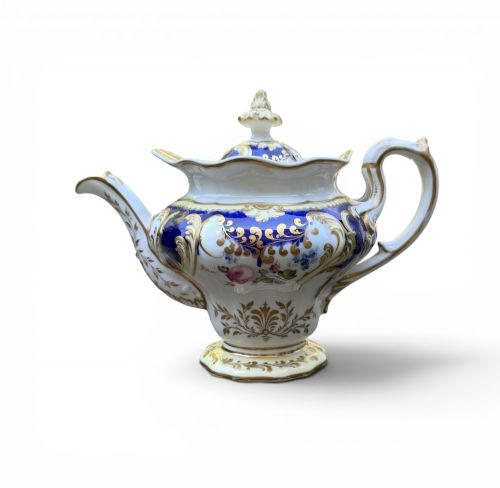
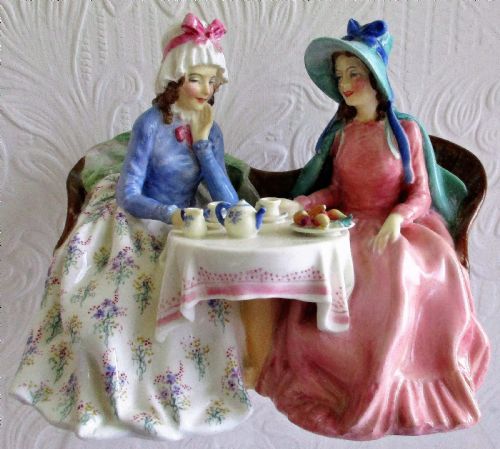
An English bone china service encompasses complete sets for tea, coffee, dessert, and dinner, alongside individual teapots, sugars, and plates. When exploring an english bone china service, buyers encounter everything from Georgian Regency tea wares to vibrant twentieth-century earthenware and porcelain sets.
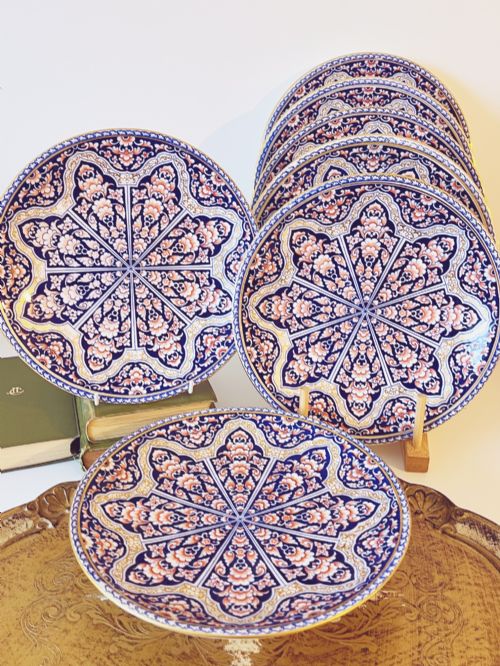
The assortment on this page ranges from large multi-piece dinner and dessert services down to intimate tea sets and miniature solitaire settings. Many examples reflect distinct historical periods including Victorian revival styles and Art Deco patterns.
How they were made
These services utilise fine bone china and porcelain body compositions shaped through historic moulding and throwing techniques. Skilled artisans then applied hand-painted enamels, intricate glazes, and rich gold leaf or gilt accents.
Firing processes achieved the characteristic translucency and strength associated with major English potteries. Artisans utilised precise brushwork for floral motifs, fruit painting, and transfer-printed patterns before final glazing.
Listings feature periods spanning from Georgian and Regency eras through Victorian, Edwardian, and Art Deco decades.
What varies in quality
Quality separates through the finesse of the hand-painting, particularly on pictorial dessert plates and botanical tea services. Superior examples exhibit crisp, master-painted details by recognised hands rather than standard factory transfers.
The weight, translucency, and brilliance of the bone china paste itself dictate the standing of a service. Richer application of gold leaf and more complex moulding shapes also elevate the standard of the piece.
Royal Crown Derby·Coalport·Minton·Spode·Royal Worcester·Shelley·Aynsley
The English Bone China Service Glossary
- Bone china
- A type of soft-paste porcelain incorporating bone ash for enhanced strength and translucency.
- Sucrier
- A small covered sugar bowl designed to match a tea or coffee service.
- Imari
- A decorative style featuring dense iron red, cobalt blue, and gold ornamentation.
- Comport
- A raised pedestal dish used traditionally for serving fruit or dessert.
- Gilt
- A thin layer of gold applied to surface decoration or rims.
English Bone China Service: Frequently Asked Questions
How do I date an English tea service?
Dating relies on maker stamps, registration marks, and stylistic clues like shape and palette.
Georgian and Regency sets often feature hand-painted patterns without modern printed factory ciphers.
Can I use antique bone china daily?
Many collectors prefer gentle hand washing to preserve delicate gold leaf and enamel overglaze painting.
Modern dishwashers and microwaves can damage historic gilding and fragile bone china.
What is the difference between tea and dessert services?
Tea services focus on pots, cups, saucers, and sugar bowls for beverage hosting.
Dessert services centre around comports and decorated plates intended for the final course.
How are mismatched sets valued?
Matching services bearing a single maker and uniform pattern command higher interest.
Part services or assembled sets still offer great utility for traditional table settings.