




English Bedsides
English antique bedsides bring compact utility and period character to a room, ranging from Georgian cupboards to Art Deco walnut cabinets.
English Bedsides
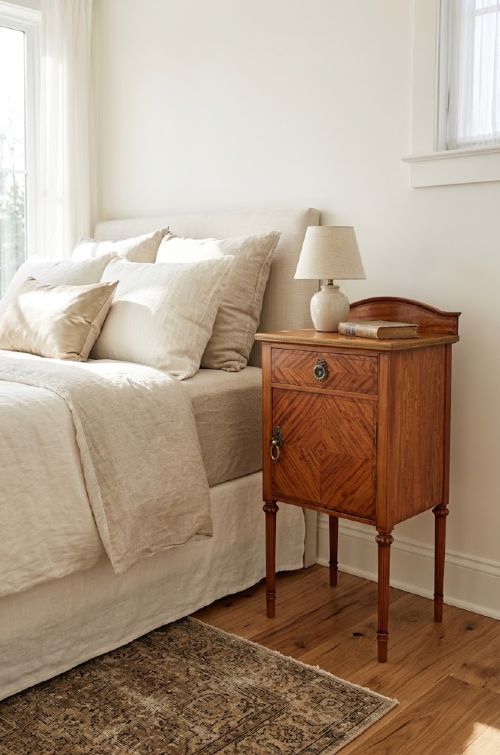
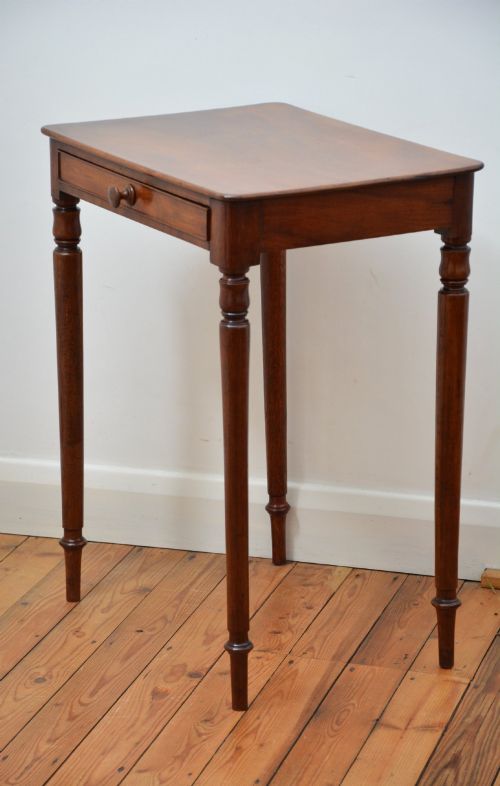
English antique bedsides encompass a variety of small-scale storage and support furniture designed for the bedroom or intimate spaces. When you search for English antique bedsides, you meet pieces intended to hold chamber items, lamps, or books beside a bed. The selection spans centuries of domestic life, showing how the secondary table evolved from simple oak cupboards to refined Victorian mahogany chests and stylish Art Deco walnut nightstands.
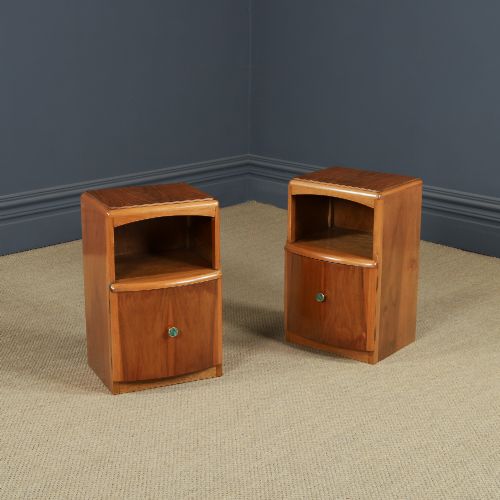
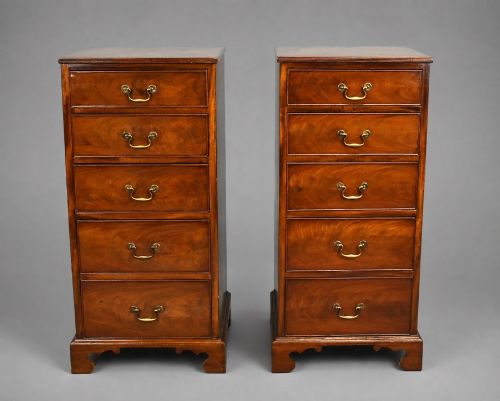
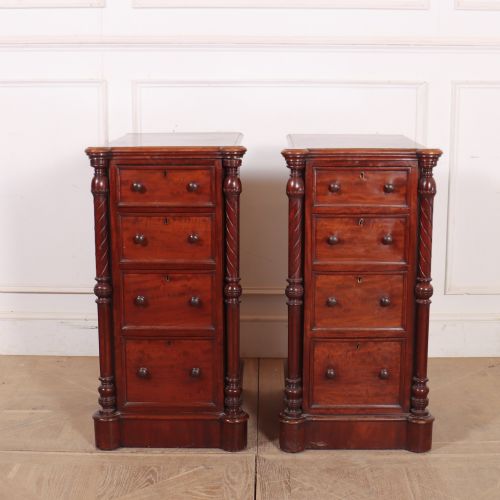
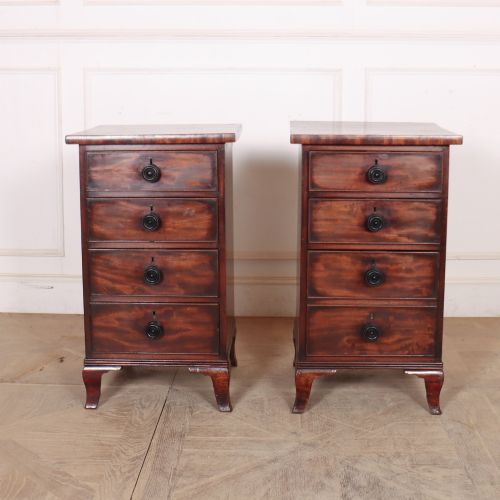
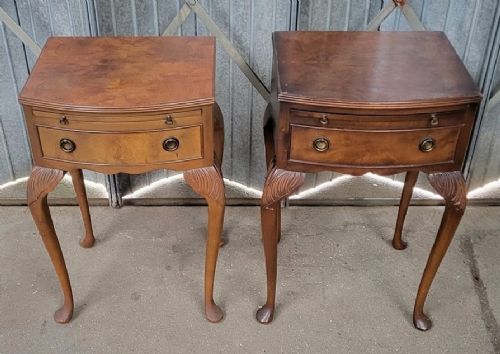
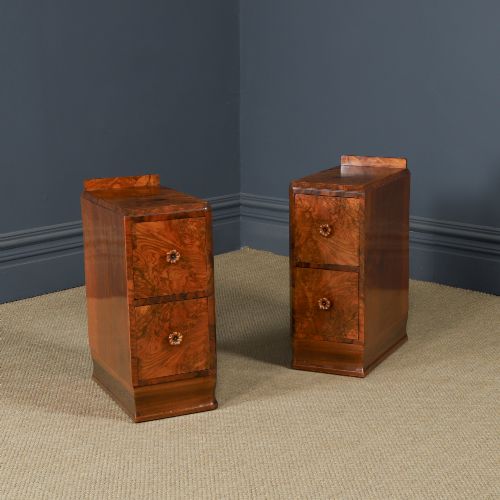
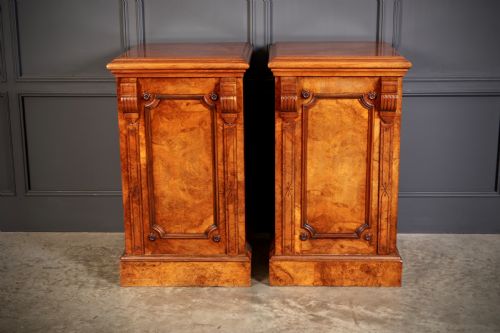
The most common forms on this page include bedside cupboards, small chests of drawers, and open nightstands. Many survive as pairs, matching the symmetry favoured in traditional bedroom layouts. Makers produced these pieces in forms ranging from enclosed pot cupboards to multi-drawer chests and tables with open display areas.
Materials and Construction
Cabinet makers relied heavily on timber selection, using figured mahogany, walnut, oak, and satinwood to give visual depth to small surfaces. Walnut and mahogany dominate the Victorian and Edwardian periods, often finished with flame veneers or polished grains that highlight the natural patterns of the wood. Oak appears in earlier 18th-century forms, valued for its robust structure and simple utility.
Construction techniques evolved from straightforward pegged joinery in Georgian oak pieces to sophisticated veneering and drawer framing in Victorian and Art Deco examples. Brass handles, hinges, and occasional glass elements complement the wooden frames. Painted wood and Chinoiserie decoration also appear, showing that makers applied surface ornament alongside natural timber finishes.
The listings show pieces spanning from the 18th century through the Georgian, Victorian, Edwardian, and Art Deco periods.
Judging Quality
Quality in these pieces rests upon the crispness of the timber selection and the integrity of the joinery. Superior examples display carefully matched wood grains, such as figured walnut or flame mahogany, carried across the drawer fronts and top surfaces without interruption.
Proportion and the retention of original hardware distinguish the better examples from standard utility items. Clean drawer construction, tight joints, and matching historical handles indicate a higher standard of original workshop production.
The English Bedsides Glossary
- Pot cupboard
- A small enclosed bedside cabinet originally designed to house a chamber pot. These pieces usually feature a single door above a small interior compartment.
- Nightstand
- A low table or cabinet placed beside a bed for holding small personal items or a lamp. The form developed significantly through the Victorian and Edwardian eras.
- Veneer
- A thin layer of figured wood applied over a secondary timber base. Cabinet makers used walnut and mahogany veneers to create decorative patterns on visible surfaces.
- Chinoiserie
- European decorative style imitating Chinese artistic traditions. Pieces featuring this finish display painted motifs on lacquered backgrounds.
English Bedsides: Frequently Asked Questions
Did historical bedrooms always have matching pairs of bedsides?
Matching pairs of bedsides were less common in the 18th century when bedroom furniture was assembled piecemeal.
By the Victorian and Edwardian periods, matched pairs became standard for symmetrical bedroom design, which explains why many surviving examples are found together.
How do I identify a Georgian bedside from a Victorian copy?
Georgian bedsides typically utilise solid oak or mahogany with simpler, heavier framing and minimal secondary wood.
Victorian and later pieces often employ more complex internal drawer construction, machine-cut elements, and thinner decorative veneers.
Can I use an antique bedside as a general side table?
These compact pieces adapt easily to various rooms as lamp tables, hall stands, or occasional furniture.
Their restrained proportions allow them to fit into narrow spaces while providing surface area and enclosed storage.