







English 19th Century Glassware
English 19th century glassware comprises functional and decorative vessels crafted from lead crystal, clear glass, and coloured glass during the Georgian, Regency, and Victorian periods.
English 19th Century Glassware
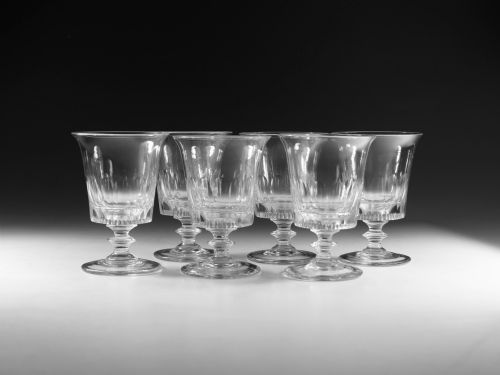
When you examine English 19th century glassware, you encounter items designed for dining, drinking, and display. The selection spans rummers, decanters, wine glasses, vases, and celery vases produced across the Georgian and Victorian eras.
The pieces on this page lean heavily towards table glass, including sets of wine glasses, champagne coupes, finger bowls, and rummers. These practical vessels survive alongside decorative objects like bells, apothecary jars, and vases.
Origins range from specific regional workshops to general English production spanning the decades from eighteen hundred to eighteen ninety. Clear lead glass and intensely coloured variants define the primary visual forms.
Materials and Techniques
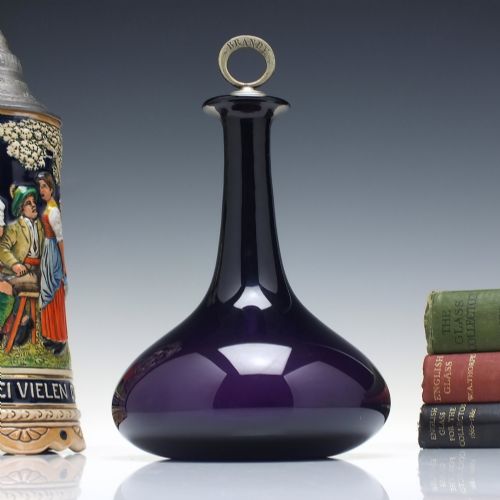
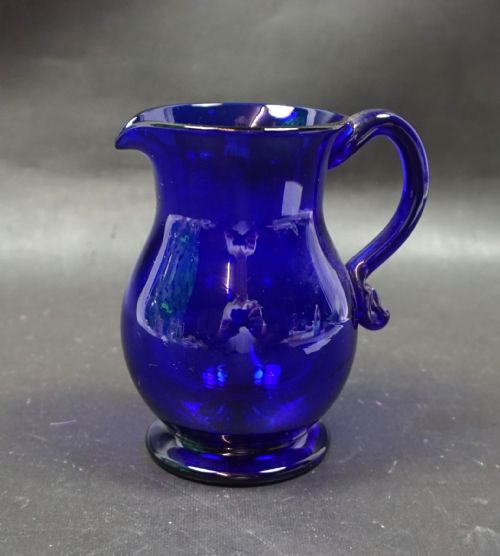
Maker operations utilised lead crystal, flint glass, and heavy lead glass to achieve substantial weight and clarity. Coloured variants incorporate agents producing amethyst, cranberry, green, turquoise, and red over crystal effects.
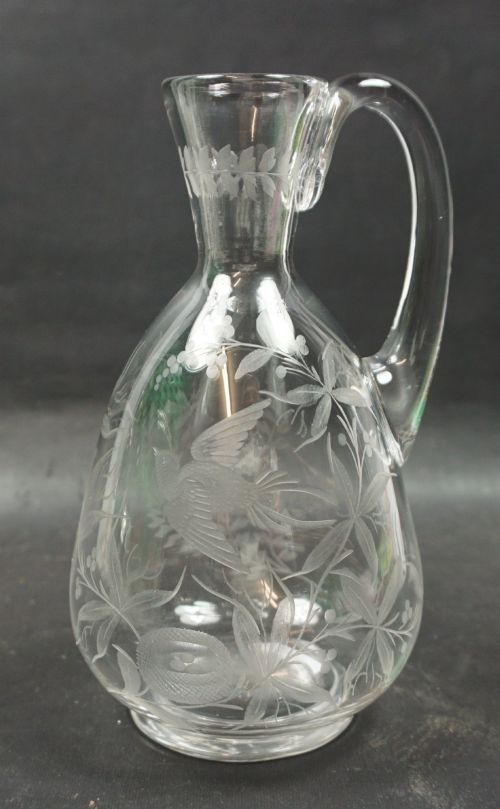
Techniques recorded on this page include free blowing, intaglio engraving, pillar cutting, acid cutting, and decalcomania. Skilled hands shaped vessels while hot and applied decorative cutting, engraving, or applied glass handles subsequently.
English 19th Century Glassware Retail Price Guide 2026
Typical asking prices for english 19th century glassware among the pieces listed under this phrase on Sellingantiques today, from the lower quarter to the upper quarter. They describe what is for sale here now, not the wider market.
A white combed glass pipe from Nailsea offers a lighter touch among serious Georgian decanters and heavy Victorian rummers.
Variations in Quality
Quality separates objects by the crispness of the cutting, the depth of the engraving, and the purity of the metal. Superior pieces display sharp facet cuts, balanced proportions, and well-executed decorative motifs such as hops and barley or fruiting vines.
The weight of the lead glass and the uniformity within matched sets dictate higher standing. Individual skill appears in the precision of intaglio work, free-blown vessel walls, and the integration of contrasting glass colours.
Stevens & Williams
The English 19th Century Glassware Glossary
- Rummer
- A large drinking glass used for wine, beer, or grog during the Georgian and Victorian periods. These heavy vessels often feature engraved decoration depicting agricultural motifs.
- Decalcomania
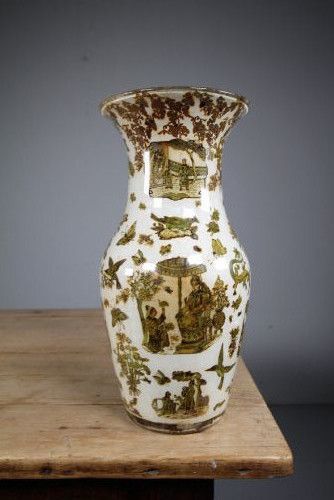
- A decorative technique involving the transfer of printed designs onto glass surfaces. This process appeared on Victorian vases.
- Intaglio
- A method of engraving where the design is sunk below the surface of the glass. It creates a subtle, tactile relief on goblets and stemware.
- Cranberry Glass
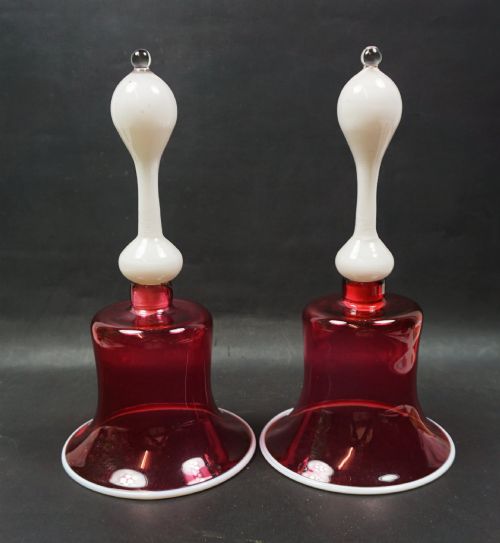
- A transparent red glass coloured with gold chloride. Victorian makers utilised this striking material for bells, jugs, and decorative vessels.
- Flint Glass
- A brilliant, heavy glass containing lead oxide that increased refractive index and weight. English makers relied on this material for fine cut tablewares.
- Celery Vase
- A tall pedestal vessel designed to hold celery stalks upright on the dining table. Regency and Victorian examples often exhibit ribbed or cut glass bodies.
English 19th Century Glassware: Frequently Asked Questions
What is English 19th century glassware?
English 19th century glassware includes tablewares, drinking vessels, and decorative objects produced in England between eighteen hundred and eighteen ninety. The category encompasses lead crystal, coloured glass, and cut vessels.
These items reflect the shifting styles of the Georgian, Regency, and Victorian periods, ranging from heavy rummers to delicate wine glasses and decanters.
How do I date these glass pieces?
Dating relies on stylistic shifts, cutting techniques, and material colours characteristic of specific decades. Georgian pieces often display heavy lead metal and simple engraving, while Victorian items introduce varied colours and complex cutting.
Evidence from marks, pontil scars, and known manufacturing periods helps narrow the decade of production for individual items.
How were these glass items used?
These vessels served functional roles in formal dining, drinking, and household administration. Rummers, wine glasses, and decanters facilitated the consumption of wine and spirits.
Other forms like celery vases, finger bowls, and ice plates fulfilled specific dining customs of the Georgian and Victorian upper classes.
How should I care for antique glass?
Antique glass requires gentle hand washing in lukewarm water with mild detergent. Avoid sudden temperature changes to prevent thermal shock and cracking.
Store pieces securely on stable surfaces, keeping stemmed glassware separated to protect delicate rims and handles from impact.