

Enamelled Silver Jewellery
Enamelled silver jewellery brings together lustrous vitreous glass and gleaming precious metal in wearable miniature art.
Enamelled Silver Jewellery
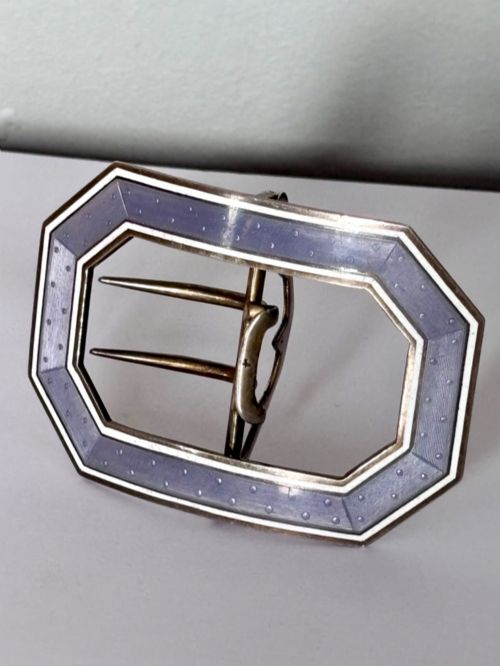
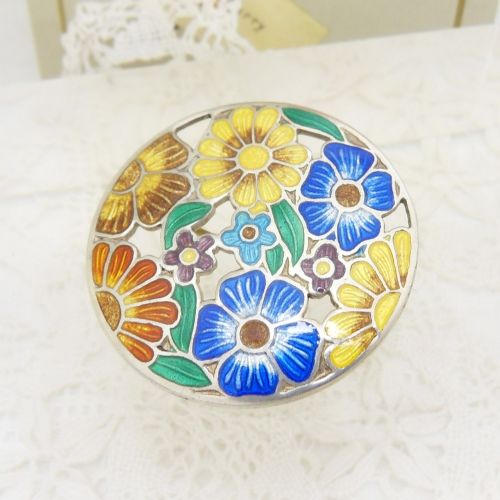
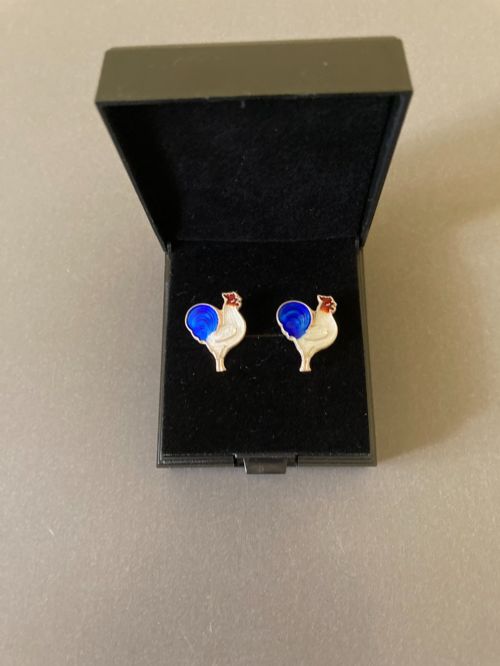
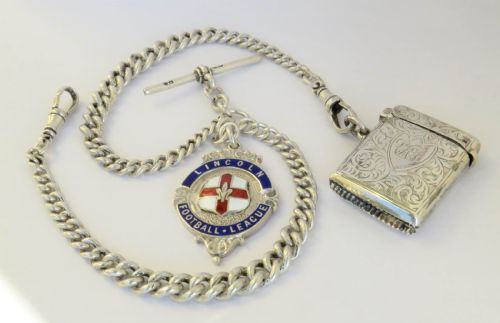
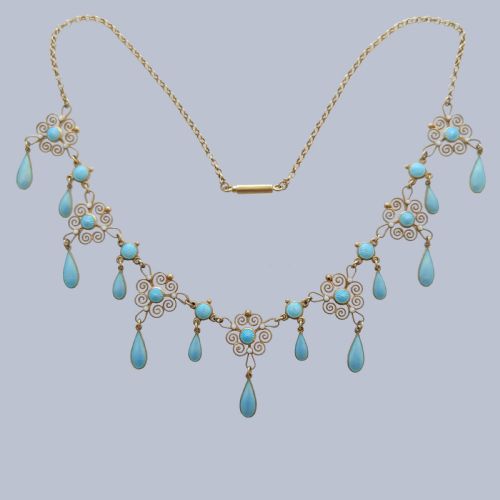
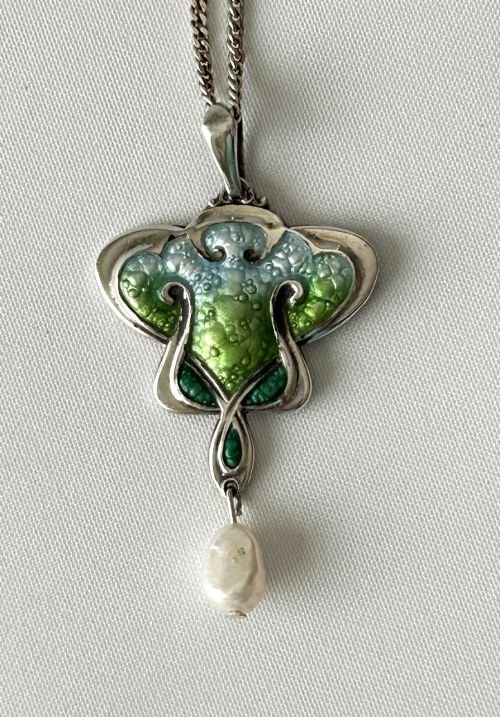
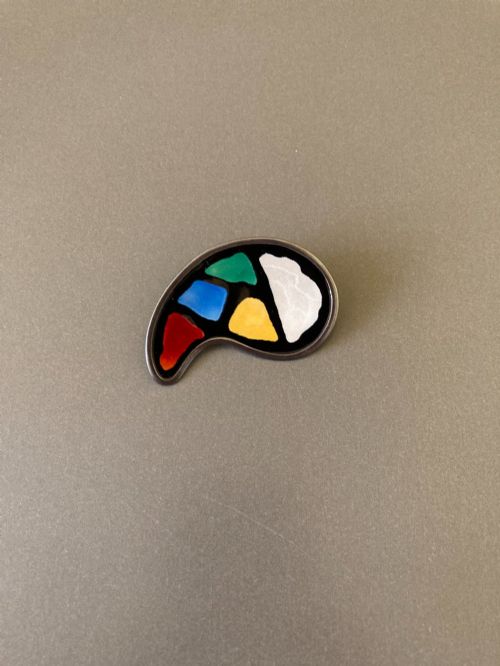
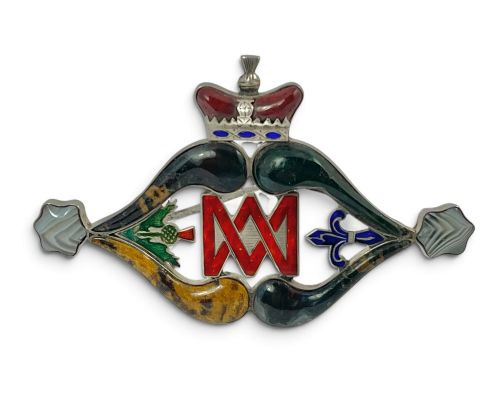
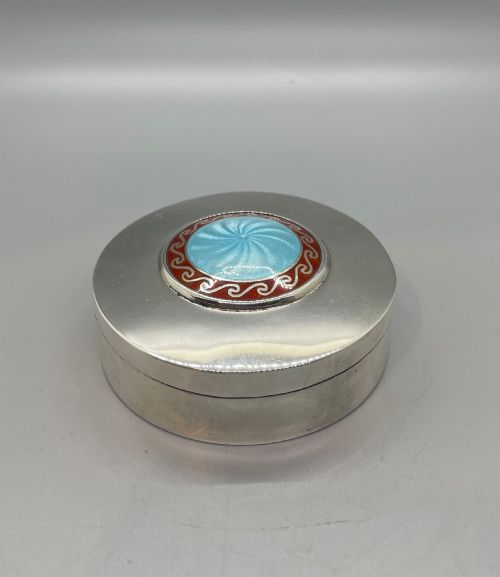
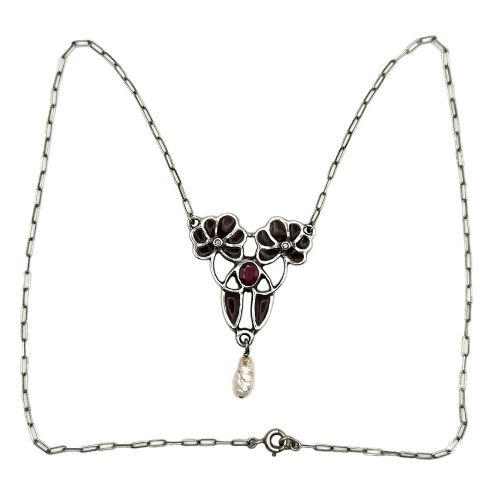
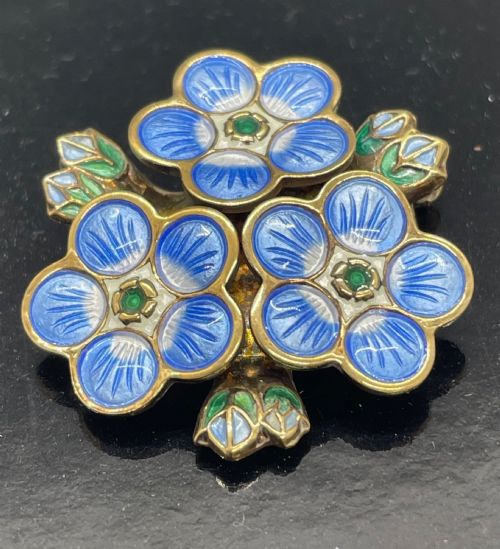
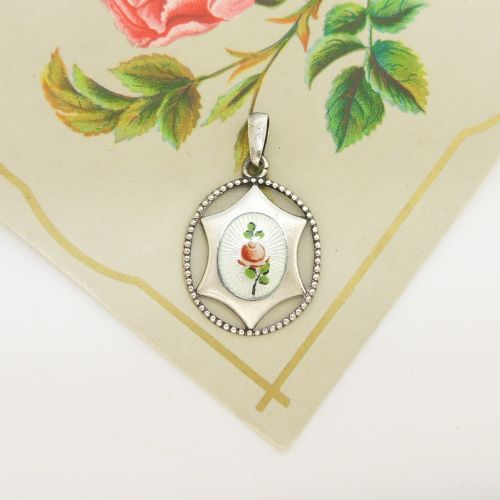
Enamelled silver jewellery encompasses brooches, pendants, bracelets, earrings, buckles and small trinket boxes produced across the Victorian, Edwardian, Art Nouveau, Arts and Crafts, Art Deco and Mid-Century eras. Buyers seeking this category encounter everything from ornate floral Edwardian pendants to clean-lined Scandinavian mid-century pieces in bold colours.
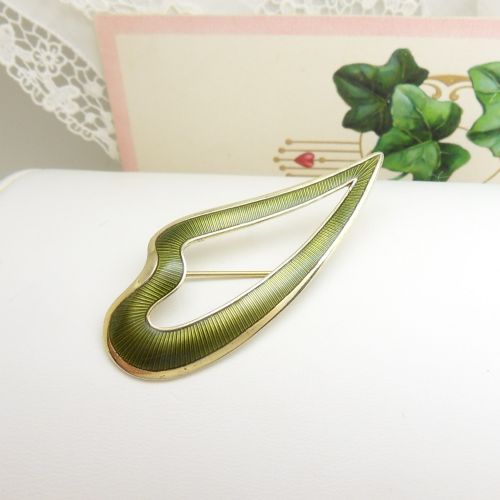
The selection ranges from British workshop creations by notable designers to Scandinavian silver gilt and guilloche enamel works featuring butterflies, flowers and abstract motifs. Early examples lean towards organic botanical designs, whilst later decades introduce geometric patterns and vibrant translucent tones over textured metal grounds.
Materials and technique
Craftsmen fused powdered glass enamel onto sterling silver, silver gilt or gold-plated bases through high-temperature kiln firing. Guilloche techniques involve engine-turning precise geometric patterns into the metal substrate so that translucent enamel layers catch the light with patterned depth.
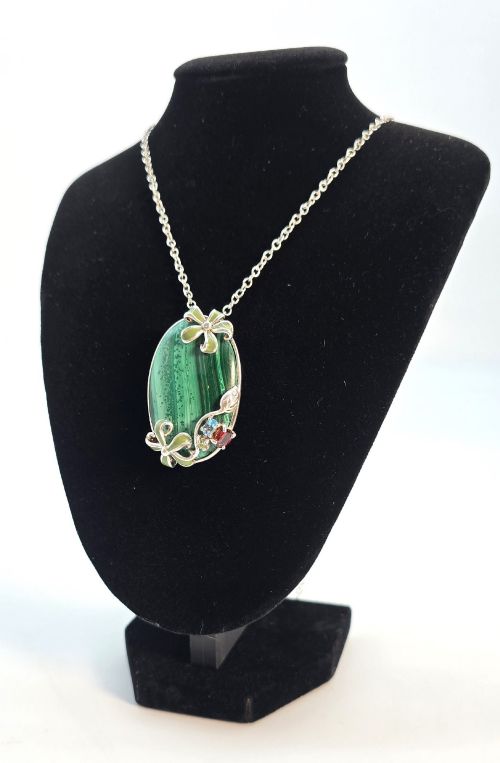
Specialised variations include plique-à-jour, where enamel spans open wire cells without a backing to create a translucent stained-glass effect, alongside niello and filigree work. Accompanying stones such as pearls, rubies, agate, chalcedony and malachite occasionally punctuate the enamelled surface.
Enamelled Silver Jewellery Retail Price Guide 2026
Typical asking prices for enamelled silver jewellery among the pieces listed under this phrase on Sellingantiques today, from the lower quarter to the upper quarter. They describe what is for sale here now, not the wider market.
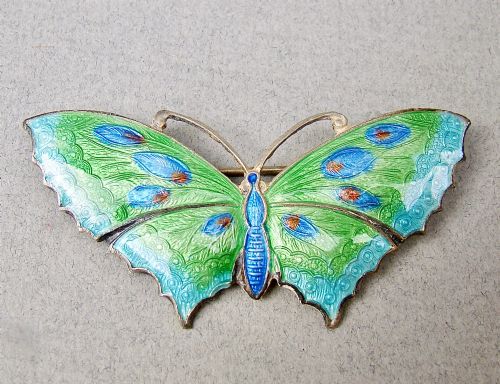
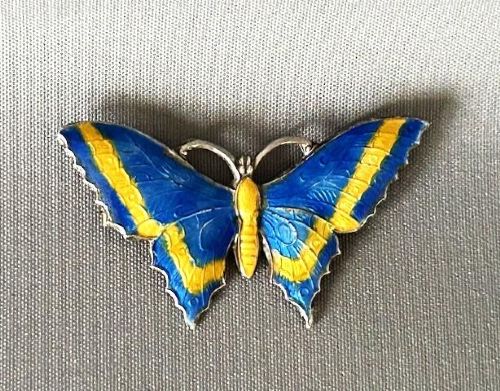
Tiny enamelled butterflies flutter across multiple decades of brooches, proving that insects make surprisingly charming companions on a lapel.
Craftsmanship and distinction
Quality rests upon the precision of the metalwork and the clarity of the vitreous glass. Superior pieces display flawless enamel application without bubbling or shrinkage away from the retaining metal walls.
Artistic authorship elevates certain examples, particularly items bearing documented attribution to renowned Scandinavian workshops or British Arts and Crafts makers. The refinement of engine-turned guilloche patterns and the structural integrity of delicate settings further separate standard production from masterwork.
Aksel Holmsen·Charles Horner·Archibald Knox·Liberty and Co·Murrle Bennett·David Andersen·Marius Hammer·James Fenton·Hroar Prydz·Harold Arthur Lazarus
The Enamelled Silver Jewellery Glossary
- Guilloche
- A decorative engraving technique where a mechanical lathe cuts a precise, intricate repetitive pattern into metal. This patterned ground shines through translucent enamel to create shimmering optical depth.
- Plique-à-jour
- An enamelling technique resembling miniature stained glass where the enamel is fired into open wire cells without a solid backing. Light passes directly through the translucent colours.
- Silver Gilt
- Sterling silver that has been coated with a thin layer of gold, often providing a warm contrast to colourful enamel work. It appears frequently in mid-century Scandinavian designs.
- Vitrous Enamel
- A material made by fusing powdered glass to a metallic substrate through firing at high temperatures. The resulting vitreous surface offers permanent colour and high resistance to wear.
Enamelled Silver Jewellery: Frequently Asked Questions
How do I clean enamelled silver jewellery safely?
Clean these pieces gently using a soft microfibre cloth and lukewarm water with mild soap. Avoid harsh chemical dips, ultrasonic cleaners and abrasive cloths that can scratch soft vitreous glass or strip gold gilt surfaces.
Dry the metal thoroughly after washing to protect vulnerable hinges, pins and gemstone settings from moisture retention. Store each item individually in a lined box to prevent scratching against other metals.
What is guilloche enamel?
Guilloche enamel involves mechanical engraving of a geometric pattern into a silver base before applying translucent coloured glass. The underlying engraved texture creates a shimmering, wave-like reflection beneath the glossy surface.
This technique gained immense popularity during the Edwardian era and mid-century Scandinavian production, particularly for brightly coloured butterfly wings and floral brooches.
How can I date an enamelled silver piece?
Dating relies upon stylistic markers such as sinuous Art Nouveau flora, geometric Art Deco lines or minimalist mid-century Scandinavian forms. Hallmarks stamped into the silver provide assay office locations and specific production years.
Maker marks also help narrow down the active workshop dates, whilst fastening types like safety catches and C-clasps offer additional chronological clues.
Is plique-à-jour enamel fragile?
Plique-à-jour lacks a solid metal backing, leaving the transparent enamel suspended within wire cells like stained glass. This open construction requires careful handling to avoid impact pressure against the unsupported glass areas.
When worn with care, these delicate pendant and brooch structures remain remarkably resilient, though they demand safe storage away from heavy items.