
Enamelled Gold Jewellery
Enamelled gold jewellery combines lustrous vitreous coatings with precious metal to create enduring wearable art.
Enamelled Gold Jewellery
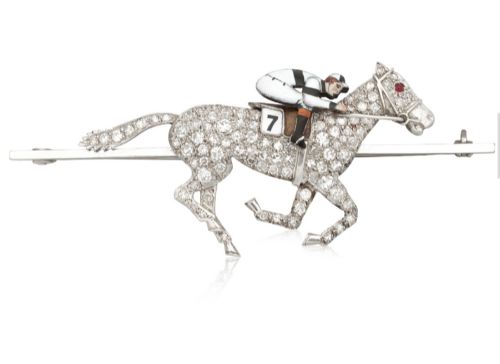
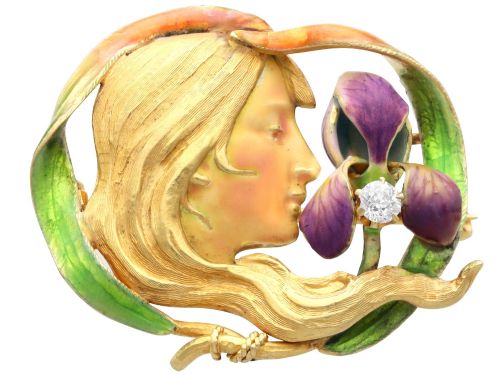
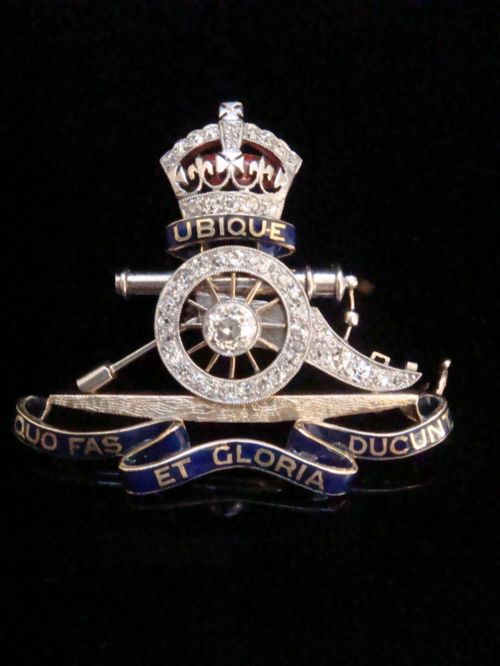
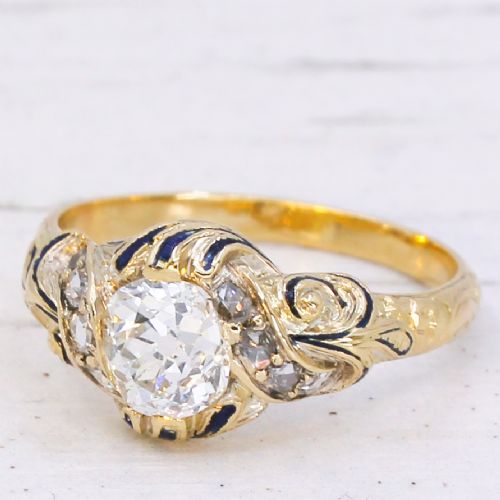
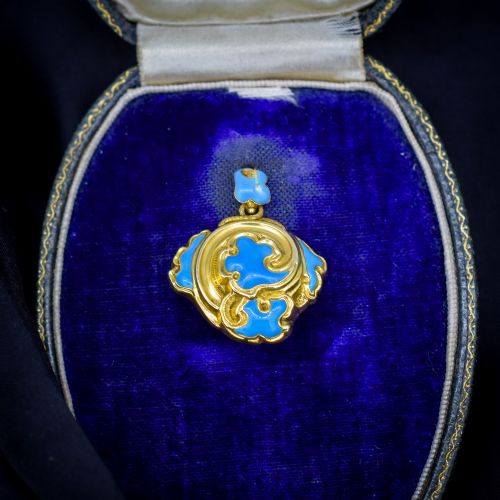
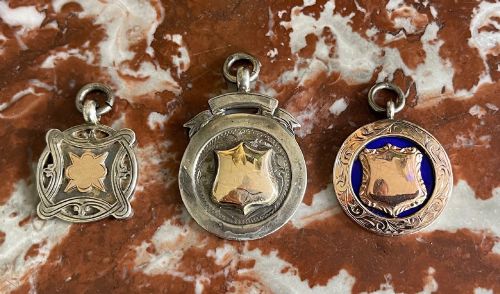
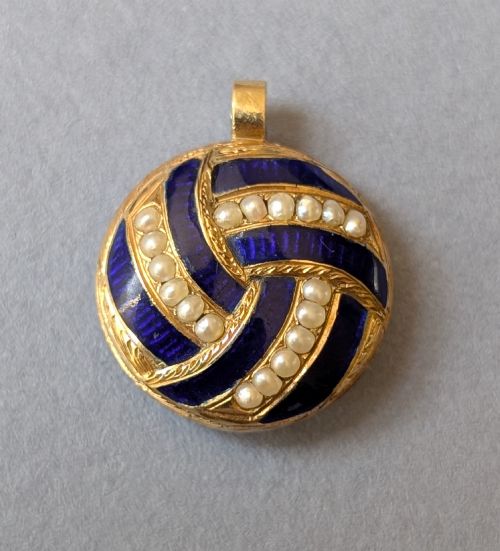
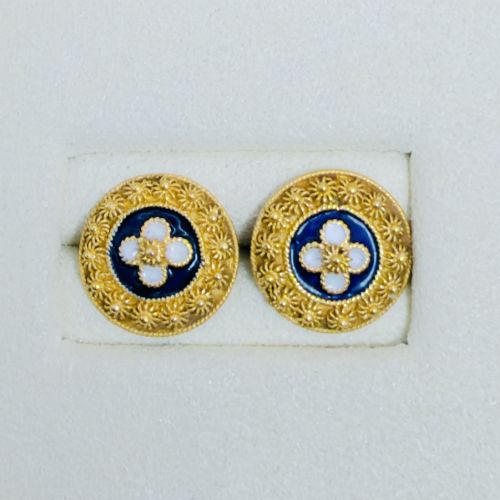
Enamelled gold jewellery encompasses pendants, brooches, rings, earrings, necklaces, lockets, and portrait miniatures spanning multiple centuries. A buyer searching for enamelled gold jewellery encounters pieces originating from the Georgian, Victorian, Edwardian, Art Nouveau, Art Deco, and later vintage eras.
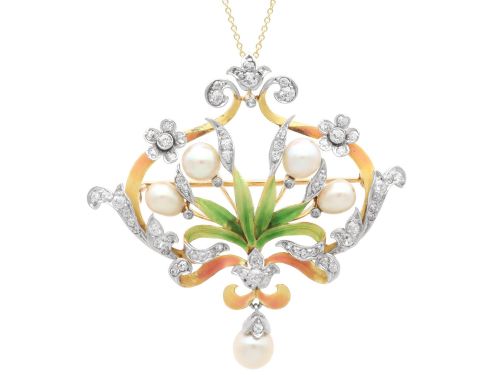
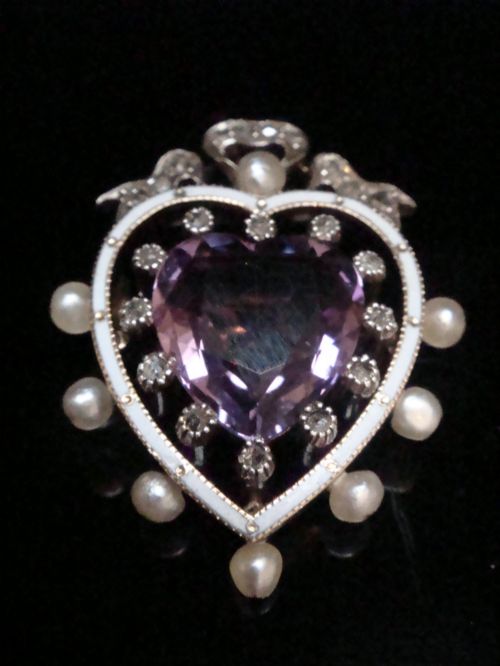
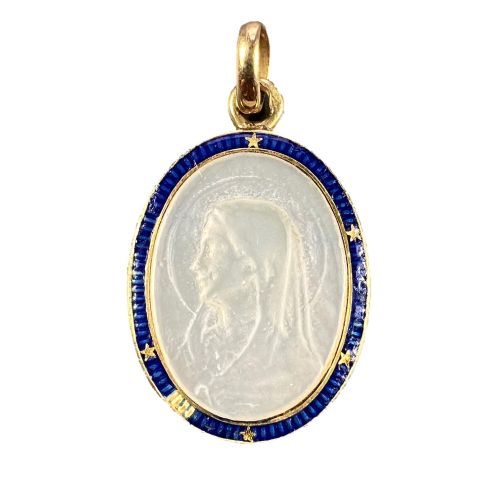
The selection ranges from sentimental mourning lockets and serpent necklaces to French religious medals and guilloche pendants. Victorian and Edwardian examples featuring pearls, diamonds, and coloured enamel appear frequently alongside Georgian sepia portraits and 1920s novelty charms.
Materials and construction methods
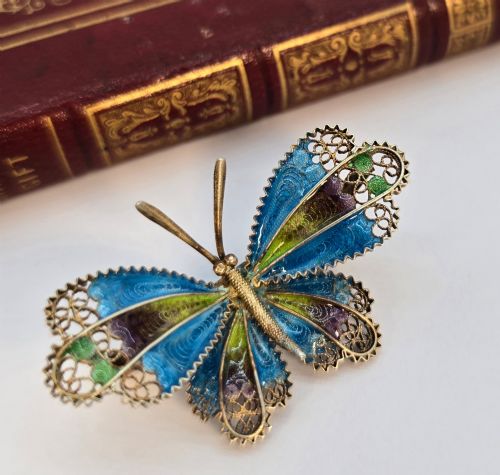
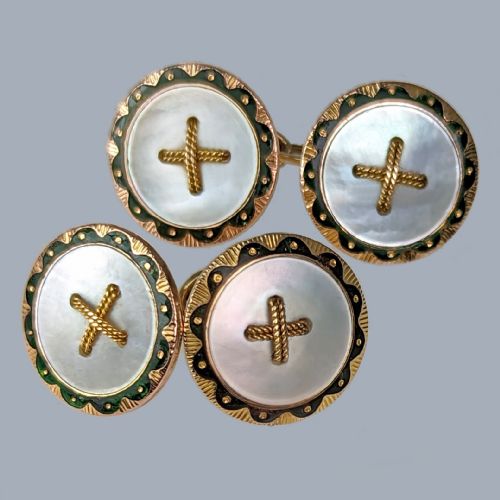
Goldsmiths fused powdered glass enamel onto yellow and white gold bases, often utilising 9ct, 14ct, 15ct, 18ct, and higher purities. Artisans applied intricate techniques such as guilloche machine-turning, translucent plique-a-jour, and opaque black mourning enamel to achieve depth and colour.
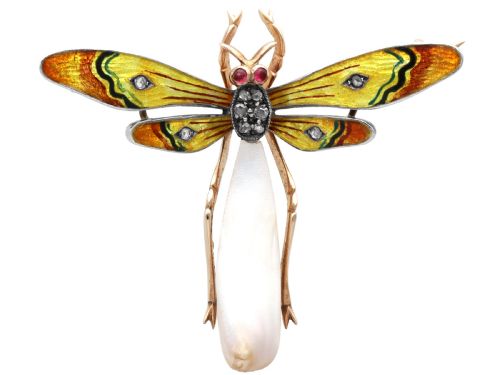
Gemstones including diamonds, pearls, garnets, peridots, and turquoise were frequently integrated alongside silver gilt settings. Portrait miniatures were hand-painted on enamel or porcelain panels and securely mounted into gold frames.
The selection spans Georgian, Victorian, Edwardian, Art Nouveau, and Art Deco eras.
Distinctions in craftsmanship
Quality rests upon the precision of the enamel work and the refinement of the precious metal setting. Finer pieces demonstrate smooth, even glass surfaces free from firing cracks, combined with detailed hand-engraving and secure gemstone flush-setting.
Design complexity also separates standard productions from masterworks, evident in multi-layered plique-a-jour cells that mimic stained glass or finely painted miniature portraits signed by documented enamelists.
Henry Bone ARA·Christian Friedrich Zincke·Solomon Blanckensee Son·Aksel Holmsen
The Enamelled Gold Jewellery Glossary
- Guilloche
- A decorative technique where a mechanical lathe engraves a precise, intricate pattern onto metal before translucent enamel is applied over the top. This lets light reflect through the coloured glass in geometric waves.
- Plique-a-jour
- An enamelling method resembling miniature stained glass without a backing, allowing light to shine directly through the transparent coloured enamel held within a gold or silver wire framework.
- Mourning jewellery
- Sentimental pieces commissioned to commemorate a deceased person, frequently incorporating black enamel, pearls, and woven human hair behind a crystal glass compartment.
- Silver gilt
- Sterling silver that has been coated with a thin layer of genuine gold, providing the warm visual appearance of solid gold while utilising a silver base metal.
Enamelled Gold Jewellery: Frequently Asked Questions
How do I care for antique enamel jewellery?
Vitreous enamel is essentially glass fused to metal, meaning it requires gentle handling to prevent chipping or scratching against harder materials. Clean pieces using a soft, damp cloth without harsh chemical dips or ultrasonic jewellery cleaners.
Store each item individually in a lined box or pouch to protect delicate surfaces and protruding gold settings. Avoid wearing antique enamel pieces during rigorous physical activities or exposure to household cleaning products.
What is guilloche enamel?
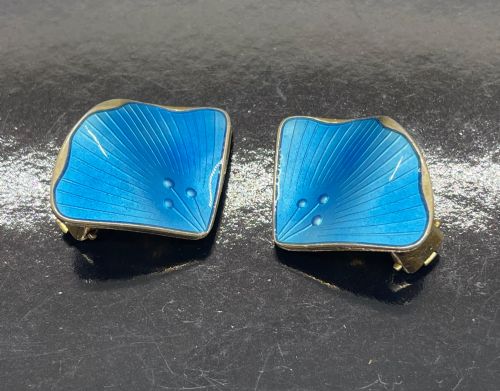
Guilloche is a decorative engraving method where a mechanical lathe cuts precise geometric patterns into a gold or silver substrate. Coloured translucent enamel is then applied over the engraved metal, creating shimmering light effects.
This technique was particularly popular during the Georgian, Victorian, and Edwardian periods for lockets, compacts, and pocket watch cases.
How can I tell the difference between periods?
Georgian pieces often feature closed-back gemstone settings, sepia miniatures, and hand-cut stones reflecting candlelight. Victorian items frequently display sentimental motifs like snakes, lovers' knots, and dark mourning enamels.
Edwardian jewellery introduces lighter platinum and high-karat gold filigree with delicate plique-a-jour, while Art Deco designs showcase sharp geometric lines and vibrant primary colours.
Are portrait miniatures hand painted?
Portrait miniatures from the eighteenth and nineteenth centuries were meticulously hand-painted by specialist artists using enamel paints on a prepared copper or porcelain base. These small works of art were then fired in a kiln to permanently vitrify the pigments.
Many bear the subtle signature or attribution of notable miniaturists who recorded likenesses before the widespread adoption of photography.