


Antique Cameo Pendant
An antique cameo pendant brings carved classical relief into personal adornment, offering miniature portraits and mythological scenes mounted in fine gold for everyday wear.
What antique cameo pendants are
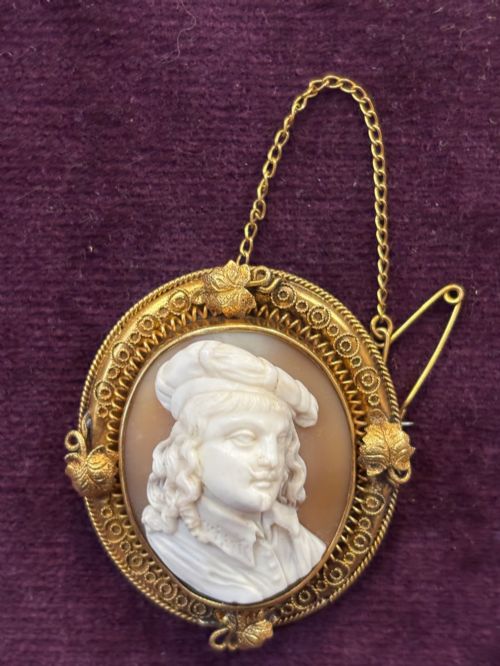
An antique cameo pendant combines carved relief with precious metal mounts, designed to hang from a chain or fasten as a brooch. When buyers search for an antique cameo pendant, they encounter dual-purpose pieces that transition between a necklace and a lapel ornament. These items range from small portrait studies to substantial figural compositions.
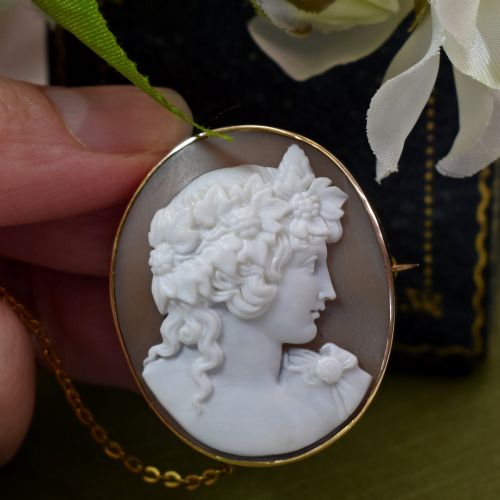
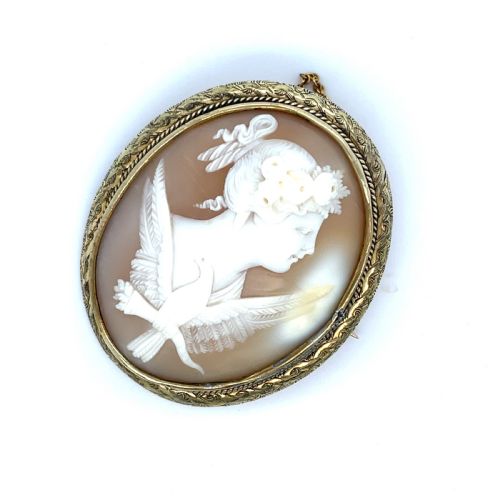
The material record on this page centres primarily on Victorian shell cameos alongside an 18th century enamelled portrait piece. Victorian examples frequently utilise shell carved with mythological subjects, such as Antinous as Dionysos, set within yellow gold frames. Forms include convertible brooch pendants and dedicated necklaces from the nineteenth century.
Earlier 18th century pieces present distinct enamel work alongside high-carat gold settings. The surviving evidence shows that nineteenth century production dominates the available stock, particularly French and British mountings in eighteen-carat or nine-carat gold.
How they were made
Gold mountings utilise high-carat alloys, including nine-carat, eighteen-carat, and twenty-two-carat gold, often shaped into rope-twist borders or elaborate bezels. Enamel techniques appear on the earliest examples, fusing powdered glass to metal surfaces under high heat to form permanent coloured backgrounds.
Roman emperors live on in Victorian shell, capturing ancient likenesses for nineteenth-century necklines.
What varies in quality
The refinement of the carving dictates the distinction between ordinary production and superior work. A master carver achieves anatomical accuracy and subtle depth within the thin shell layers, whereas lesser pieces display stiff lines and flat planes.
The weight and purity of the gold mount also establish the hierarchy of these items. Substantial eighteen-carat or twenty-two-carat frames with integrated safety chains and intricate wirework elevate the piece above simpler nine-carat settings.
The Antique Cameo Pendant Glossary
- Cameo
- A method of carving an object such as a gemstone or shell so that a raised relief image stands proud of the background. The technique relies on contrasting strata in the natural material.
- Brooch pendant
- A dual-purpose mounting featuring both a hinged pin and a hidden loop or bale. This allows the wearer to pin the item to clothing or suspend it from a chain.
- Shell cameo
- A carving executed on the outer layer of a marine shell, typically a helmet shell. It offers a softer medium than stone, permitting rapid production of detailed classical motifs.
- Enamel
- A durable substance created by fusing powdered glass to a metal substrate through firing. It adds permanent colour and decorative detail to metalwork settings.
Frequently Asked Questions
Can I wear this as both a necklace and a brooch?
Many Victorian examples feature a folding bail alongside a pin fastening on the reverse. This dual configuration allows the item to function equally well suspended from a chain or pinned directly to fabric.
Buyers should inspect the reverse of the mounting to confirm whether both attachment methods remain intact and secure.
What periods do these pendants date from?
The available examples span from the eighteenth century through to the late Victorian era. Nineteenth-century pieces form the largest portion of the record, often bearing French or British characteristics.
Earlier eighteenth-century items rely on enamel and high-carat gold rather than shell carving.
How do I care for a shell cameo?
Shell is a calcium-based material that reacts adversely to harsh chemicals, perfumes, and ultrasonic cleaning methods. Wipe the surface gently with a soft, damp cloth when cleaning is necessary.
Store the pendant away from hard items to prevent scratching the delicate raised relief.
What gold purity is typically used?
The metal mounts range from nine-carat gold up to twenty-two-carat gold, depending on the period and origin. Higher karat gold provides a rich yellow colour and greater malleability for intricate bezel settings.
Victorian makers frequently utilised eighteen-carat yellow gold for substantial frames and mountings.