




Enamelled Glass Vessel
An enamelled glass vessel brings together colour, surface detail and light, offering collectors a rich decorative object spanning multiple periods.
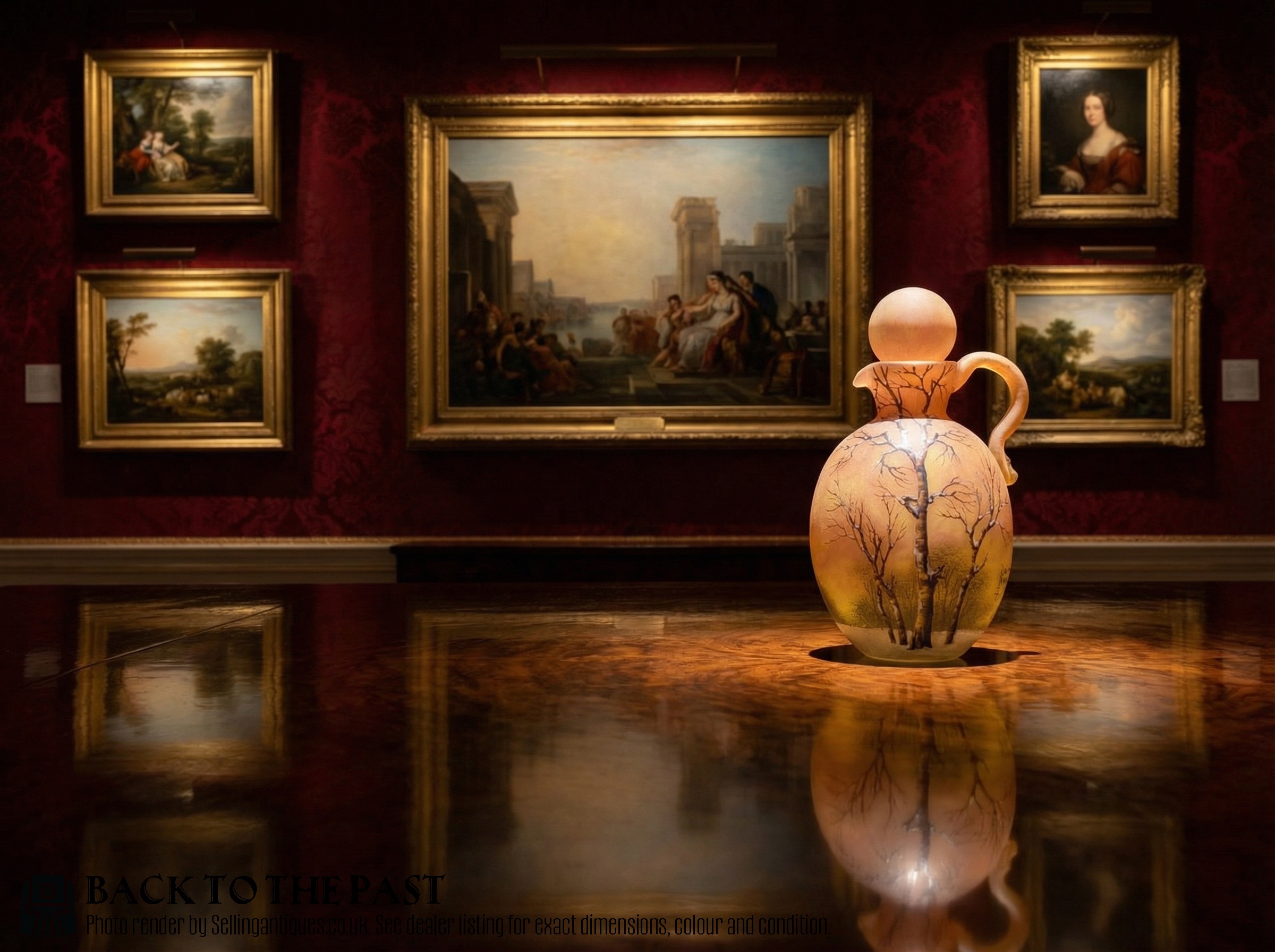
Enamelled Glass Vessel
When you search for an enamelled glass vessel, you encounter a diverse group of decorative items ranging from Victorian Mary Gregory glassware to early twentieth-century Czech Art Deco pieces. The selection includes vases, decorative bowls, scent bottles, trinket boxes and flasks produced across various European centres.
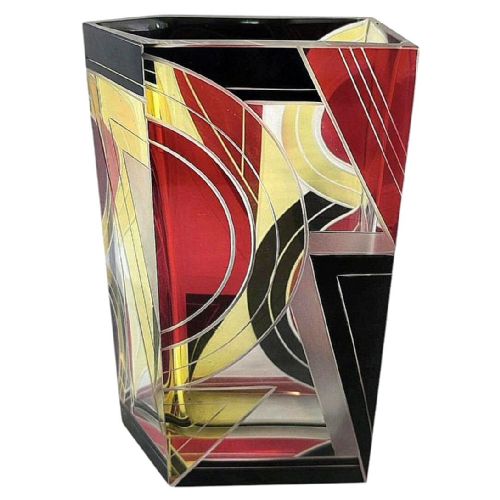
The pieces you are most likely to meet on this page date from the Victorian era up to the nineteen-thirties. These include Bohemian hand-painted items, French cameo glass works and geometric Art Deco designs featuring enamel and etching.
Materials and Technique
Makers utilised glass bodies in varied colours such as cranberry, green, milk glass, opaline and uranium glass, sometimes incorporating cameo layers or solid silver and sterling silver-gilt mounts. Hand-blowing techniques formed the foundational shape of the vessel before any surface decoration took place.
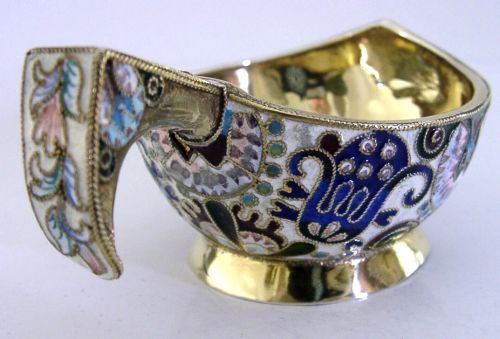
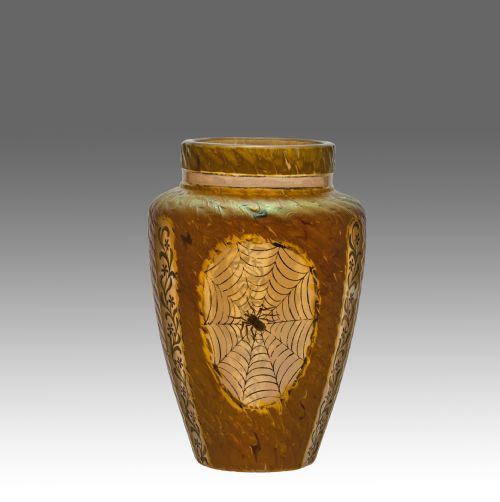
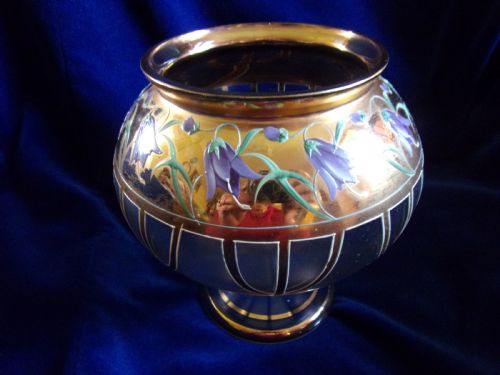
Workers applied enamel paints, gold leaf and enamel inclusions directly onto the glass surface, often firing the pieces to fuse the decoration permanently. Etched geometric patterns and painted scenes depicting landscapes, flora and fauna demonstrate the varied application methods used by European glasshouses.
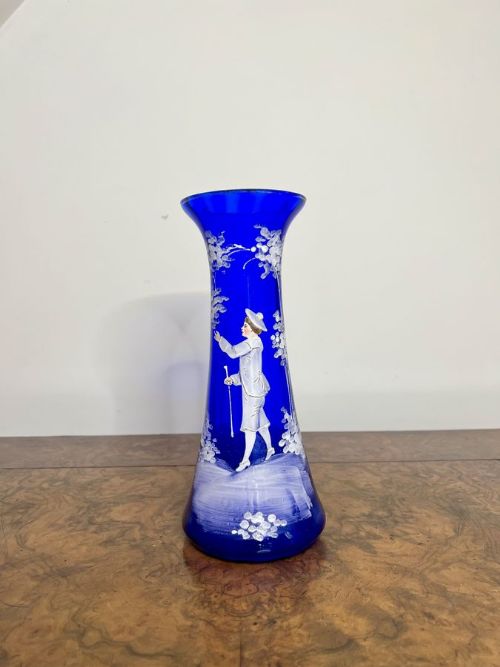
Several Victorian pieces feature enamelled children frogging about in white silhouette without a care in the world.
Assessing Quality
The standard of an enamelled glass vessel rests on the precision of the hand-painted or enamelled details and the harmony between the glass body and its ornament. Finer examples display crisp application of enamel and gilding that integrates smoothly with the blown or cameo glass form.
Artistic ambition and the reputation of the workshop also dictate standing within the range. Pieces bearing specific signatures from recognised makers or featuring complex landscapes and multi-coloured enamel work demonstrate superior execution compared to standard production wares.
Daum Frerès·Kralik Glass·Karl Palda·François-Eugène Rousseau·Baccarat
The Enamelled Glass Vessel Glossary
- Cameo Glass
- Glass formed with multiple layers of different coloured glass carved to produce a raised design. This technique allows for detailed pictorial motifs on vases and vessels.
- Cranberry Glass
- Transparent red or pink glass coloured by the addition of gold chloride during manufacture. It is frequently associated with Victorian decorative glassware and Mary Gregory styles.
- Silver-gilt
- Silver that has been coated with a thin layer of gold. This material appears on mounts, lids and cups accompanying glass bodies.
- Opaline Glass
- An opaque or semi-translucent glass that displays a delicate pale hue. It served as a smooth background for hand-painted enamel decoration in the eighteenth and nineteenth centuries.
- Uranium Glass
- Glass containing trace amounts of uranium to impart a distinctive yellow or green fluorescence under ultraviolet light. It was utilised by Czech designers during the Art Deco period.
Enamelled Glass Vessel: Frequently Asked Questions
What is Mary Gregory glass?
Mary Gregory glass refers to Victorian glassware decorated with white or tinted enamel silhouettes, usually depicting children in natural settings.
These pieces typically utilise cranberry or green glass backgrounds and date from the late nineteenth century.
How do I identify Art Deco vessels?
Art Deco vessels feature geometric patterns, stark linear etching and opaque or uranium glass bodies.
Originating around nineteen-thirty, these items often originate from Czech workshops and favour abstraction over Victorian floral painting.
What is cameo glass?
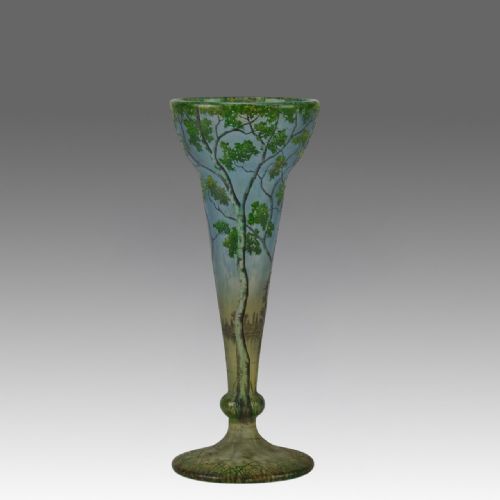
Cameo glass is created by layering different coloured glass and carving away the top layer to reveal the contrasting design underneath.
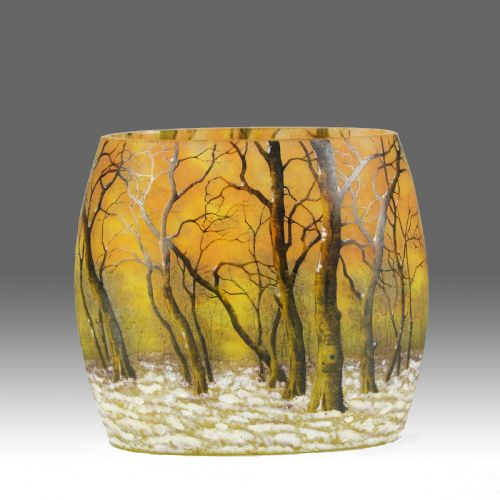
French glasshouses utilised this technique to render detailed landscape scenes on vases.
How should I clean enamelled glass?
Enamelled and gilded glass requires gentle care using a soft, dry cloth to remove dust without disturbing the surface decoration.
Avoid immersing antique items in water or utilising harsh chemical cleaners that might damage the enamel or gold leaf.
Where were these pieces made?
These items originated across various European glass-making regions, including Bohemia, France, Scotland and England.
Different centres specialised in distinct styles, from Scottish Monart bowls to Bohemian hunting scenes.