


French Art Glass Stoppered Bottle
These French art glass stoppered bottle pieces combine functional vessels with sculptural glasswork, offering tactile appeal and historical elegance for any collection.
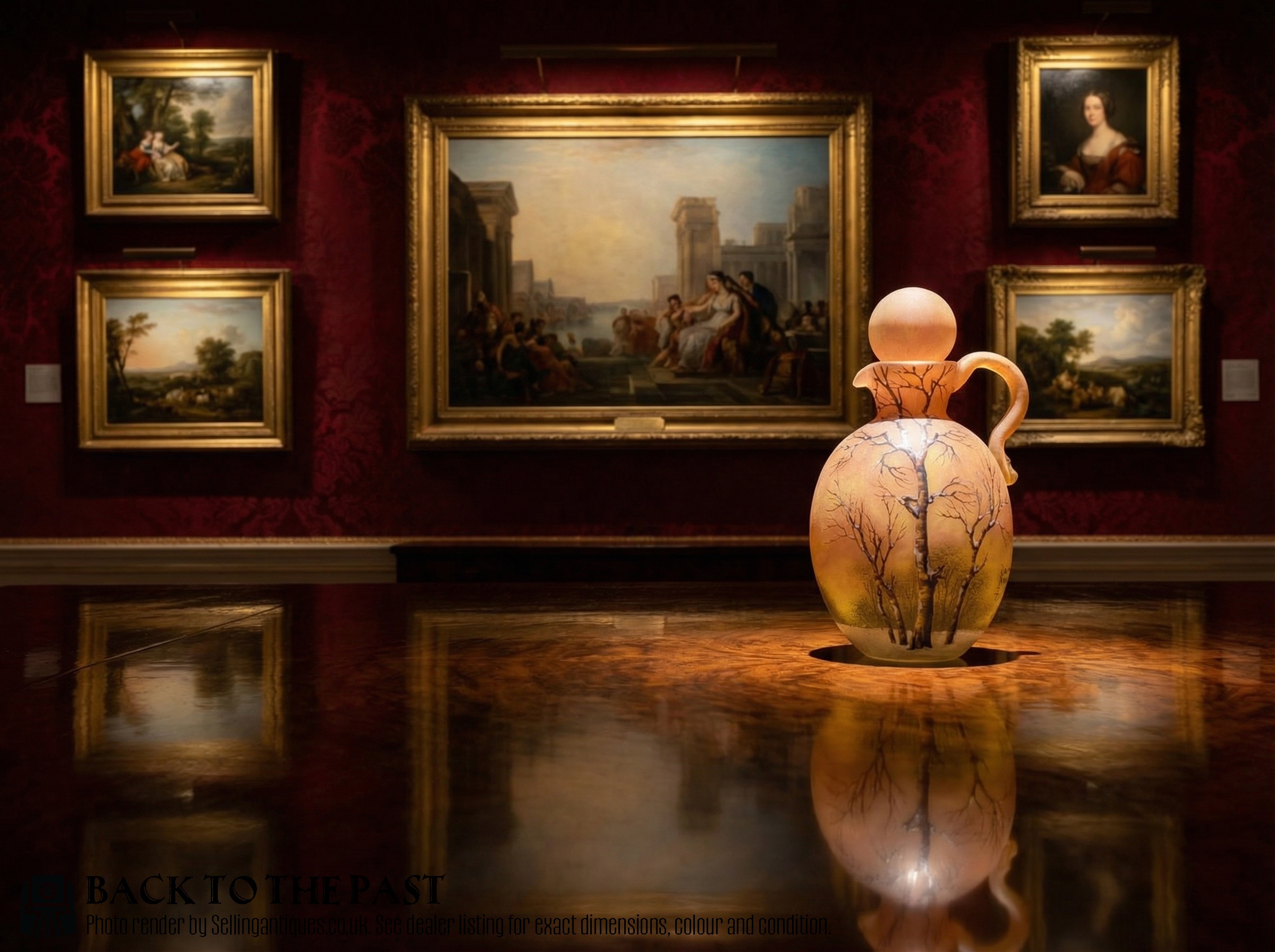
French Art Glass Stoppered Bottle
A french art glass stoppered bottle is a vessel created during the early twentieth century, spanning periods from nineteen hundred through nineteen thirty. The selection centres heavily upon perfume bottles, scent bottles, and decanters.
Buyers frequently encounter pieces representing the Art Deco and Art Nouveau styles, alongside French Chateau influences. These objects range from delicate scent containers to larger decanter and jug forms.
Origins trace directly to French workshops and glassworks operating during the height of decorative glass artistry. The presence of an original stopper remains a defining characteristic across these surviving examples.
Materials and construction methods
Makers utilised diverse glass formulations including opalescent glass, frosted glass, opalaline glass, and cameo glass. Patinated finishes and delicate enamel work frequently highlight the surface details.
Moulding and acid-etching techniques shaped the body of each bottle, allowing intricate relief patterns such as butterflies and winter landscapes to emerge across the glass.
French Art Glass Stoppered Bottle Retail Price Guide 2026
Typical asking prices for french art glass stoppered bottle among the pieces listed under this phrase on Sellingantiques today, from the lower quarter to the upper quarter. They describe what is for sale here now, not the wider market.
Listings span four distinct decades from nineteen hundred to nineteen thirty, showing diverse applications of opalescent, frosted, and cameo glass.
Assessing quality and craftsmanship
Quality rests upon the crispness of the moulded relief and the harmony between the bottle body and its matching stopper. Finer examples display deliberate control over opalescent or frosted optical effects.
The sophistication of surface treatments, such as patination and enamelling, distinguishes standard production items from masterworks of the period.
Rene Lalique·Portieux Vallerysthal·Daum·Sabino
The French Art Glass Stoppered Bottle Glossary
- Opalescent glass
- A type of glass that diffuses light to display milky, translucent blue or amber tones. This optical property creates shifting colour effects when viewed from different angles.
- Cameo glass
- A vessel formed with multiple layers of different coloured glass carved in relief. Acid etching and wheel carving reveal the contrasting design.
- Patinated glass
- Glass treated with pigments or chemical agents to accentuate recessed details. This technique darkens crevices to make moulded motifs stand out clearly.
- Decanter
- A decorative vessel designed to hold and serve liquids, fitted with a secure stopper. In this category, decanters share space with smaller scent and perfume bottles.
French Art Glass Stoppered Bottle: Frequently Asked Questions
What defines a french art glass stoppered bottle?
These pieces are decorative glass vessels produced in France during the early twentieth century, functioning primarily as perfume bottles, scent bottles, or decanters.
They combine utilitarian purposes with artistic glassmaking techniques like moulding and cameo carving.
How do I identify Art Deco versus Art Nouveau styles?
Art Nouveau examples tend to feature flowing natural motifs, organic lines, and winter landscape scenes. Art Deco pieces favour geometric clarity, stylised symmetry, and opalescent finishes.
Studying the relief patterns and overall silhouette clarifies the design movement.
Why is the original stopper important?
The stopper completes the sculptural and functional integrity of the vessel. Matching glasswork ensures the piece retains its intended aesthetic balance.
Finding a bottle with its original fitting preserves the complete artistic vision of the maker.
How should I care for vintage glass bottles?
Keep these pieces away from direct sunlight and dramatic temperature fluctuations. Clean them gently with a soft, dry cloth to protect patinated surfaces and enamel work.
Avoid submerging delicate enamel or patinated areas in water.