
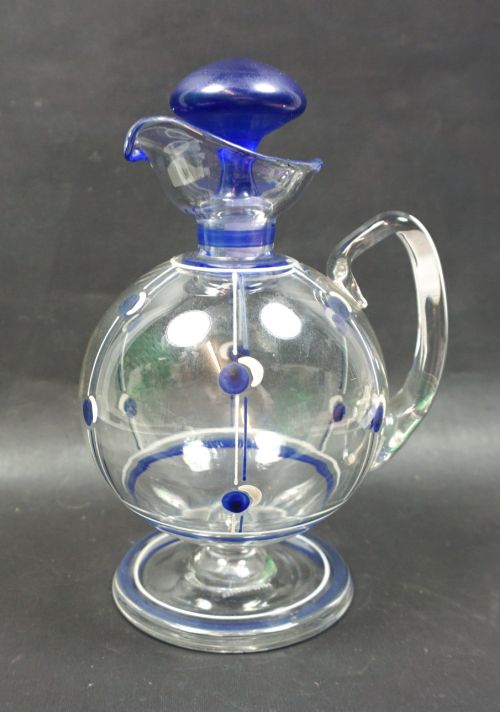
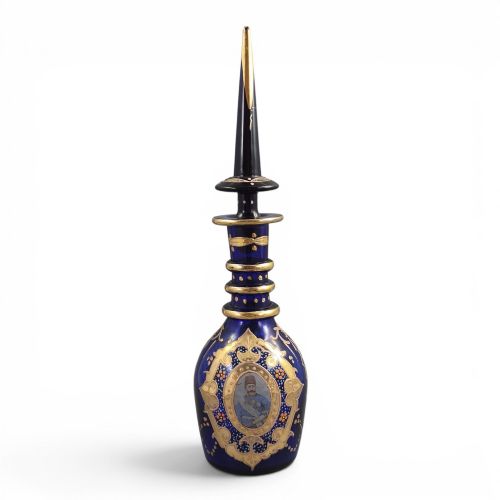
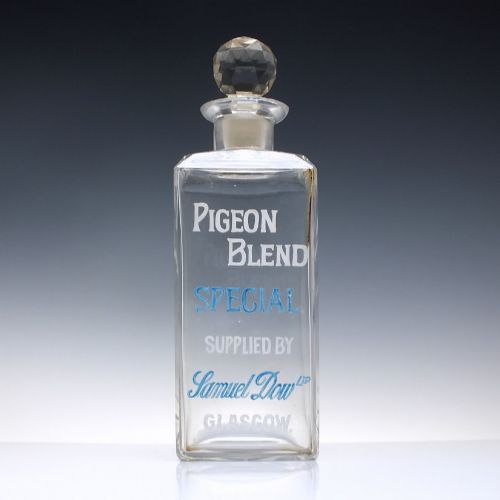


Enamelled Glass Decanter
An enamelled glass decanter brings colour and painted detail to a tabletop, offering a functional vessel for wine, whisky or spirits.
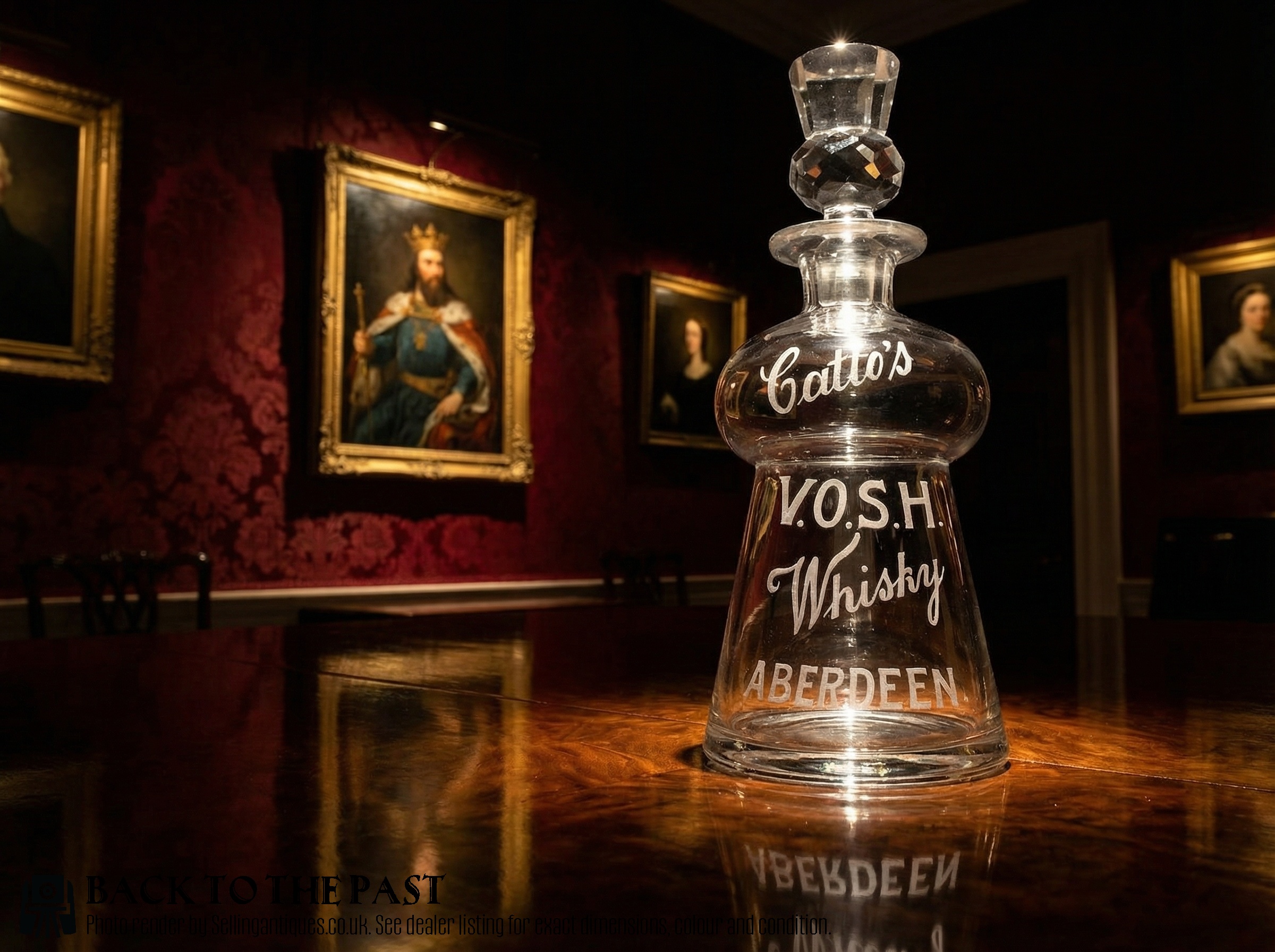
Enamelled Glass Decanter
An enamelled glass decanter combines blown or moulded glass vessels with fired opaque or translucent paint decoration. When you search for an enamelled glass decanter, you encounter forms ranging from Georgian bottles to Art Deco cocktail sets.
These vessels served diverse drinks over the centuries, functioning as wine jugs, schnapps flasks, whisky decanters, and liqueur sets complete with matching glasses. Surviving pieces often retain original stoppers or sit within metal stands and trays.
How they were made
Makers formed the vessels using clear, coloured, or opaline glass, sometimes employing lead crystal or moulded techniques before applying the painted decoration. Glass bodies appear in shades of green, blue, cranberry, turquoise, and cobalt, providing a contrasting ground for the pigments.
Decorators applied coloured enamels and gold leaf by hand, fusing the pigments to the surface through firing in a kiln. Metal mounts, sterling silver collars, pewter fittings, and chrome elements occasionally complete the construction.
Enamelled Glass Decanter Retail Price Guide 2026
Typical asking prices for enamelled glass decanter among the pieces listed under this phrase on Sellingantiques today, from the lower quarter to the upper quarter. They describe what is for sale here now, not the wider market.
Listings incorporate clear glass, lead crystal, and opaline glass decorated with enamel, gold leaf, and sterling silver mounts.
What varies in quality
The distinction between standard production and superior work rests on the precision of the hand-painted enamel and the clarity of the underlying glass. Finer pieces display crisp linework, delicate gilding, and well-balanced proportions in both the decanter body and its matching stopper.
Association with documented designers or specific glasshouses elevates the standing of a piece, particularly when paired with complete sets of original glasses and matching trays. Preservation of the enamel surface without extensive rubbing indicates careful historical use.
Karl Palda·Archibald Knox·Liberty·Salviati·Daum·Mosey
The Enamelled Glass Decanter Glossary
- Enamel
- A glass-like substance fused to the surface of glassware through high-temperature firing. It provides opaque or coloured decoration that sits slightly raised above the glass body.
- Mary Gregory
- A style of Victorian glass decoration featuring white or tinted enamel silhouettes of children amidst foliage. Figures are typically depicted playing outdoors or engaging in pastoral pursuits.
- Lead crystal
- A heavy, high-clarity glass containing metallic oxide that increases brilliance and weight. It forms the base for many twentieth-century geometric vessels.
- Opaline glass
- An opaque, slightly translucent glass produced in white or soft pastel colours. It acts as a solid ground for painted enamel scenes.
- Gilding
- The application of gold leaf or gold paint to highlight rims, handles, and decorative motifs. It appears frequently alongside coloured enamel work.
Enamelled Glass Decanter: Frequently Asked Questions
How do I date an enamelled glass decanter?
Dating relies on stylistic markers, glass colours, and manufacturing techniques present in the piece. Victorian examples often feature opaque silhouettes or botanical motifs on coloured glass, while nineteen-thirties pieces tend toward geometric patterns.
Shape and mounting details also offer chronological clues. Earlier eighteenth-century bottles display simpler blown forms, whereas later sets incorporate matching trays and precision-cut crystal.
What is Mary Gregory glass?
Mary Gregory glass refers to Victorian decorative glassware painted with white enamel silhouettes, usually depicting children in natural settings. The style gained popularity during the nineteenth century across British and European workshops.
Pieces commonly utilise green, blue, or cranberry glass as a dark background to make the white figures stand out. Collectors find these designs on ewers, water jugs, and liquor sets.
Are stoppers usually original?
Original stoppers match the glass colour, weight, and wear patterns of the decanter body. Finding a piece retaining its correct stopper adds significantly to its completeness.
Replacements occasionally occur due to the fragile nature of glass stoppers over centuries of use. Close inspection of the ground glass neck helps determine if the stopper belongs to the vessel.