




Enamelled Copper Snuff Box
An enamelled copper snuff box brings pocket-sized eighteenth-century artistry to your desk.
Enamelled Copper Snuff Box
When you search for an enamelled copper snuff box, you enter the world of Georgian smallwares created for tobacco and personal vanity. The pieces seen on this page span the eighteenth and nineteenth centuries, with a strong representation of Georgian production. These containers served varied functions, doubling as patch boxes and trinket boxes alongside traditional snuff containers.
How they were made
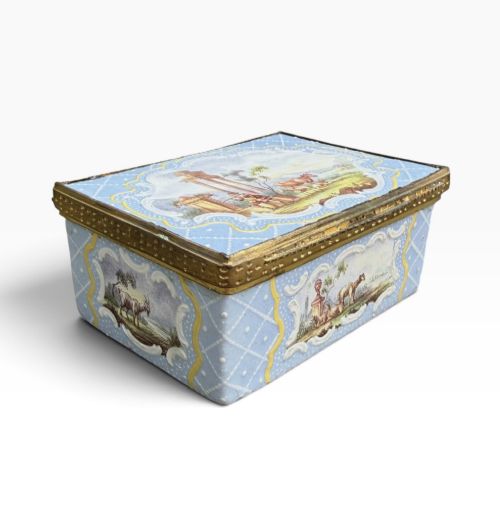
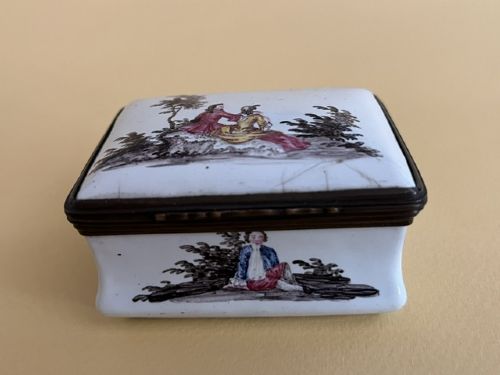
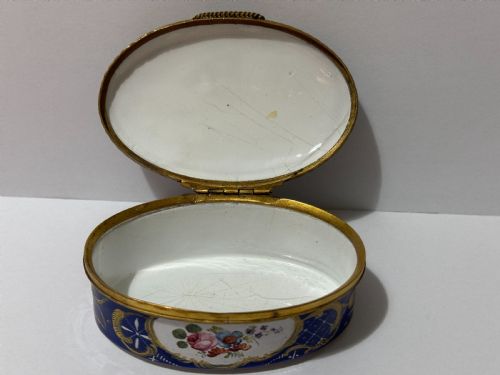
The foundation of each piece is beaten copper, shaped into bases and hinged lids to form the box structure. Artisans then applied vitreous enamel to the metal surface, fusing the powdered glass through kiln firing. Gilt metal and brass mounts were subsequently added to secure the edges and provide functional closures.
Painted decoration brought the white or tinted enamel grounds to life, often depicting pastoral scenes like musicians in parkland or specific locations such as Cheltenham Wells. Some containers take distinct figurative forms, including novelty shapes like a King Charles Cavalier spaniel. The resulting objects combined durability with miniature painted detail.
Object forms span standard snuff and patch boxes alongside novelty animal figures and flat decorative plaques.
What varies in quality
The refinement of the painted miniature on the lid dictates much of the visual success in these boxes. Finer pieces display crisp brushwork and detailed compositions, whereas simpler examples rely on more schematic decoration. The subtlety of the colour palette and the preservation of the enamel surface also separate standard production from superior specimens.
The execution and survival of the metal mounts contribute significantly to the overall merit of a box. Original gilt metal hinges and bezels that align cleanly with the copper body indicate careful initial construction. The integrity of the vitreous coating, free from major restoration, underpins the lasting appeal of any individual piece.
The Enamelled Copper Snuff Box Glossary
- Bilston enamel
- A term used for enamelled copper items produced in the Staffordshire town of Bilston during the eighteenth century. These pieces are particularly noted for their hinged lids and painted top scenes.
- Patch box
- A small container originally designed to hold cosmetic beauty patches worn on the face in the Georgian period. They frequently feature mirrors fitted inside the lid.
- Vitreous enamel
- Glass powder melted and fused onto a metal substrate at high temperature. This technique creates a smooth, glossy, and coloured surface coating.
- Bonbonniere
- A small ornamental box intended to hold sweets or confectionery. In this context, they share the same enamelled copper construction as snuff boxes.
- Beijing enamel
- Chinese painted enamel ware produced during the Qing Dynasty, often featuring distinct polychrome decoration on metal bases.
Enamelled Copper Snuff Box: Frequently Asked Questions
What did people keep in a patch box?
These small containers held small silk or velvet patches that fashionable Georgians adhered to their faces. The patches concealed blemishes or denoted social signals through their placement.
Many of these boxes included a small interior mirror fitted inside the lid to assist with placing the patches correctly.
How do I clean an enamelled box?
Maintenance requires only a gentle wipe with a soft, dry cloth to remove dust. Moisture should be kept away from the metal mounts and hinges to prevent tarnishing.
Harsh cleaning agents or abrasive cloths will damage the delicate glass surface and painted decoration permanently.
Are all these boxes from Staffordshire?
While Staffordshire and Bilston represent the majority of English pieces on this page, production also occurred elsewhere. The selection includes eighteenth-century Chinese Beijing enamel boxes alongside English works.
Examining the palette, copper gauge, and painting style helps distinguish regional origins among the listed items.
Can I still use these for snuff?
While technically functional, most collectors treat these fragile boxes as cabinet pieces rather than daily pocket accessories. The historic hinges and enamel linings warrant careful handling.
Storing modern tobacco inside them is generally discouraged to protect the interior glaze from staining and moisture.