



Enamelled Brass Dish
An enamelled brass dish brings vibrant colour and meticulous metalwork into a room, offering striking decorative plates and chargers from the nineteenth century.
Enamelled Brass Dish
When you search for an enamelled brass dish, you encounter a striking array of decorative chargers, plates, bowls, and trays spanning the eighteenth, nineteenth, and early twentieth centuries. These pieces predominantly originate from Japanese workshops of the Meiji and Edo periods, alongside examples from French and Georgian makers.
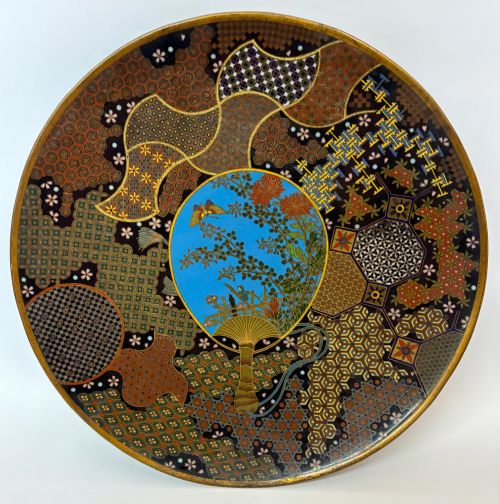
The objects take several distinct forms, from large decorative chargers depicting birds, landscapes, and dragons to smaller trinket boxes and pin trays. Japanese cloisonne chargers dominate the selection, often displaying intricate floral and animal motifs across generous diameters.
How they were made
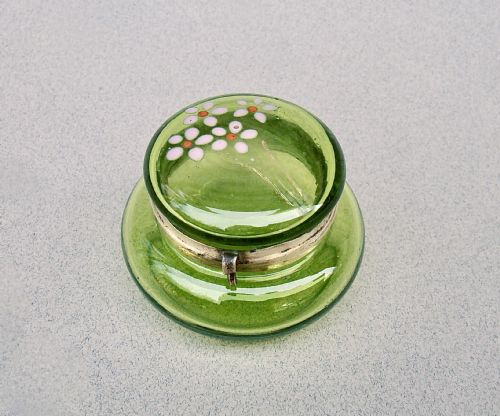
Artisans constructed these pieces using brass, copper, and bronze as a foundation, applying glass enamel within soldered metal wires for cloisonne work or directly onto cast metal surfaces for champleve. Ormolu mounts and glass elements appear alongside metal bases to form lidded bowls, patch boxes, and display plaques.
The enamelling process required precise firing of powdered glass pastes within defined metal cells, followed by extensive grinding and polishing to achieve a smooth finish. Makers utilised varied colour palettes, setting vibrant green, blue, and multi-coloured enamel against polished metal grounds.
Enamelled Brass Dish Retail Price Guide 2026
Typical asking prices for enamelled brass dish among the pieces listed under this phrase on Sellingantiques today, from the lower quarter to the upper quarter. They describe what is for sale here now, not the wider market.
Materials documented across the current selection include brass, copper, bronze, glass, ormolu, and both cloisonne and champleve enamel.
What varies in quality
The refinement of the wirework and the complexity of the pictorial subject matter dictate the distinction between standard production and masterwork pieces. Chargers featuring detailed depictions of fauna such as koi, birds, and dragons demonstrate superior technical control.
The density and uniformity of the enamel ground, coupled with the absence of pitting or firing flaws, mark the level of craftsmanship. Pieces retaining crisp metal definition and balanced compositional harmony represent the upper tier of the available range.
The Enamelled Brass Dish Glossary
- Cloisonne Enamel
- A technique where thin metal wires are soldered to a metal base to create cells, which are then filled with coloured glass paste and fired. This method allows for intricate pictorial designs across chargers and plates.
- Charger
- A large decorative plate or dish, typically exceeding thirty centimetres in diameter, designed for display rather than dining. These form the primary format for Japanese metalwork in this selection.
- Champleve Enamel
- A process where troughs or cavities are cast, carved, or gouged into a metal surface and filled with enamel prior to firing. French nineteenth century pin trays frequently utilise this method.
- Ormolu
- Gilded bronze used for decorative mounts, handles, and trims on nineteenth century French decorative items and boxes. It provides a bright metallic accent to enamel and glass pieces.
- Edo Period
- A historical division of Japanese history spanning from sixteen hundred and three to eighteen hundred and sixty-eight. Pieces from this era represent the earlier baseline of the Japanese metalwork seen here.
Enamelled Brass Dish: Frequently Asked Questions
How were these dishes used?
These pieces served primarily as decorative display items, placed on walls, tables, or cabinets to showcase intricate metalwork and enamelling. Smaller vessels functioned as trinket boxes, patch boxes, or pin trays for personal use.
Larger chargers were intended to command visual attention in reception rooms, acting as centerpieces of orientalist or Victorian interior decoration rather than serving food.
How do I date a cloisonne charger?
Dating relies on stylistic shifts in Japanese and European manufacture, moving from Edo period precursors through the Meiji era and into the late nineteenth century. Details such as wire thickness, colour saturation, and subject matter provide chronological indicators.
Parks of comparison include nineteenth century French or Georgian items which exhibit distinct European manufacturing traits compared to Meiji period Japanese imports.
How do I care for enamelled metal?
Maintain these pieces by dusting gently with a soft, dry cloth to prevent debris accumulation on the enamel and metal surfaces. Avoid using liquid cleaners, abrasive cloths, or chemical polishes which can damage the glass enamel or strip the metal finish.
Keep them away from direct sunlight and high humidity to protect both the metal base and the fired glass components from environmental degradation.
What is the difference between cloisonne and champleve?
Cloisonne involves soldering thin flat wires onto a metal foundation to form raised partitions, which are then filled with enamel paste. This creates a detailed, wire-defined image common in Japanese chargers.
Champleve requires cutting or sinking troughs directly into the thick metal plate to hold the enamel, producing a bolder, more recessed design often found in French ormolu-mounted desk wares.