

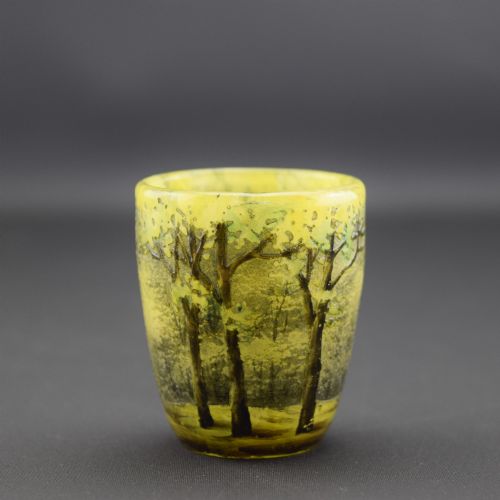
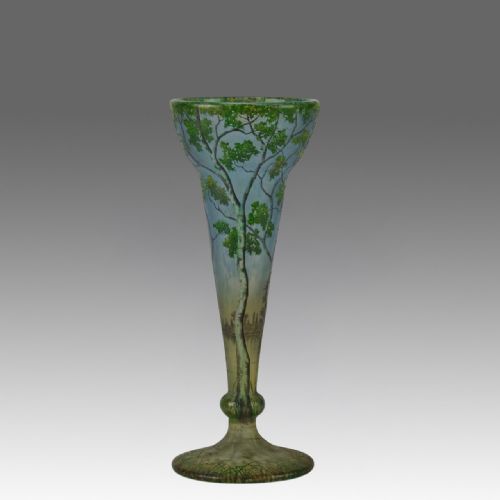
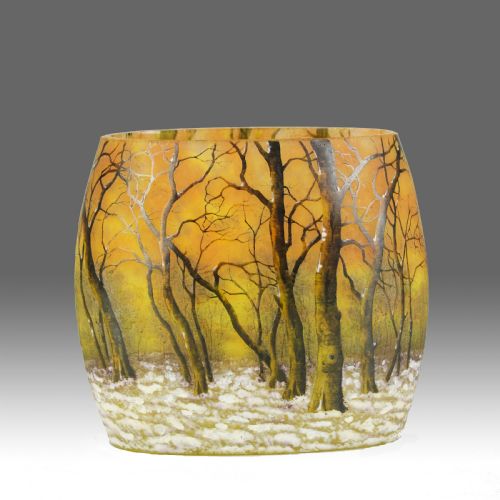
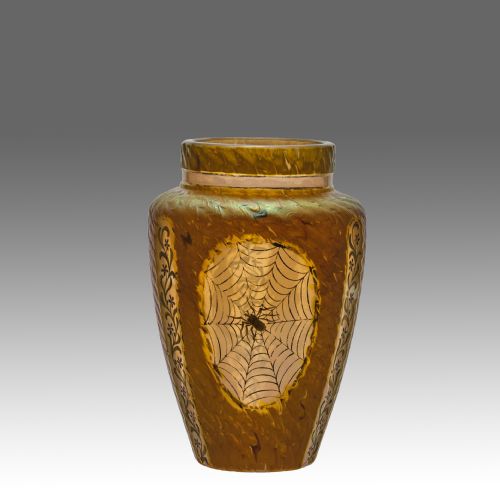

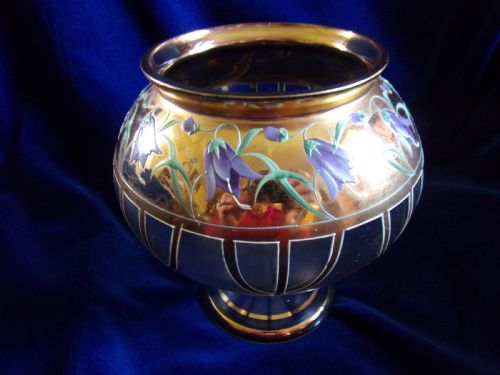


Enamelled Art Nouveau Vase
An enamelled art nouveau vase brings organic floral motifs and winter landscapes together in richly coloured glass.
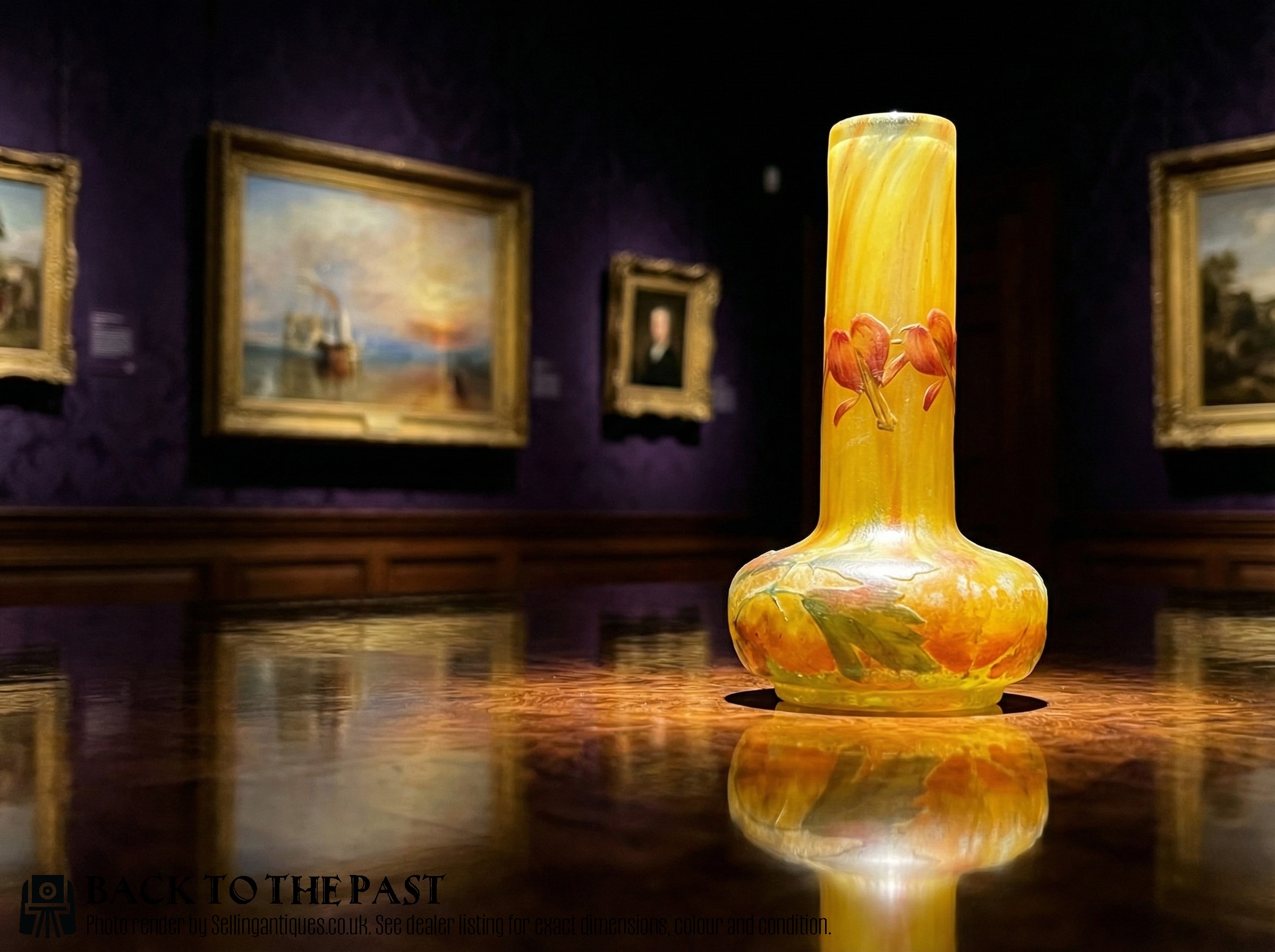
Enamelled Art Nouveau Vase
An enamelled art nouveau vase combines organic floral decoration or landscape scenes with the distinct glass and crystal forms of the late nineteenth and early twentieth centuries. These vessels emerge predominantly from the Art Nouveau period, though examples span from the eighteen eighties through to the nineteen twenties.
The most common form on this page is the glass vase, frequently fashioned from cameo glass, iridescent glass, or opaline. Makers utilise techniques like acid-etching and gold enamelling to render natural subjects such as irises, poppies, thistles, and winter landscapes.
Buyers encounter individual decorative vases alongside matched pairs and large crystal bowls. The origins trace heavily to French glassworks and European workshops producing distinct botanical and landscape pieces.
How they were made
Makers shaped glass and crystal through blowing and moulding, often layering different colours to create depth in cameo glass pieces. Acid-etching then cut away portions of the surface to reveal contrasting colours beneath.
Surface decoration relied on enamelling, hand painting, and the application of gold leaf or gold enamel. Artists painted delicate botanical motifs, including lotuses, palmettes, and blackberries, directly onto the glass body before firing.
Enamelled Art Nouveau Vase Retail Price Guide 2026
Typical asking prices for enamelled art nouveau vase among the pieces listed under this phrase on Sellingantiques today, from the lower quarter to the upper quarter. They describe what is for sale here now, not the wider market.
Spiders and blackberries share shelf space with delicate iris flowers.
What varies in quality
Quality rests in the precision of the cameo carving and the fineness of the enamel work. Superior pieces display crisp definition in etched landscape details and meticulously applied gold leaf rather than flat, heavy pigment.
The complexity of the glass body itself distinguishes the standard of work. Iridescent effects, multi-layered cameo glass, and substantial crystal bowls demonstrate higher technical ambition than simpler opaline vessels.
Daum Frères·Kralik Glass·Legras·St Louis glassworks·Wedgewood·CLIO·Fachschule Steinschönau
The Enamelled Art Nouveau Vase Glossary
- Cameo glass
- Glass formed with multiple layers of contrasting colours, then carved or acid-etched to create a raised design. This technique allows for intricate multi-toned floral and landscape imagery.
- Acid-etched glass
- Glass treated with acid to eat away specific areas of the surface, creating texture and pattern. It provides a tactile contrast to smooth enamelled decorations.
- Iridescent glass
- Glass treated with metallic salts to produce a shimmering, rainbow-like surface sheen. This finish shifts colours when viewed from different angles.
- Opaline
- An opaque or semi-translucent pale glass often used as a background for hand-painted or enamelled motifs. It gained popularity during the nineteenth and early twentieth centuries.
- Gold enamel
- Enamel infused with metallic gold particles, used to highlight botanical details and borders. It adds a reflective quality to floral stems and leaves.
Enamelled Art Nouveau Vase: Frequently Asked Questions
What periods do these vases come from?
The pieces span from the eighteen eighties to the nineteen twenties, capturing the height and late phase of the movement.
Most examples cluster around nineteen hundred, reflecting the peak of French cameo and enamelled glass production.
Where were these pieces made?
Many originate from French glassworks and workshops, including notable makers active around nineteen hundred.
Other examples stem from Central European institutions such as the Fachschule Steinschönau.
What subjects appear on the decoration?
Natural motifs dominate the decoration, featuring flowers like irises, poppies, lotuses, and thistles.
Landscape scenes, including winter views and boating settings, also appear frequently across the glass surfaces.
How should I display an enamelled glass vase?
Place the vessel in a stable spot with good natural light to highlight the iridescence and layered cameo glass.
Avoid direct, intense sunlight that might strain older glass or enamel over extended periods.