

Enamel Silver Case
When you examine an enamel silver case, you hold a functional object transformed by vitreous pigments and precious metal into miniature art.
Enamel Silver Case
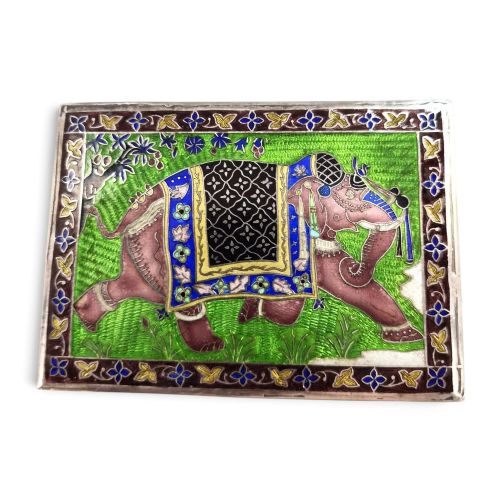
An enamel silver case encompasses pocket accessories and containers designed to hold matches, tobacco, cards or cosmetics. The selections span from Victorian novelty vesta cases and Edwardian match holders to sleek Art Deco powder compacts and cigarette boxes.
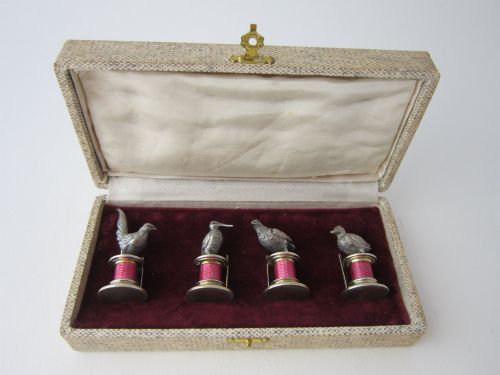
The objects frequently combine sterling silver with hand-painted or machine-turned enamel decoration. Pieces range from British factory productions to Scandinavian silver-gilt tableware and continental European card cases.
How they were made
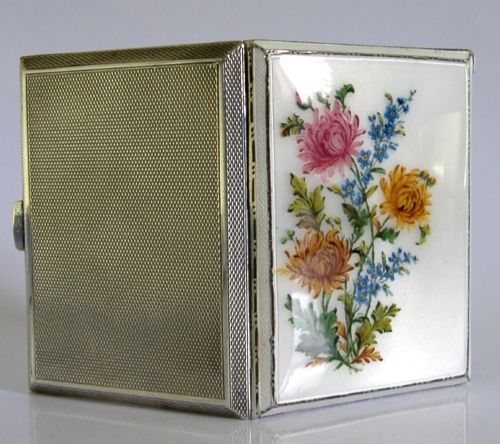
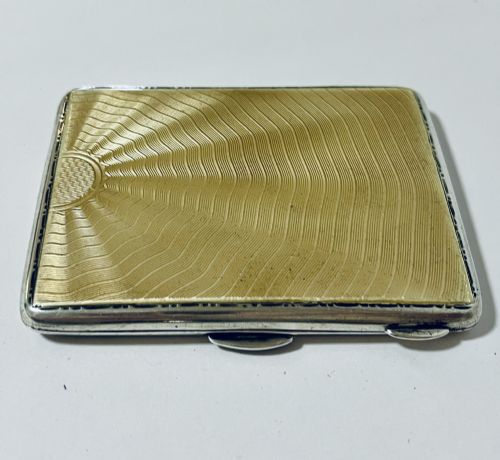
Craftsmen fused powdered glass onto sterling silver bases through high-temperature kiln firing to produce vitreous enamel surfaces. Machine engraving techniques such as engine-turning created repeating geometric patterns beneath translucent coloured glazes.
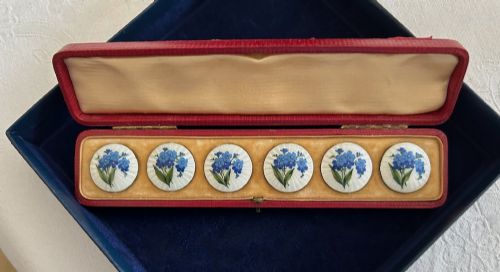
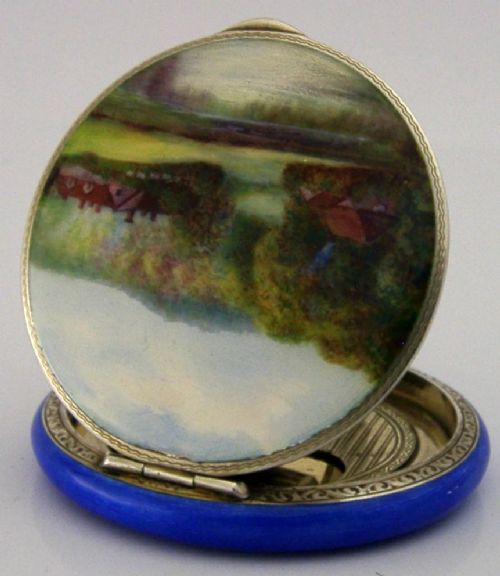
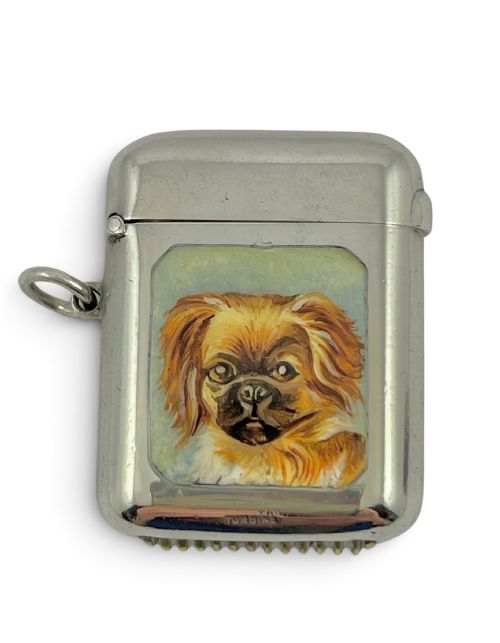
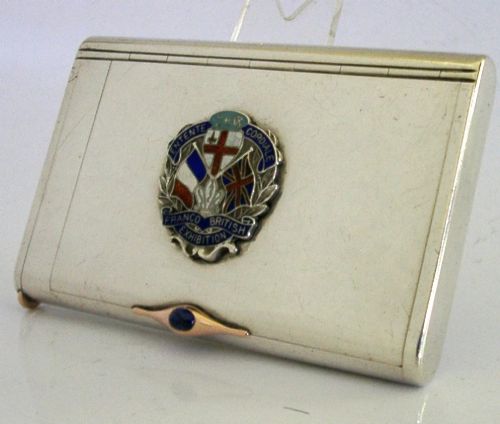
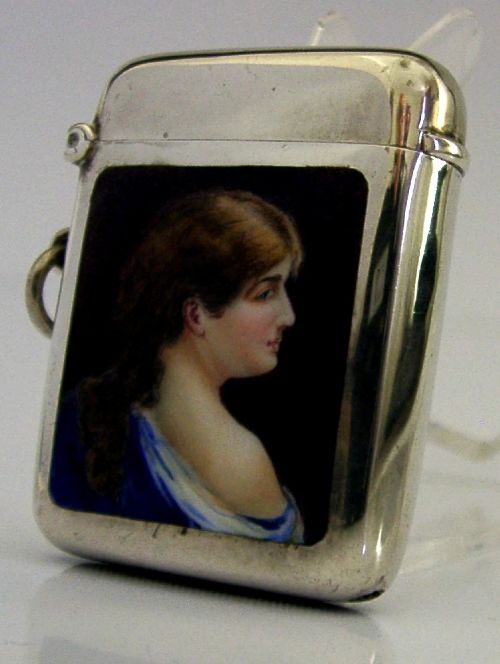
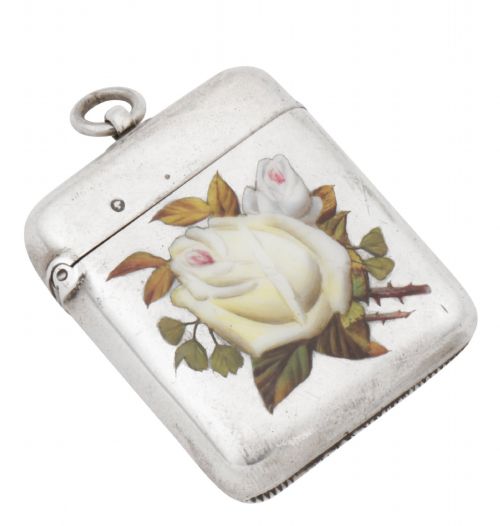
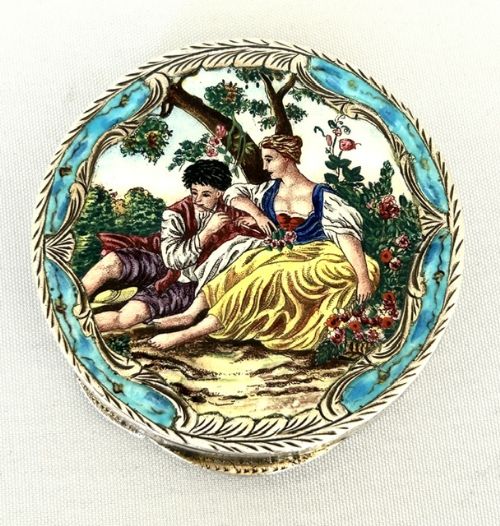
Makers applied hand-painted floral motifs, animal portraits or heraldic crests directly onto prepared enamel grounds before secondary firing. Artisans mounted these decorated panels into hinged silver housings lined with velvet, leather or silk.
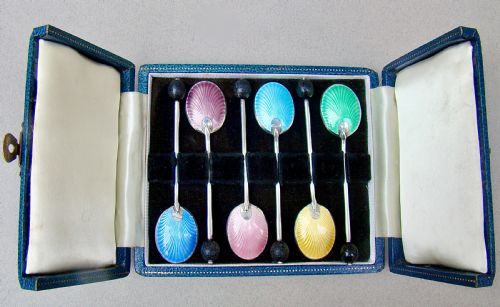
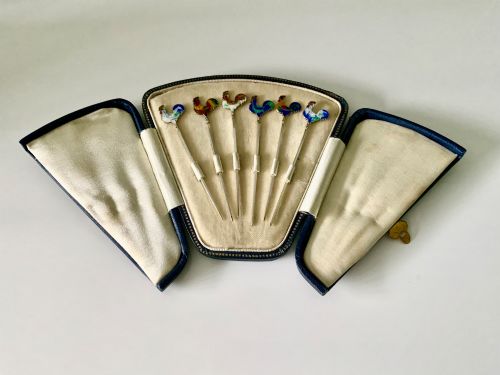
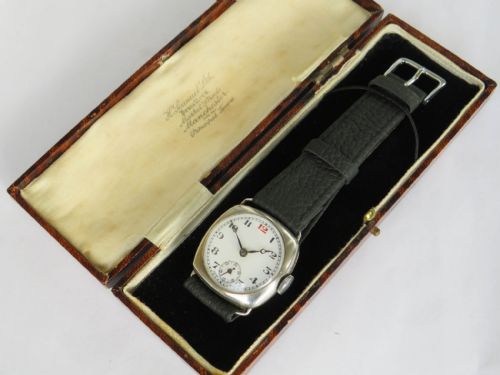
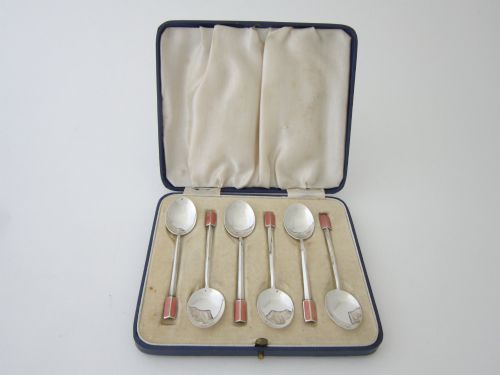
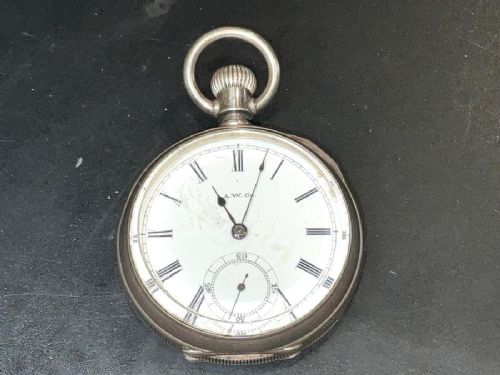
The inventory records pocket watches, vesta cases, powder compacts, cocktail sticks, and teaspoons decorated with hand-painted flora and fauna.
What varies in quality
The precision of the guilloche engraving determines the brilliance of translucent enamel layers beneath the light. Crispness in hand-painted details, such as miniature portraits or floral studies, separates standard production items from masterworks.
The weight and thickness of the sterling silver chassis dictate the structural integrity of the hinge and closing mechanism. Superior examples display flawless glass fusion without surface pitting or stress fractures around bezel settings.
William Neale·Sampson Mordan·Henry Matthews·David Andersen·Liberty And Co
The Enamel Silver Case Glossary
- Guilloche Enamel
- A decorative technique where a mechanical lathe cuts precise geometric patterns into a silver base before translucent enamel is applied over the top. This allows light to reflect through the coloured glass in shifting waves.
- Vesta Case
- A small pocket box specifically manufactured to hold wooden safety matches and keep them dry. They typically feature a striking serrated edge on the base for igniting the match.
- Silver Gilt
- Sterling silver that has been coated with a thin layer of gold through chemical or electrolytic processes. This treatment provides a rich warm interior or decorative exterior finish.
- Full Hunter
- A pocket watch featuring a spring-loaded metal cover designed to protect the glass dial from scratches and impacts. The cover springs open via a crown-mounted push-button.
Enamel Silver Case: Frequently Asked Questions
How do I clean an enamel silver case?
Use a soft, dry microfiber cloth to gently remove dust and surface oils from both the silver and the vitreous enamel panels. Avoid chemical silver dips or abrasive polishes, as these substances will scratch the glass surface and damage delicate metal gilding.
Store each piece individually away from direct sunlight and extreme temperature fluctuations to prevent stress on the enamel-metal bond. Proper environmental control protects the integrity of interior linings like velvet, leather or silk.
Were these cases used daily?
Original owners carried these items in pockets, handbags or travel luggage as practical everyday accessories for matches, cigarettes, visiting cards and cosmetics. Wealthy patrons commissioned specific designs featuring family crests, military insignia or personal portraits for daily utility.
As social habits shifted away from pocket match safes and heavy cigarette cases, many survivors entered collections or remained tucked away in domestic drawers. This history of use explains why mechanisms range from crisp and tight to gently worn.
How can I tell Art Deco from Edwardian pieces?
Edwardian items typically feature organic floral motifs, softer pastel enamel colours, and elaborate engraved borders inspired by Edwardian and late Victorian aesthetics. The forms lean towards natural curves, romantic miniature paintings, and traditional heraldry.
Art Deco examples embrace strict geometric symmetry, sunburst guilloche patterns, and bold primary or metallic enamel tones. The overarching design vocabulary shifts towards industrial streamlining and sharp architectural lines.
What is engine-turned enamel?
Engine-turned enamel refers to a surface where an artisan uses a rose engine lathe to carve precise, repetitive geometric patterns directly into the silver metal. Applying a translucent coloured enamel over this textured base creates optical depth and shimmering light effects.
This technique became a hallmark of refined cigarette cases, compacts, and card holders throughout the early twentieth century. The underlying pattern remains entirely visible through the glass glaze, producing a dynamic visual texture.