


Enamel Painted Glass
These pieces of enamel painted glass bring together rich coloured bodies and detailed fired decoration from the nineteenth and early twentieth centuries.
Enamel Painted Glass
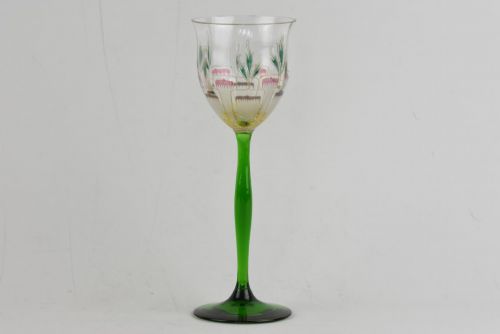
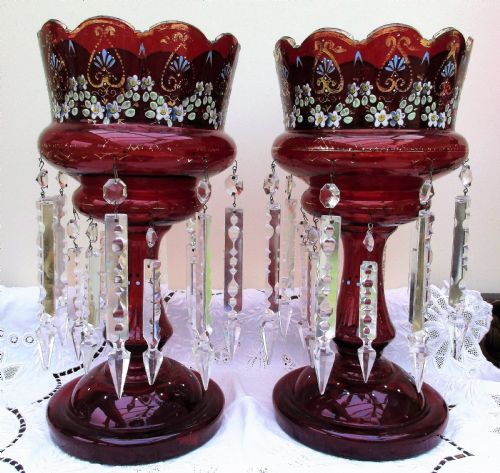
When you search for enamel painted glass, you encounter everything from delicate wine goblets and hock glasses to robust mantel lustres, biscuit barrels, and table lamps. The selection spans distinct periods, with Victorian pieces sitting alongside Art Nouveau, Art Deco, and Bohemian examples.
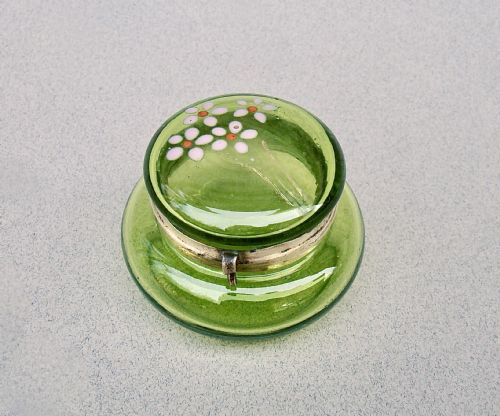
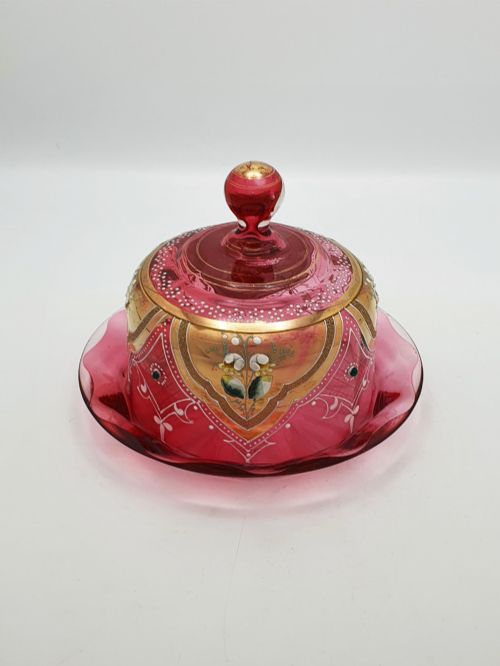
Vases and decorative glassware dominate the forms, often rendered in saturated shades of ruby, cranberry, Bristol blue, and green glass. You also find practical items such as decanters, covered cheese dishes, and dressing table jars.
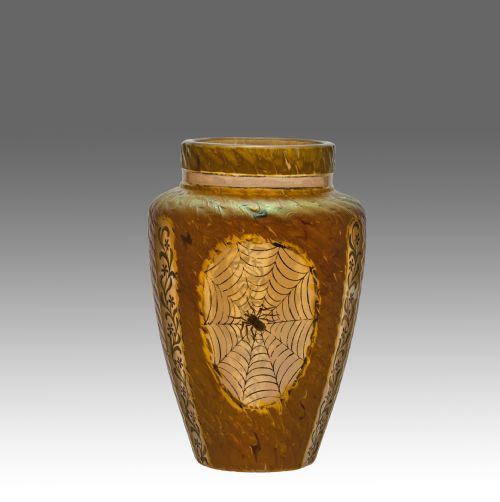
Many objects reflect specific regional traditions, originating from English makers, German workshops, and Bohemian glasshouses. Pieces range from modest nineteenth-century scent bottles to large opaline glass vases adorned with floral and neoclassical motifs.
Materials and Techniques
Makers utilised blown glass, crystal, and opaline glass as the base canvas for their work, frequently incorporating rich coloured glass such as cranberry and ruby. These glass bodies provided a stable foundation for the application of opaque and translucent enamels.
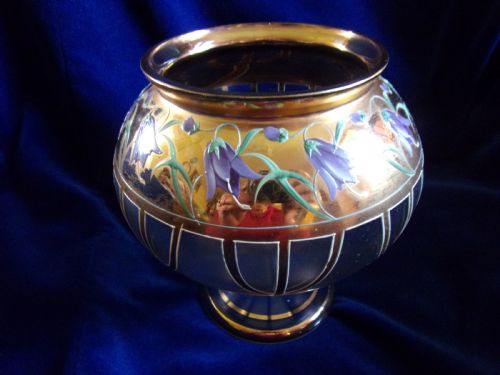
Decoration relied on hand-painted enamels, sometimes paired with gold leaf, gilt decoration, or wrought iron mounts. The painted motifs were fired at high temperatures to fuse the mineral colours permanently to the glass surface.
Some Victorian wine glasses proudly depict a fox hunting scene right across the bowl.
Judgement of Quality
The standard of an item rests upon the precision of the hand-painted enamelling and the crispness of any accompanying gilding. Superior examples display fine brushwork with clean lines and securely bonded mineral colours, whereas lesser pieces show sloppy application and faded detail.
The underlying glass quality also dictates value, with heavy hand-blown crystal and rich coloured glass bodies outperforming thin, cloudy alternatives. Proportion, clarity of form, and the integration of decorative motifs with the shape of the vessel set exceptional pieces apart.
Kralik Glass·Theresienthal·Fritz Heckert·Emmy Seyfried·Lobmeyer·Moser·George Tye·Harrach
The Enamel Painted Glass Glossary
- Mantel Lustres
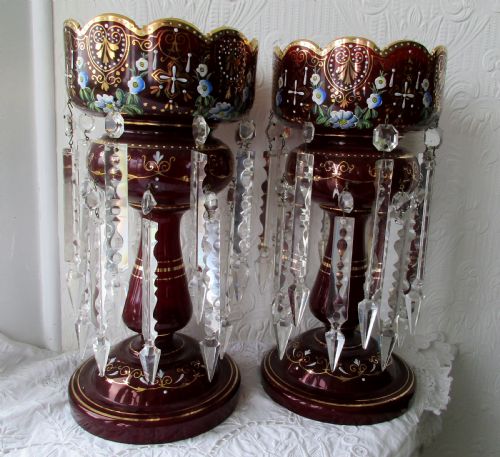
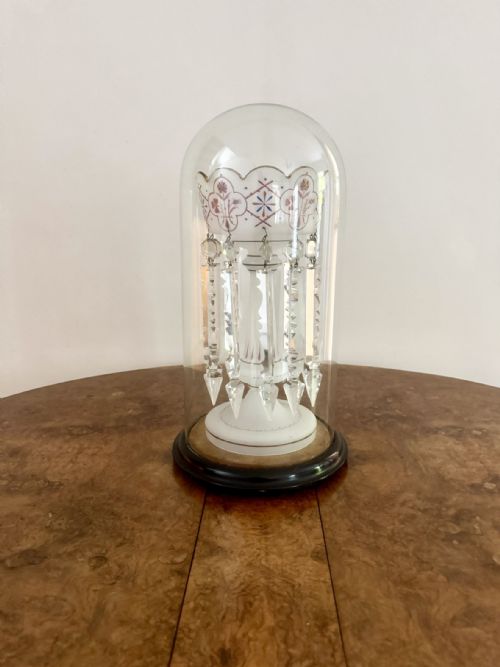
- Decorative glass vases fitted with hanging glass prisms intended to catch the light. They were popular on nineteenth-century fireplace mantels.
- Opaline Glass
- An opaque, slightly translucent glass that ranges in colour from white to pink and blue. It serves as an ideal background for polychromatic enamel painting.
- Roemer
- A traditional Germanic large-bowled wine goblet with a thick patterned stem. They often carry heraldic enamel decorations from the Historismus period.
- Guilloche
- A decorative technique involving precise, intricate mechanical patterns engraved beneath translucent enamel. It appears frequently on small personal accessories.
Enamel Painted Glass: Frequently Asked Questions
Were Mary Gregory pieces actually made by her?
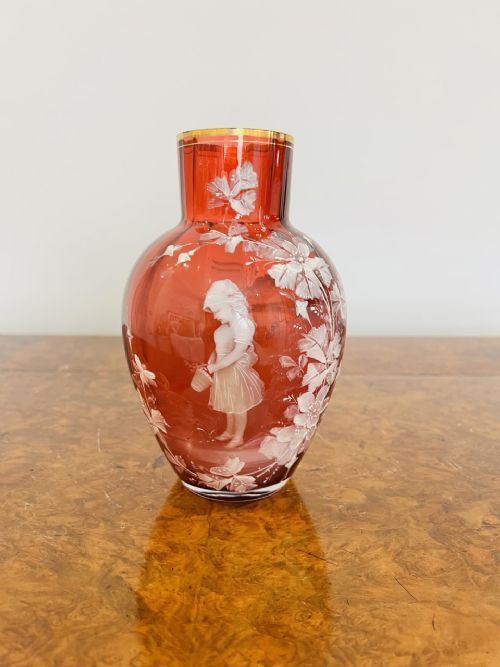
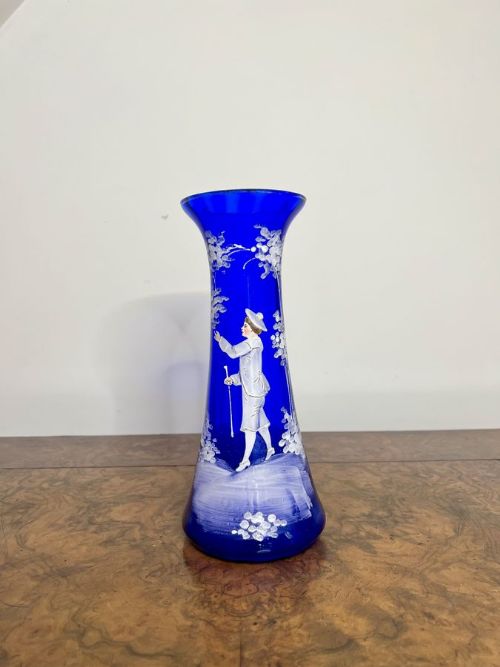
The term typically describes Victorian glassware decorated with white enamel silhouettes of children playing, rather than the work of an individual artist. These charming scenes were produced in large quantities by various English and Bohemian glasshouses.
While popularised under her name in the trade, the style represents a widespread factory method of the late nineteenth century.
How can I tell Bohemian glass from English glass?
Bohemian pieces often showcase heavy gilding, vibrant overlay techniques, and deep green or ruby bodies influenced by regional woodland traditions. English glass items of the same era lean towards refined opaline finishes and delicate floral motifs.
Examining the weight, pontil marks, and colour palette usually clarifies the geographic origin of the vessel.
Can I use antique decanters for serving wine?
Many nineteenth-century decanters remain functional, provided the interior is clean and free from old sediment or residue. Check the stopper fit and ensure the glass shows no internal cracks before filling.
Hand wash only after use and store them without the stopper wedged tightly to allow air circulation.