




Antique Painted Glass Jug
An antique painted glass jug brings rich Victorian colour and hand-applied gilding to the table.
Antique Painted Glass Jug
When buyers search for an antique painted glass jug, they encounter vibrant blown glass vessels decorated with enamel or gold leaf. The pieces span from the Georgian period through the Victorian era up to Art Deco Czech glassware.
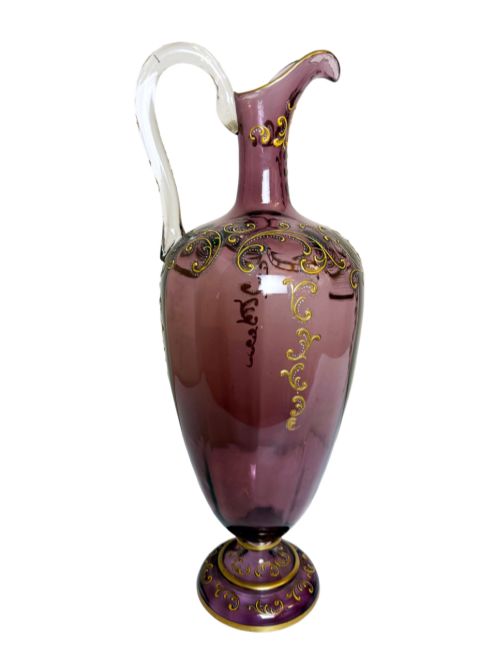
Green, blue, and violet hues dominate the selection on this page. Forms range from cream jugs and water pitchers to decorative ewers and decanters.
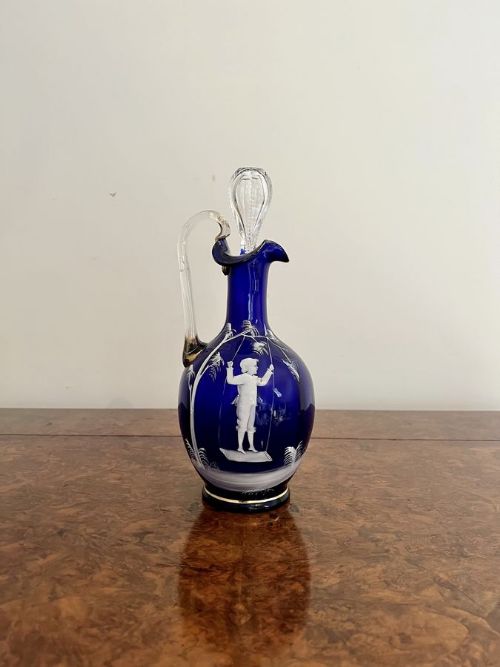
Victorian examples featuring enamel painting or Mary Gregory style decoration appear most frequently among the listings. These vessels served practical duties for drinks or sat on display as decorative ewers.
How they were made
Makers fashioned these vessels using blown glass techniques, shaping molten metal into pitchers, decanters, and ewers. Artisans then applied rich colours such as Bristol blue, emerald green, and deep violet directly to the glass body.
Decoration relied on hand-painted enamel and gold leaf applique to build intricate surface detail. Some pieces incorporated cast metal or bronze mounts to accent the handles and rims.
Victorian children painted in white enamel frolic forever on green and blue glass.
What varies in quality
The fineness of the hand-painted enamel work separates ordinary production from superior pieces. Crisp application of gold leaf and detailed figural subjects elevate the status of a vessel.
The depth and clarity of the coloured blown glass itself define the upper tier of the range. Heavier, more ambitious forms such as large Victorian ewers demonstrate greater artisanal skill.
The Antique Painted Glass Jug Glossary
- Mary Gregory
- A style of white enamel painting on coloured glass, typically depicting Victorian children in pastoral settings. This technique defines several notable green and blue glass ewers.
- Ewer
- A large jug with a wide spout and ornate handle, traditionally used for holding water or wine. Victorian makers often produced them purely for display.
- Bristol Blue
- A deep, cobalt-tinted glass historically produced in Bristol. Georgian makers utilised this intense colour for cream jugs and domestic drinksware.
- Gilt Applique
- Surface ornamentation applied using gold leaf or gold paint. This technique highlights the rims, handles, and painted motifs on blown glass pitchers.
Antique Painted Glass Jug: Frequently Asked Questions
How were these jugs used originally?
Victorian households utilised glass jugs for serving water, wine, and cream at the table. Many larger ewers served a purely decorative purpose on sideboards.
Smaller pieces like cream jugs functioned alongside sugar bowls in tea service settings. Drinksware sets accommodated gatherings and formal dining.
How do I date an antique glass jug?
Dating relies on stylistic markers, colour palettes, and manufacturing techniques recorded across the periods. Georgian pieces often display deep Bristol blue tones, whereas Victorian items frequently feature enamel painting and Mary Gregory motifs.
Art Deco examples from the twentieth century introduce distinct Czech glass forms and colour combinations. Examining the handle construction and gilding style provides further clues to the era.
How do I care for antique painted glass?
Painted and gilded glass requires gentle hand washing with lukewarm water and mild soap. Harsh detergents and abrasive sponges will damage the delicate enamel and gold leaf.
Displaying pieces away from direct sunlight helps preserve the vibrancy of the coloured glass and painted decoration over time.