





Empire Style Sideboard
An empire style sideboard brings commanding presence and architectural dignity to a room, grounding your interior with classic classical proportions and rich timber.
Empire Style Sideboard
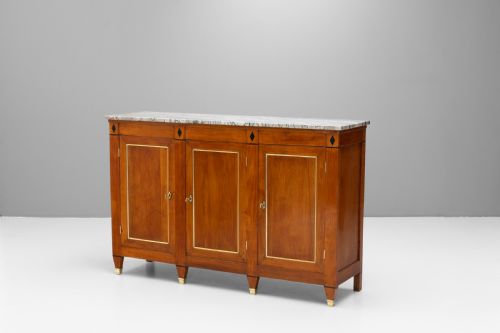
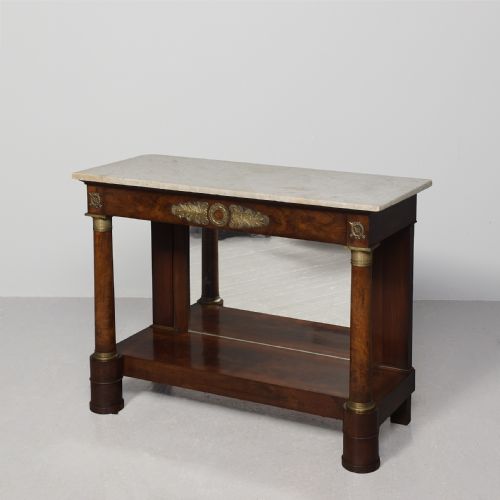
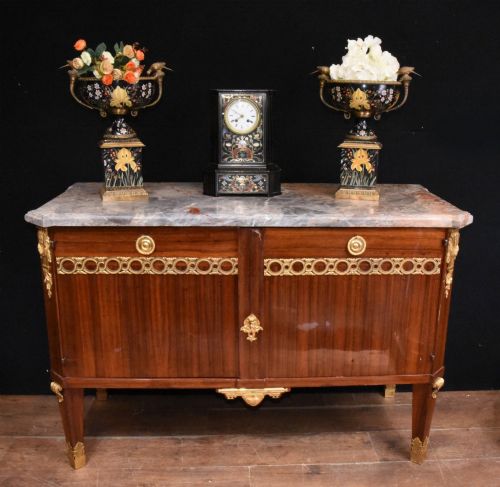
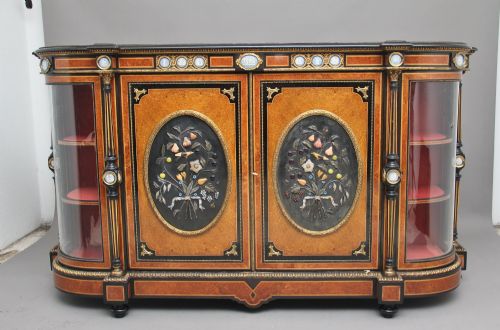
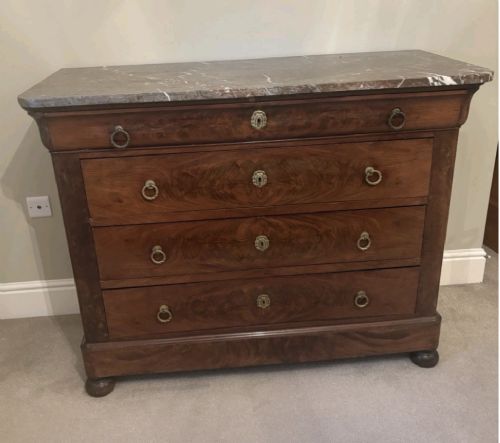
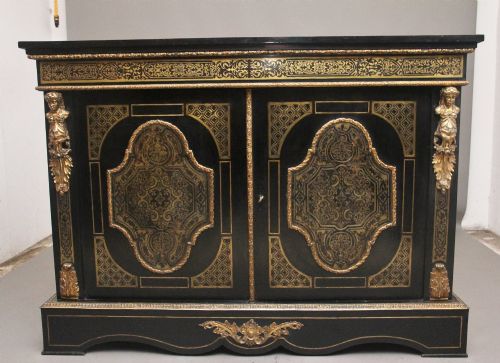
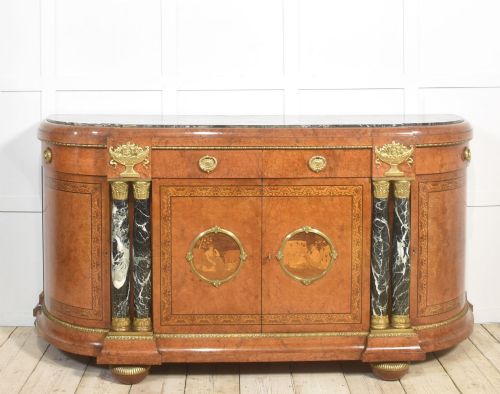
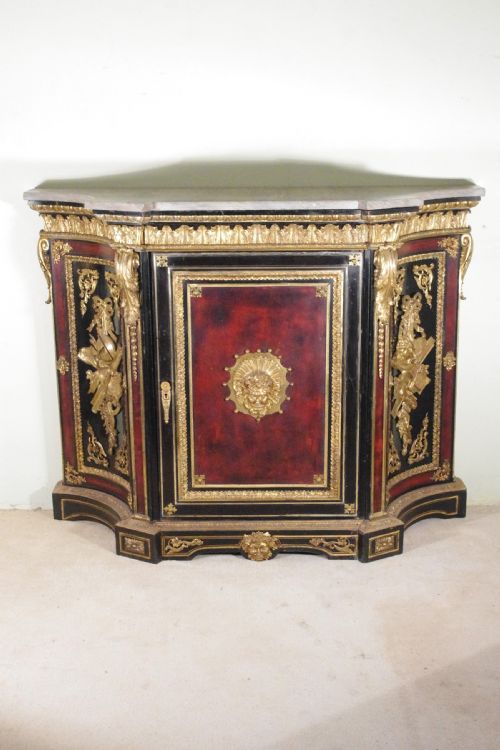
When you search for an empire style sideboard, you encounter grand storage pieces defined by architectural lines, prominent columns, and rich timber surfaces. The examples available span the nineteenth century up to the early twentieth century, drawing heavily on French and English interpretations.
Most pieces you meet on this page utilise deep mahogany, burr walnut, or ebonised wood, often finished with striking marble tops and heavy metal mounts. The forms range from traditional sideboards and enfilades to chiffoniers and side cabinets, each offering substantial presence and formal storage.
Originating from neoclassical design principles, these pieces reflect the grandeur of empire periods and subsequent nineteenth century revivals. They suit formal dining rooms, grand hallways, or generous living spaces where their architectural weight can anchor the room.
Factors That Separate Examples
The quality of an empire style sideboard rests largely on the crispness of its cast bronze or ormolu mounts and the selection of timber veneers. Finer pieces display finely chased metalwork and symmetrical grain patterns across large cabinet doors.
The integration of heavy marble tops and the precision of structural joinery distinguish higher tier examples from simpler utility pieces. Attention to classical proportions and the survival of original patination elevate certain cabinets above standard production.
Empire Style Sideboard Retail Price Guide 2026
Typical asking prices for empire style sideboard among the pieces listed under this phrase on Sellingantiques today, from the lower quarter to the upper quarter. They describe what is for sale here now, not the wider market.
Listings for empire style furniture frequently combine nineteenth century French and English cabinetmaking traditions.
S. Jamar
The Empire Style Sideboard Glossary
- Ormolu
- Gilded bronze or brass applied as decorative mounts on furniture and lighting. This technique requires meticulous mercury gilding or modern electroplating to achieve a brilliant, durable finish.
- Enfilade
- A long sideboard or buffet designed for formal dining rooms, usually featuring a series of matching cabinet doors in a continuous line. It provides extensive storage while maintaining a unified architectural front.
- Chiffonier
- A tall, narrow side cabinet featuring doors enclosing shelves, often surmounted by a low tier or a marble top. Originating in France, it serves as compact yet formal storage for tableware or linens.
- Ebonised
- Wood treated with a dark finish to imitate expensive ebony. This process became widely used in nineteenth century revival furniture to create high contrast against gilt mounts and marble.
- Commode a porte
- A cabinet form featuring enclosed doors rather than open drawers, providing deeper storage space. These pieces frequently incorporate stone or marble tops and classical pilasters.
Empire Style Sideboard: Frequently Asked Questions
What is an empire style sideboard?
An empire style sideboard is a heavy, architectural storage piece inspired by neoclassical design, featuring dark timbers and classical metal mounts.
These pieces were traditionally used in dining rooms to store formal tableware and serve food during large gatherings.
Where should I place a side cabinet?
These cabinets work exceptionally well in dining rooms, grand hallways, or spacious living areas where their formal presence can be fully appreciated.
Ensure you measure your floor space carefully, as the projecting columns and heavy doors require ample clearance.
How do I date a nineteenth century sideboard?
Dating relies on examining the timber construction methods, internal secondary woods, and the style of the ormolu mounts.
Nineteenth century pieces often show hand-cut joinery and heavy brass hardware consistent with neoclassical revivals of that era.