




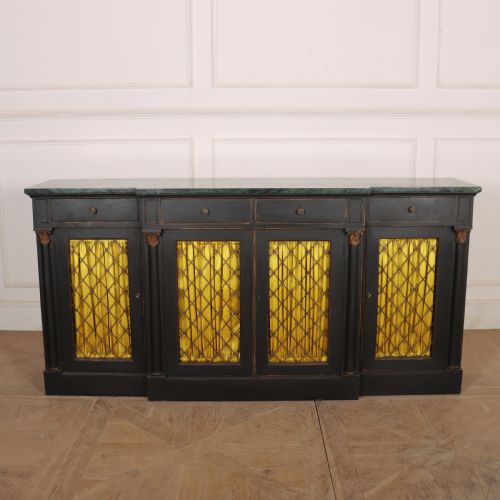
Black Marble Sideboard
A black marble sideboard is a substantial serving and display piece topped with dark stone, bringing formal presence to a room.
Black Marble Sideboard
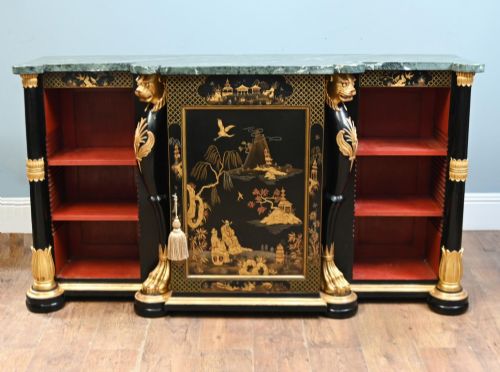
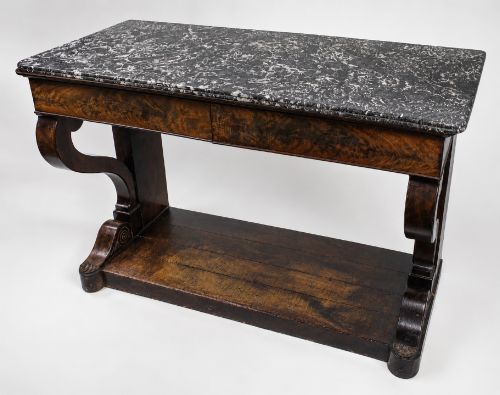
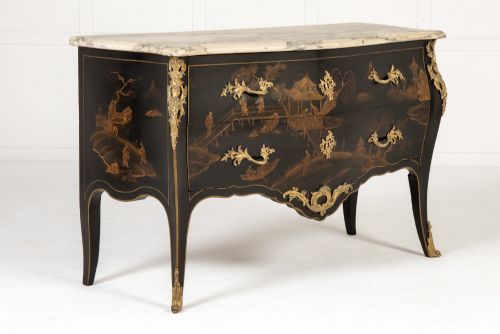
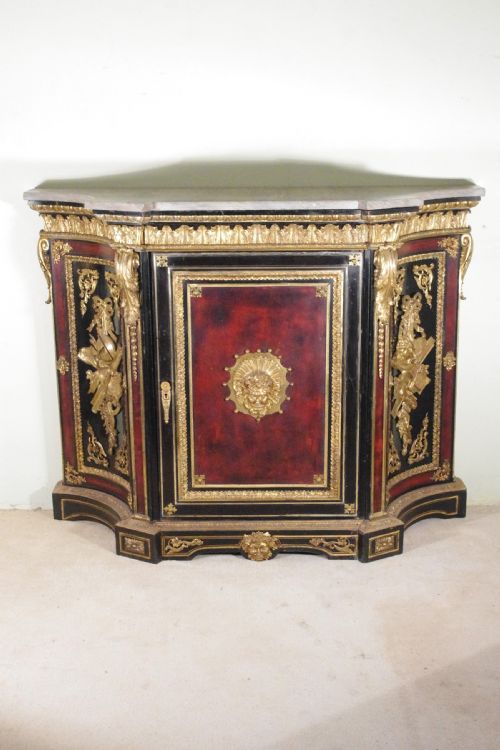
A black marble sideboard comprises heavy storage furniture outfitted with dark stone surfaces, appearing across periods from the eighteenth century through to the twentieth. These pieces include console tables, commodes, side cabinets, chiffoniers, and buffets.
The versions met on this page span French Napoleon III, French Empire, Regency, and Chinoiserie styles. They combine timber frames with marble tops to serve both decorative and practical functions in a dining room or salon.
How they were made
Carpenters constructed the carcasses using timbers such as mahogany, oak, ebonised wood, and lacquered wood. Stone masons shaped the heavy marble tops to fit precisely over the wooden bases.
Craftspeople applied decorative details including ormolu mounts, gilt metal mounts, and pietra dura inlays. Japanned lacquer and black lacquer finishes were also utilised on specific stylistic examples.
Black Marble Sideboard Retail Price Guide 2026
Typical asking prices for black marble sideboard among the pieces listed under this phrase on Sellingantiques today, from the lower quarter to the upper quarter. They describe what is for sale here now, not the wider market.
The furniture forms include console tables, commodes, chiffoniers, and breakfront dresser bases reflecting diverse European styles.
What varies in quality
The standard of execution in the ormolu and gilt metal mounts distinguishes finer examples from simpler workshops. Crisply chiselled mounts and intricate pietra dura work indicate superior craftsmanship.
The selection and thickness of the marble top, alongside the depth of the ebonised or lacquered finish on the timber frame, determine the overall grade of the piece.
KRIEGER of Paris·GAUDREAUX
The Black Marble Sideboard Glossary
- Ormolu
- Gilt bronze mounts applied to furniture for decoration. This technique was widely utilised on French nineteenth-century pieces.
- Pietra dura
- Inlaid work using cut and fitted polished coloured stones to create geometric or pictorial designs. It appears on elite nineteenth-century cabinets.
- Ebonised
- Timber treated to resemble ebony through staining or painting. This dark finish provides a stark contrast to marble tops.
- Commode
- A low chest of drawers or cabinet designed for domestic storage. These frequently feature marble tops across various periods.
- Chiffonier
- A tall sideboard or cabinet fitted with doors and drawers. These pieces developed distinct regional variations during the nineteenth century.
Black Marble Sideboard: Frequently Asked Questions
What is a black marble sideboard?
A black marble sideboard is a heavy storage and display piece finished with a dark stone top. These items encompass console tables, commodes, and side cabinets.
They emerged from various historical periods, frequently associated with French design movements such as Napoleon III and Empire styles.
How do I date a black marble sideboard?
Dating relies on identifying the underlying timber, the construction techniques used for the carcass, and the stylistic details of the mounts. Eighteenth-century pieces differ substantially in proportion and joinery from nineteenth-century productions.
Examining the edge profile of the marble top and the material of the internal linings helps narrow down the period of manufacture.
Where were these pieces used?
These pieces were principally designed for formal reception rooms, dining spaces, and grand hallways. They functioned as serving surfaces and display areas for silver and porcelain.
Their substantial weight and decorative mounts meant they remained static statement furniture within domestic interiors.
How do I care for black marble?
Black marble requires cleaning with soft cloths and neutral substances to protect the polished surface from acidic marks. Water and moisture should not be left sitting on the stone.
Regular dusting prevents particle build-up that can dull the sheen over extended periods of use.