


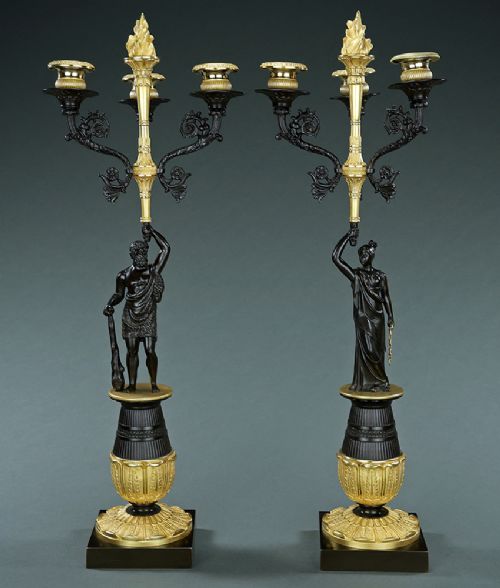


Empire Style Gilt Candle Holder
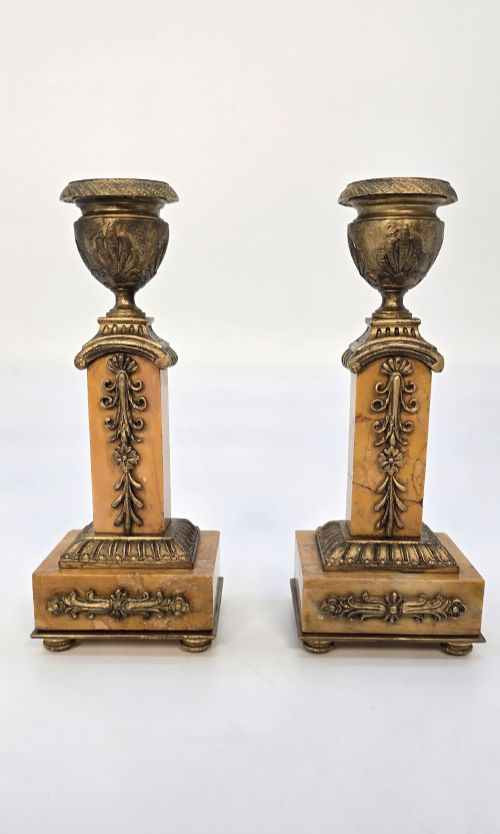
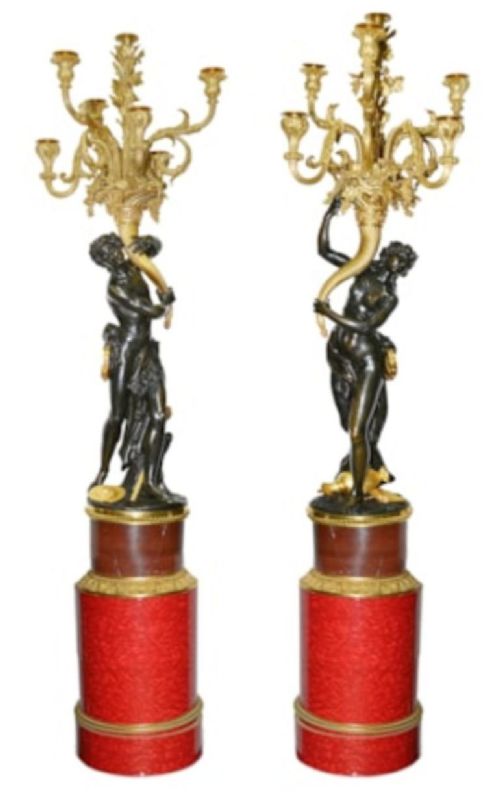
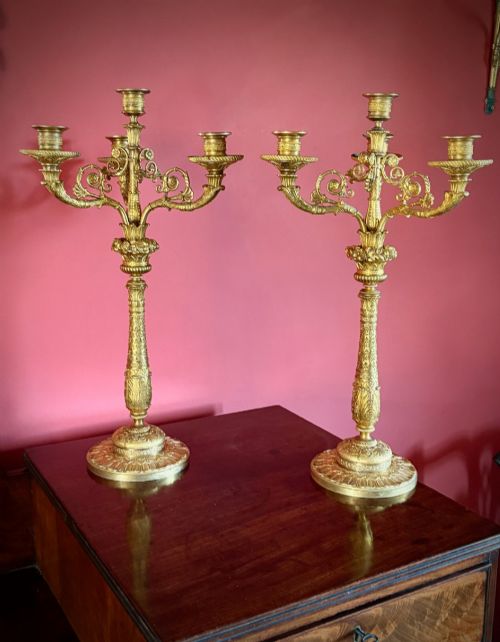
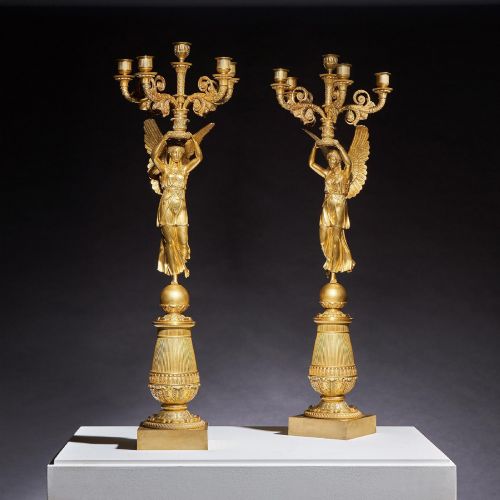
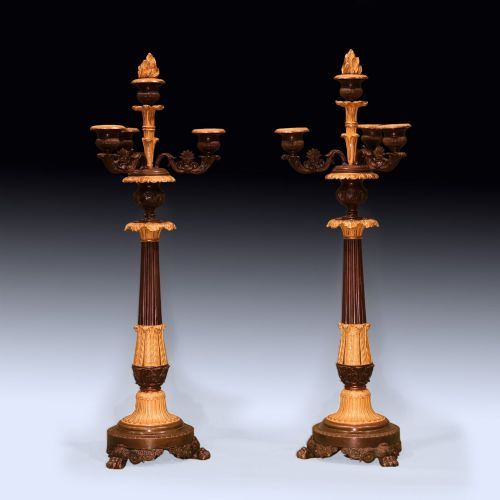
These empire style gilt candle holder pieces combine gilt bronze, ormolu, and patinated bronze to bring classical proportion and rich illumination to an interior.
Empire Style Gilt Candle Holder
When searching for an empire style gilt candle holder, buyers encounter objects designed to hold multiple candles or single tapers upon desks, mantelpieces, and side tables. The selection spans the nineteenth century, Regency period, and later decades, drawing on French Empire, Neoclassical, and Swedish Empire design vocabularies.
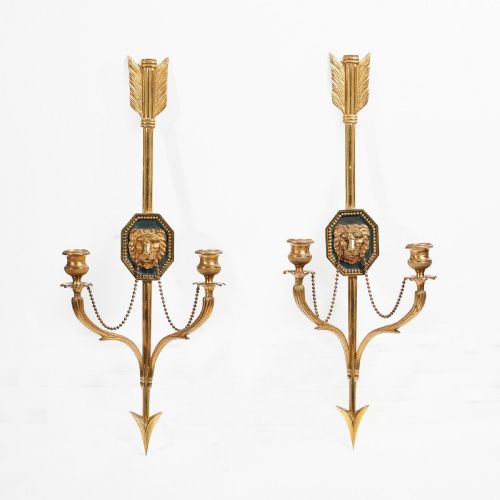
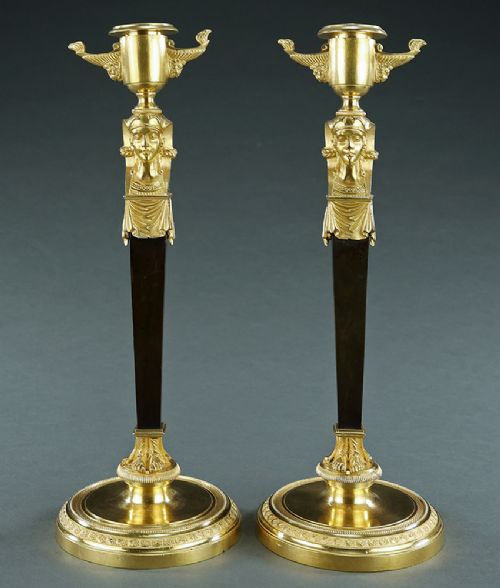
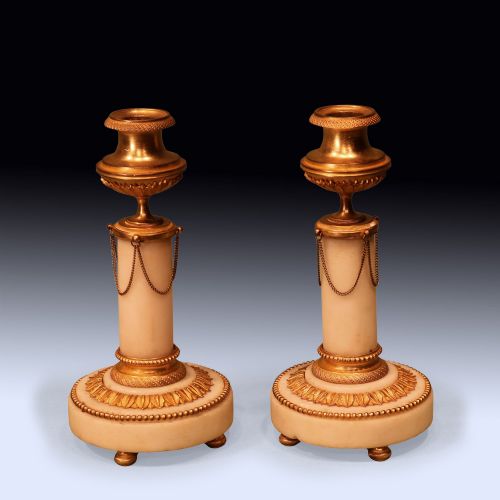
The physical forms include single candlesticks, multi-branched candelabra, wall sconces, and decorative tazzas. Many examples pair gilt ormolu mounts with dark patinated bronze figures, white marble bases, and classical motifs such as caryatids, winged putti, and mythological subjects.
How They Were Made
Foundries created these pieces by casting bronze, brass, or gilt metal into detailed figurative and architectural components. Artisans applied mercury gilding or ormolu finishes to highlight specific decorative elements against patinated bronze surfaces.
Marble elements were turned and polished to form contrasting plinths and columns that supported the metalwork. Precision chasing and engraving finished the cast components, sharpening the details of acanthus leaves, drapery, and facial expressions.
Empire Style Gilt Candle Holder Retail Price Guide 2026
Typical asking prices for empire style gilt candle holder among the pieces listed under this phrase on Sellingantiques today, from the lower quarter to the upper quarter. They describe what is for sale here now, not the wider market.
Listings feature items from the Georgian period through the nineteenth century, incorporating materials like white marble, patinated bronze, and ormolu.
What Varies In Quality
The refinement of the chasing separates standard production from exceptional workshop output. Crisply defined ornamentation, deep fire gilding, and heavy, solid casting distinguish the work of prominent makers and skilled foundries from simpler commercial pieces.
Proportion and the integration of mixed media also dictate the grade of an object. The harmonious balance between patinated bronze figures, polished marble plinths, and bright ormolu mounts indicates careful design and high manufacturing standards.
Pierre Philippe Thomire·Galle
The Empire Style Gilt Candle Holder Glossary
- Ormolu
- Gilt bronze created by applying a mixture of gold and mercury to a bronze object and heating it to drive off the mercury. This technique produced a durable and rich golden finish seen on classical nineteenth-century lighting.
- Patinated Bronze
- Bronze that has been chemically treated to produce a dark, uniform surface colour. It provides a strong visual contrast against bright ormolu mounts.
- Candelabra
- A branched candlestick designed to hold multiple candles simultaneously. They often feature a central shaft surrounded by removable arms.
- Grand Tour
- Souvenirs and classical antiquities acquired by travellers during European journeys through Italy and France. These pieces typically replicated ancient architectural forms and sculptural figures.
- Caryatid
- A sculpted female figure serving as an architectural support taking the place of a column or pillar. They frequently appear supporting the shafts of candlesticks.
Empire Style Gilt Candle Holder: Frequently Asked Questions
How do I clean an ormolu candle holder?
Dust gently with a soft, dry brush to prevent the accumulation of dirt in recessed chasing. Avoid abrasive cloths and chemical polishes that can strip the historic ormolu surface.
Keep moisture away from any integrated marble or bronze components during maintenance. Professional conservation is recommended for pieces showing heavy tarnish or oxidation.
What is the difference between ormolu and gilt bronze?
Ormolu specifically refers to objects finished using traditional mercury gilding techniques on a bronze substrate. Gilt bronze is a broader term that encompasses various methods of applying gold leaf or liquid gold to metal.
Both terms describe the brilliant golden surfaces characteristic of nineteenth-century decorative arts. The distinction lies primarily in the historical application method rather than the visual appearance.
Can I use real candles in these holders?
Standard taper candles fit most historical sockets, provided the diameter matches the aperture. Drip trays and bobeches catch melted wax and protect the delicate metal finish below.
Ensure candles burn away from drafts to prevent uneven dripping onto antique surfaces. Snuff the flame carefully rather than blowing it out to avoid splashing hot wax.
How do I date a bronze and marble candelabrum?
Examine the casting quality, fastener types, and stylistic cues such as Regency or French Empire motifs. Nineteenth-century pieces often feature hand-cut threads on screws and dense, heavy bronze casting.
Compare the overall patination and wear patterns with known period examples. Base materials like white marble and patinated metal offer further clues to the exact manufacturing decade.