

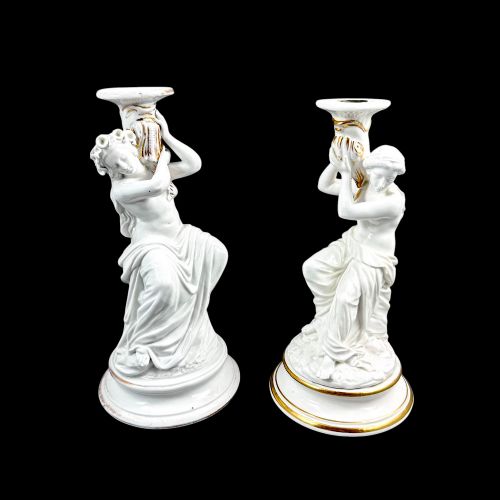
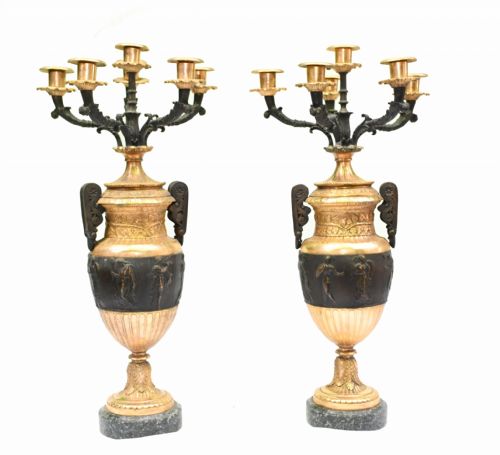


Classical Figure Candlestick Holder
These classical figure candlestick holder pieces combine sculptural bronze, marble, and gilt metal to bring sculptural dignity to a room.
Classical Figure Candlestick Holder
A classical figure candlestick holder combines functional lighting with sculpted human forms, drawing directly from ancient motifs. You will encounter these pieces chiefly from the nineteenth century, including Victorian, Regency, and French Empire styles.
The forms range from single candlesticks supported by caryatids and puttis to multi-light candelabra featuring patinated bronze figures. Many stand upon socle or marble bases, integrating metalwork with stone.
Continental workshops, particularly French and Swedish makers, produced a large proportion of these designs. English examples also appear, reflecting the neoclassical taste of the period.
Materials and construction methods
Foundry work relied on bronze, brass, and gilt metal, often combining patinated dark bronze with bright ormolu highlights. Artisans cast these metals in sections before hand-chasing the surface details.
Bases frequently incorporate white or dark marble, slate, and onyx to provide stability and a contrasting texture. Carved wooden examples also exist, demonstrating alternative sculptural skills.
Ceramic variations utilise porcelain and Wedgwood jasperware for the figural elements, set within metal mounts. Gilding techniques applied gold leaf or mercury gilt to the bronze surfaces.
Classical Figure Candlestick Holder Retail Price Guide 2026
Typical asking prices for classical figure candlestick holder among the pieces listed under this phrase on Sellingantiques today, from the lower quarter to the upper quarter. They describe what is for sale here now, not the wider market.
Putti figures occasionally balance entire candle branches while appearing remarkably unconcerned by the weight.
Judging the quality of manufacture
The sharpness of the cast distinguishes superior examples, where facial expressions and drapery folds remain crisp and detailed. Lesser pieces often exhibit soft edges and shallow chasing from worn moulds.
Material selection dictates durability and weight, with heavy bronze and genuine marble mounts commanding greater presence than lighter brass and slate combinations. The integration between the figure and the base reveals the maker's precision.
Thomas Hope·Wedgwood·Sutherland and Sons·Decoro England
The Classical Figure Candlestick Holder Glossary
- Ormolu
- Gilt bronze produced by applying a mercury and gold amalgam to cast bronze before firing. This technique creates a rich, durable golden finish characteristic of French decorative arts.
- Caryatid
- A sculpted female figure serving as an architectural support instead of a column. In these pieces, the figure often forms the main shaft holding the candle socket.
- Patinated bronze
- Bronze treated with chemical solutions to produce a dark, aged surface tone. This contrasts effectively with bright ormolu mounts.
- Jasperware
- A fine-grained, unglazed stoneware developed by Wedgwood, typically featuring white neoclassical reliefs against a coloured background. It appears frequently in nineteenth-century decorative items.
- Socle base
- A short plinth or pedestal supporting a bust, figure, or candlestick. It elevates the sculptural element above the main foot.
Classical Figure Candlestick Holder: Frequently Asked Questions
How do I clean bronze and ormolu?
Dusting gently with a soft, dry cloth is the safest method for maintaining nineteenth-century metalwork. Avoid chemical polishes, which strip the original ormolu or patination.
Harsh liquids can permanently damage the delicate surfaces of gilt bronze and marble bases, diminishing their historical integrity.
Are these pieces suitable for daily use?
While structurally sound, antique metal and marble items require careful handling to prevent chipping or bending. Modern tapers may not fit older sockets without slight adjustment.
Many collectors prefer to display them as decorative sculptures rather than using them routinely for lighting.
How do I tell French Empire from Regency styles?
French Empire pieces often feature heavier patinated bronze combined with rich ormolu highlights and classical military or mythological motifs. Regency items from England share similar neoclassical roots but frequently incorporate lighter bronze work and distinct local interpretations.
Both styles emerged from the broader revival of ancient aesthetics during the early nineteenth century.
What does Grand Tour mean?
The Grand Tour refers to the traditional travel itinerary undertaken by wealthy young Europeans through France and Italy to study classical art. Souvenirs brought back included bronzes, figures, and architectural models.
Candlesticks from this context often incorporate souvenir figures or materials sourced directly from Italian workshops.