

Empire Style Desk
An empire style desk brings classical dignity to a room through dark woods, weighty mounts, and imposing architectural proportions.
Empire Style Desk
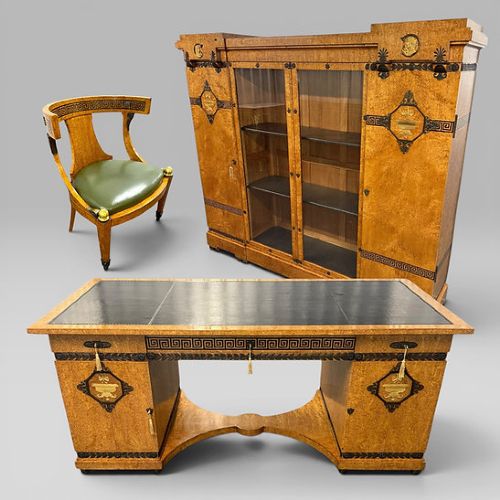
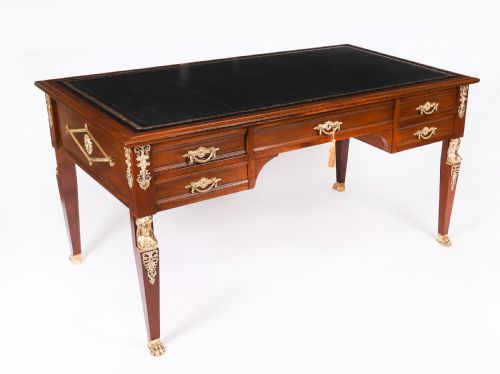
An empire style desk encompasses large architectural writing tables, pedestal desks, cylinder desks, and secretary cabinets that draw upon classical forms. Pieces bearing this descriptor trace their design lineage back to French and English neoclassical movements of the nineteenth century, alongside later revivals.
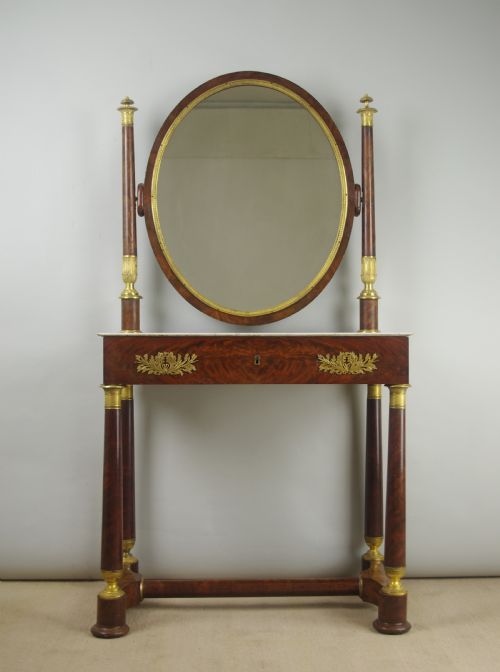
The version most commonly encountered on this page is the French nineteenth-century mahogany writing table or bureau plat, frequently decorated with cast metal mounts. These forms balance severe rectangular geometry with rich timber grain and polished metal details.
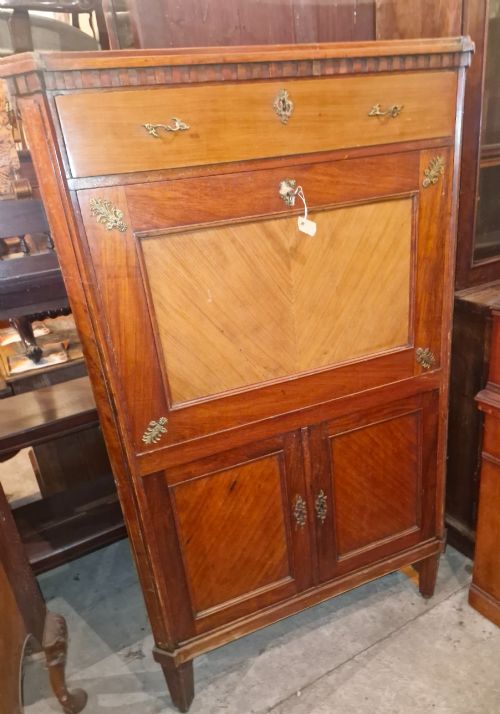
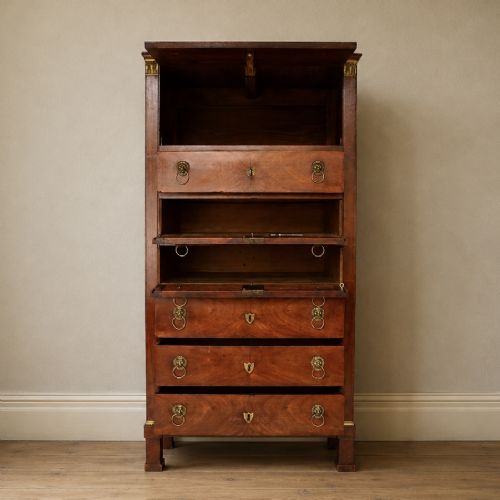
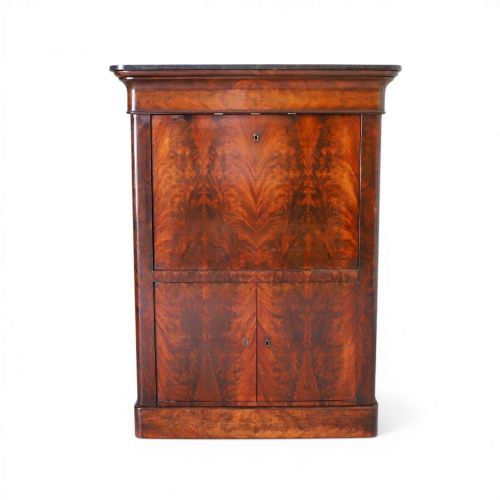
Alongside standard writing tables, buyers will find secretary cabinets featuring drop fronts that conceal fitted drawers, as well as pedestal variations designed for institutional or grand domestic interiors.
Materials and construction
Cabinet makers constructed these pieces using dense hardwoods such as mahogany and walnut, frequently selecting flame veneers to create striking symmetrical patterns across large surfaces. These timbers provide a dark, heavy foundation that supports the formal character of the design.
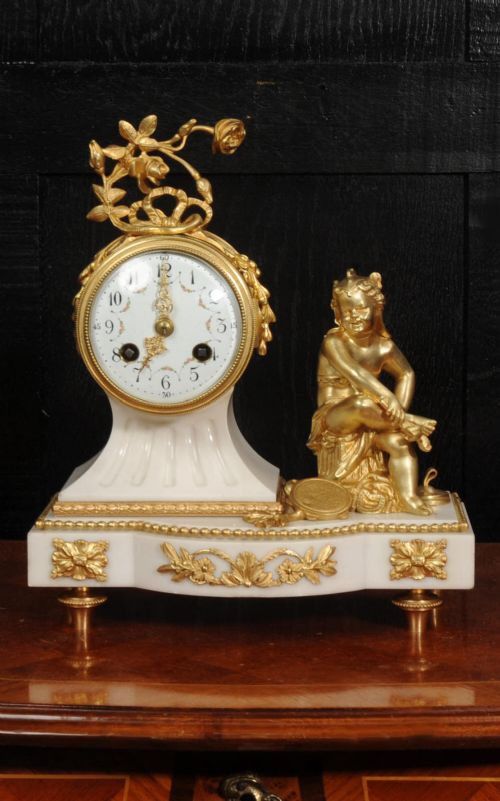
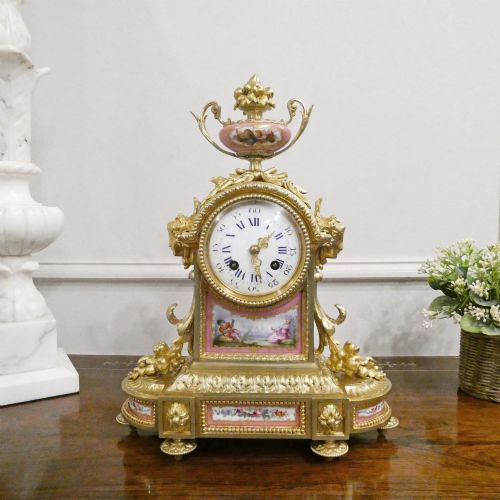
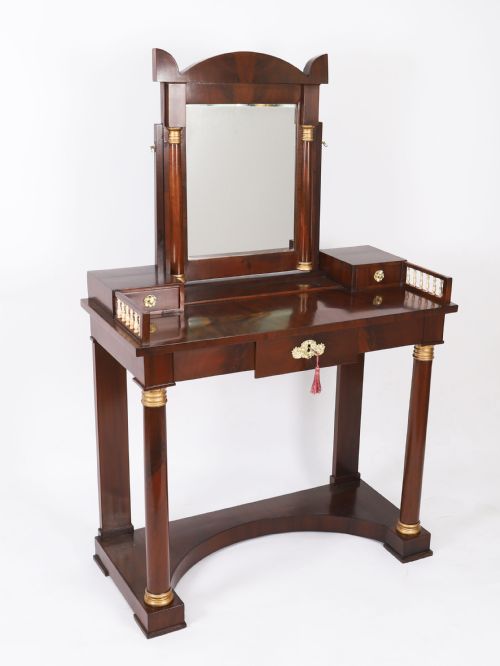
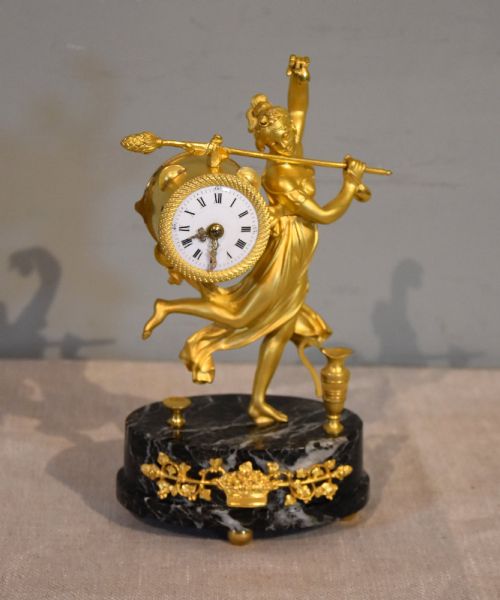
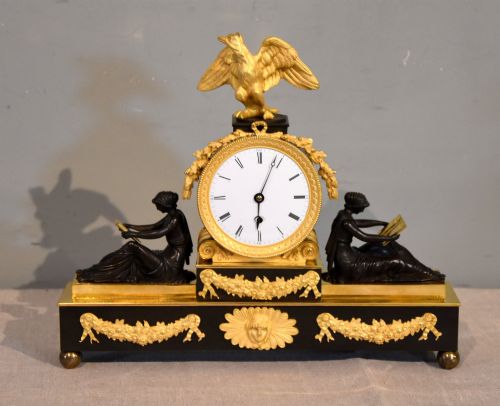
Cast ormolu and gilt bronze mounts define the decorative vocabulary, applied along corners, drawer edges, and legs to highlight structural lines. Marble tops and inset leather writing surfaces also appear frequently, adding contrasting textures and colour to the wooden framework.
Several desks come equipped with secret drawers designed to outsmart inquisitive guests.
Assessing quality and execution
The distinction between ordinary and exceptional pieces rests upon the crispness of the ormolu casting and the depth of the timber preparation. Finer examples display sharp, hand-chased metal mounts with distinct detailing, whereas lesser pieces rely on softer, shallower castings lacking definition.
Construction methods likewise separate standard production from superior craftsmanship, visible in the precision of the drawer dovetails and the integration of secondary timbers. The selection and book-matching of flame mahogany veneers also indicate the ambition of the original workshop.
Japy Freres·Mercier Freres
The Empire Style Desk Glossary
- Ormolu
- Gilded bronze applied as a decorative mount to furniture and clock cases. The technique involves coating base metal in a gold amalgam and firing it.
- Secrétaire à abattant
- A tall upright cabinet with a drop-down writing flap that conceals internal pigeonholes and small drawers. It hides functional storage behind a formal architectural facade.
- Flame mahogany
- A veneer cut from the fork of a mahogany tree where the branch joins the trunk. This technique produces a flickering flame-like grain pattern highly prized for cabinet fronts.
- Neoclassical
- A style rooted in the art and architecture of classical antiquity. It emphasises symmetry, straight lines, and classical motifs such as columns and wreaths.
Empire Style Desk: Frequently Asked Questions
What is an empire style desk?
An empire style desk is a heavy, formal writing table or cabinet influenced by classical antiquity and nineteenth-century French design. These pieces utilise dark timbers like mahogany and walnut, paired with symmetrical proportions.
Such desks often include cast bronze or ormolu mounts, leather writing inserts, and architectural columns. They were built to project authority and classical proportion in grand studies and libraries.
How were these desks used?
These desks served primarily for correspondence, administration, and the management of household or estate affairs. The inclusion of drawers and secret compartments allowed owners to store private papers securely.
Freestanding writing tables were placed in the centre of rooms rather than against walls, allowing them to be approached from multiple sides during daily correspondence.
How do I care for the timber?
Maintaining mahogany and walnut surfaces requires keeping the furniture away from direct sunlight and sudden temperature changes. Natural waxes help nourish the wood grain and preserve the deep reddish-brown tones without building up heavy residue.
Harsh chemical cleaners should be avoided to protect both the polished wood finish and the delicate gilt bronze mounts attached to the frame.
How do I tell periods apart?
Dating these pieces involves examining construction techniques, timber selection, and the style of the metal mounts. Nineteenth-century originals typically display hand-cut dovetails and heavier, more precise ormolu castings than later twentieth-century revivals.
Early nineteenth-century examples reflect the direct influence of French and English Regency design, whereas later revivals often borrow decorative elements more freely across historical periods.