






French Empire Writing Desk
A french empire writing desk brings severe classical symmetry and rich mahogany into a room.
French Empire Writing Desk
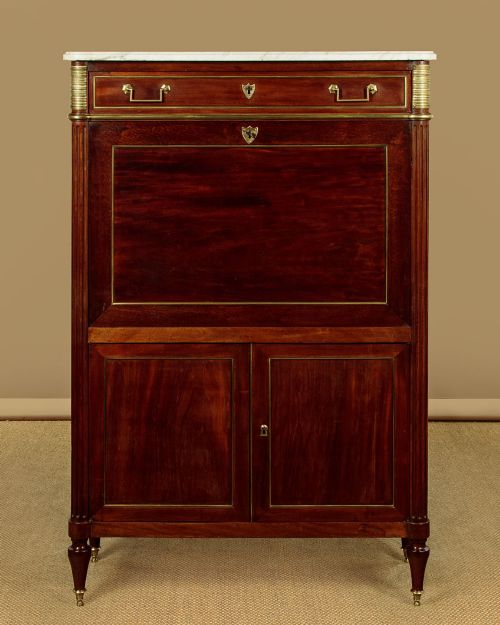
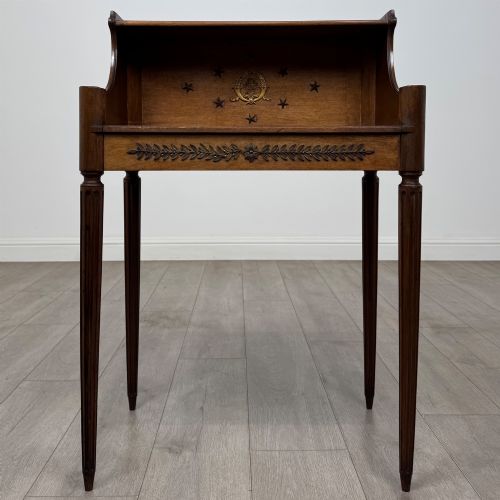
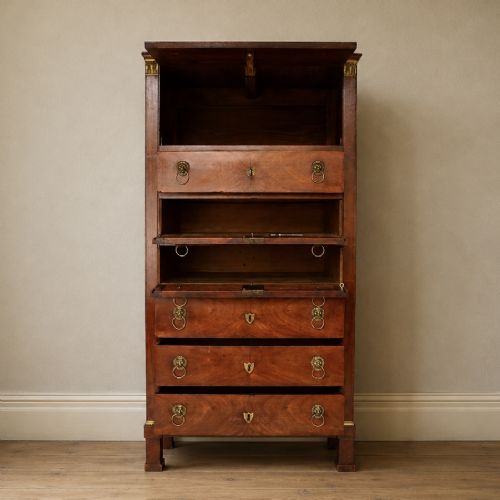
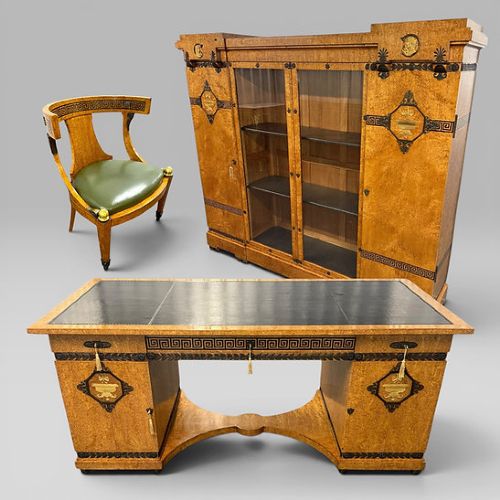
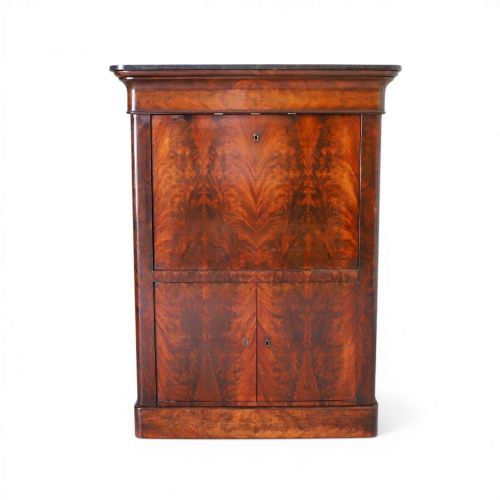
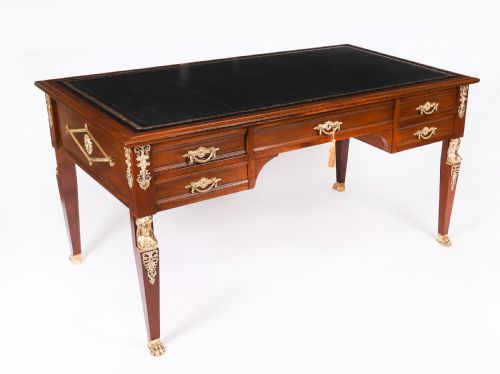
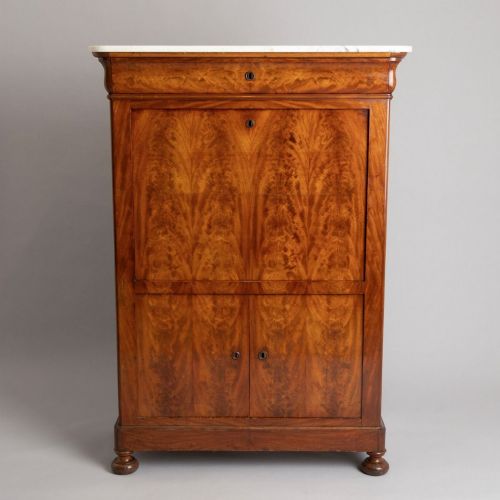
A french empire writing desk encompasses freestanding bureau plat tables, drop-front secretaire abattant cabinets, and cylinder desks built across the nineteenth century. These pieces draw on French Neoclassical, Empire, and Restoration styles, appearing alongside later revival iterations.
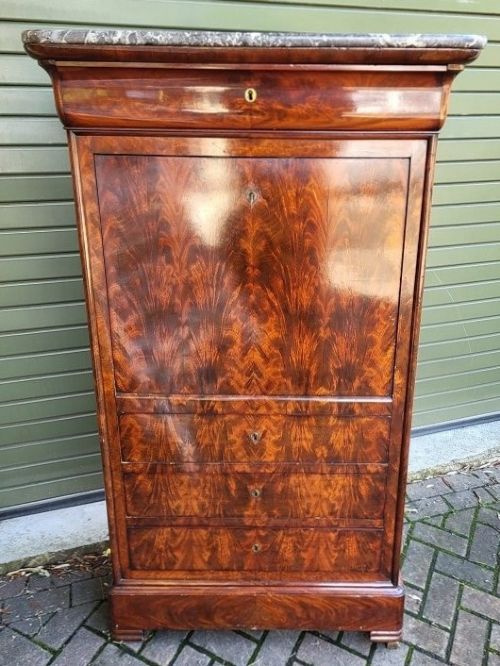
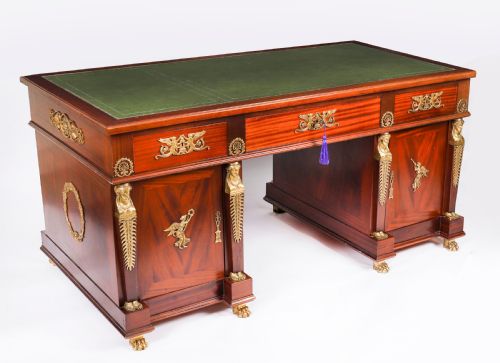
The version most commonly encountered on this page is the freestanding bureau plat or the vertical secretaire abattant in mahogany, walnut, or flame mahogany. Many incorporate marble tops, leather writing inserts, and concealed compartments.
Origins trace directly to French workshops and cabinetmakers working within the nineteenth century, though related pieces extend into the twentieth century under Edwardian and later revival influences.
Materials and Construction
Carpenters constructed these desks using solid and veneered timbers including mahogany, flame mahogany, walnut, and burr walnut over robust carcases. Leather inserts provided the primary writing surface.
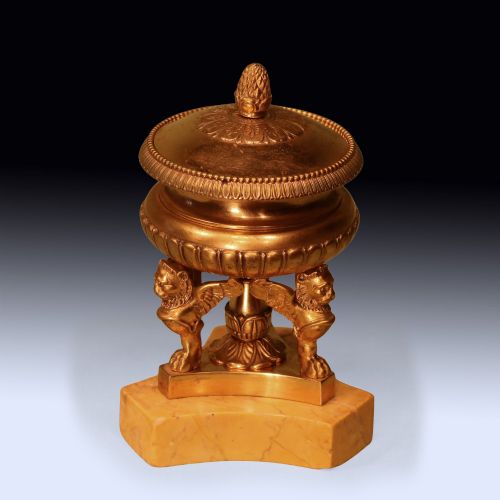
Mounts and hardware relied heavily on cast brass, ormolu, and gilt bronze, often paired with contrasting white or coloured marble tops on cabinets and inkstands.
Listings feature mahogany, walnut, and flame mahogany paired with ormolu, marble, and leather across nineteenth-century forms.
Craftsmanship and Proportion
Quality rests in the precision of the cabinetwork, the depth of figure in the flame mahogany or walnut veneers, and the crispness of the cast ormolu mounts. Finer examples display harmonious architectural proportions and integrated secret drawers.
Lesser pieces exhibit simpler secondary timbers, coarser bronze casting, and straightforward joinery without the refined classical detailing or heavy gilt enrichment found on works associated with notable makers.
Mercier Frères·Jean-Joseph Chapuis·Lefebvre of Belgium
The French Empire Writing Desk Glossary
- Bureau plat
- A freestanding writing table, typically finished on all sides with a leather inset top and multiple drawers.
- Secrétaire à abattant
- A tall vertical cabinet featuring a drop-front panel that conceals a fitted interior of small drawers and pigeonholes.
- Ormolu
- Gilded bronze used for decorative mounts and feet, cast and chiselled to accent the corners and aprons of the furniture.
- Escritoire
- A general term for a writing desk or cabinet designed for correspondence and storage of paper.
- Inkstand
- A desk accessory holding inkwells and sanders, frequently mounted on a marble base with ormolu detailing.
French Empire Writing Desk: Frequently Asked Questions
How do I identify a true period piece?
Examine the secondary timbers inside the drawers, the hand-cut dovetails, and the weight and chasing of the ormolu mounts. Nineteenth-century construction methods leave distinct tool marks absent in later reproductions.
Compare the style markers against documented pieces from the Empire and Restoration periods to verify proportions and material combinations.
What is a secretaire abattant?
A secretaire abattant is a tall upright cabinet with a hinged front board that folds down to create a writing surface. Inside, small drawers and pigeonholes store writing materials.
When closed, the drop-front locks flush against the cabinet body, concealing the interior workspace.
How do I care for leather desk inserts?
Keep leather writing surfaces away from direct sunlight and excessive heat to prevent drying and cracking. Dust regularly with a dry cloth.
Condition the leather sparingly with appropriate neutral balms recommended for antique leather surfaces to maintain flexibility.
Where were bureau plat desks placed?
A bureau plat was designed to stand away from the wall, often positioned in the centre of a study or library. Because the back is finished identically to the front, the piece commands a prominent room position.
This freestanding format suited formal administrative tasks and allowed access from multiple sides.