

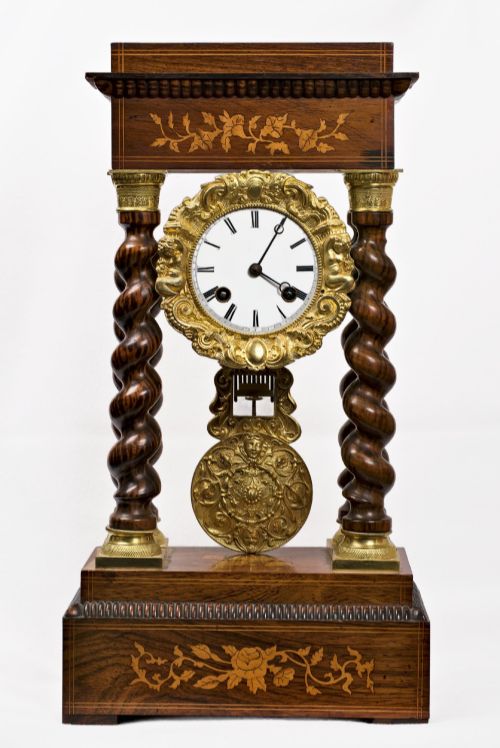
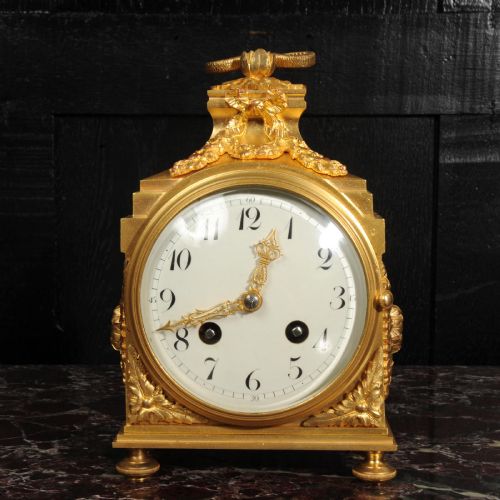
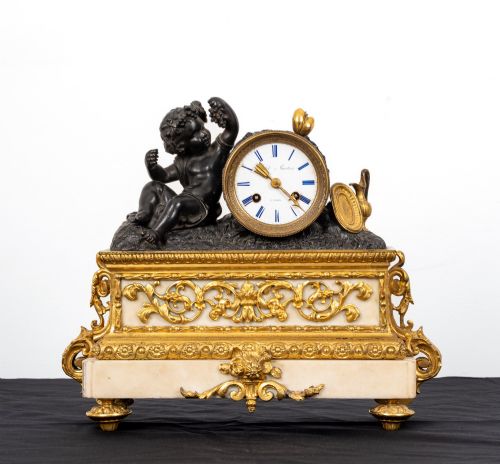
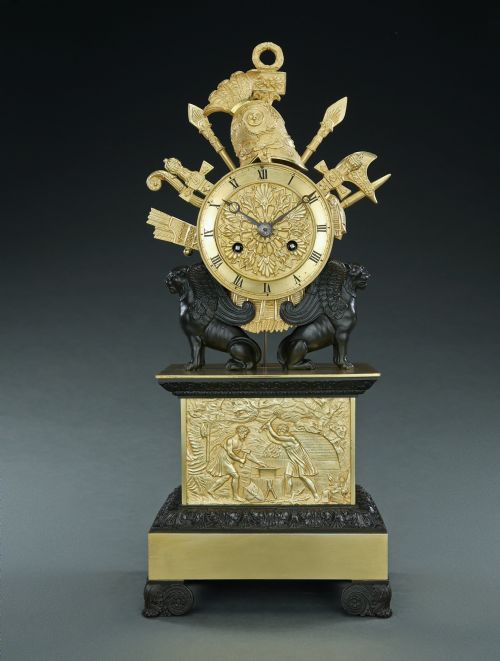
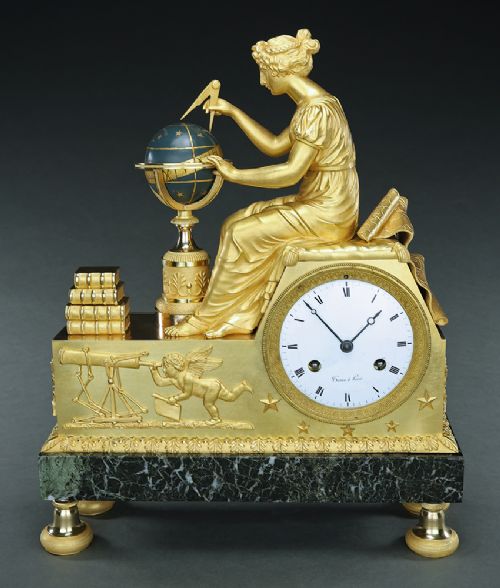
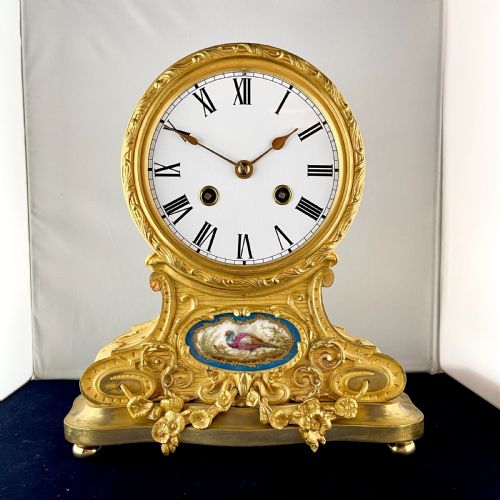
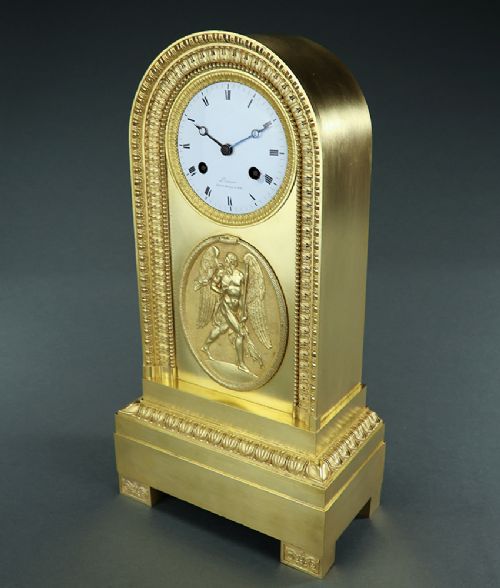
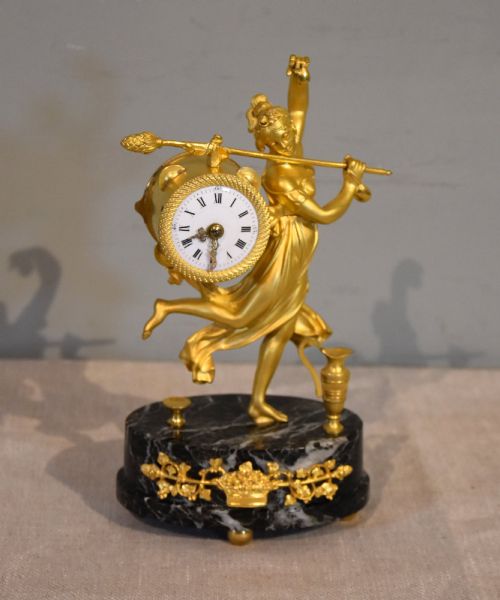

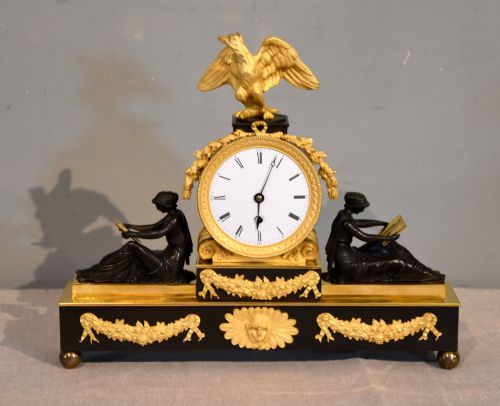

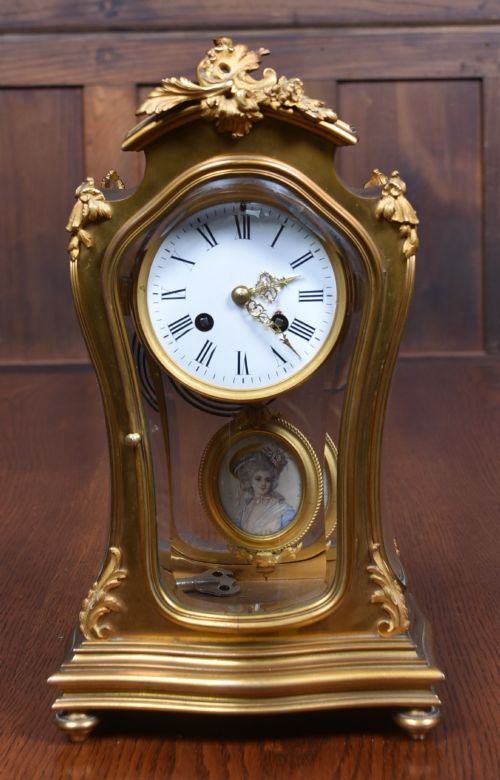
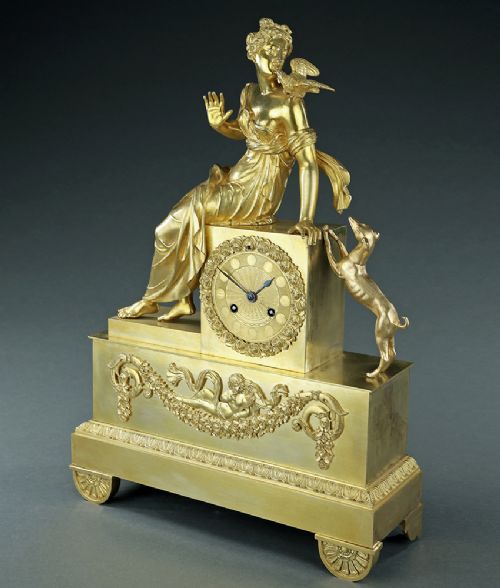
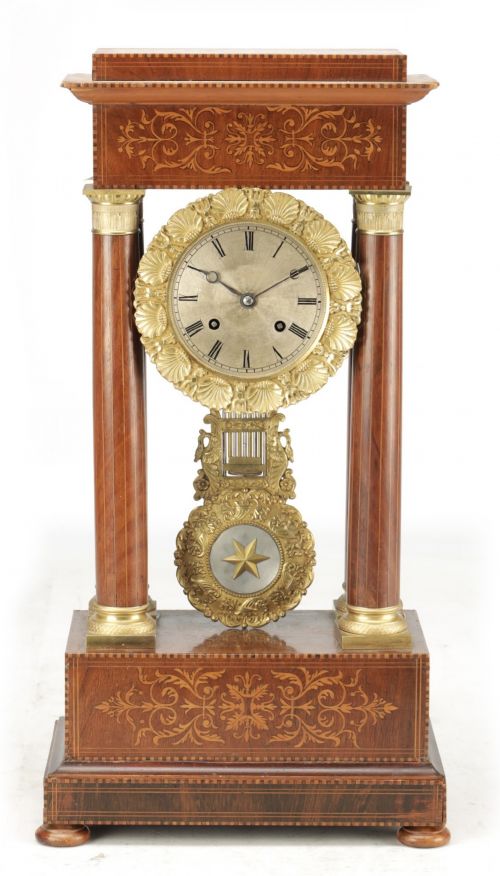
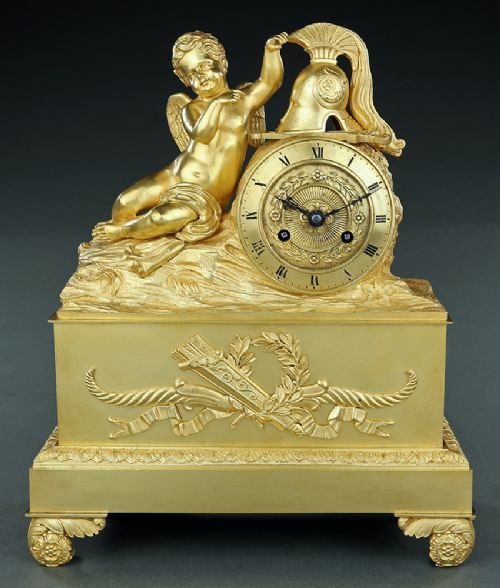
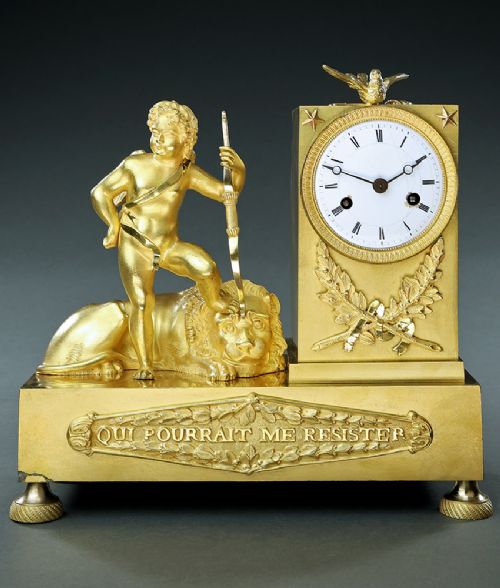
Empire Ormolu Table Clock
An empire ormolu table clock brings grand neoclassical presence to a room, combining cast gilt bronze with intricate mechanical precision.
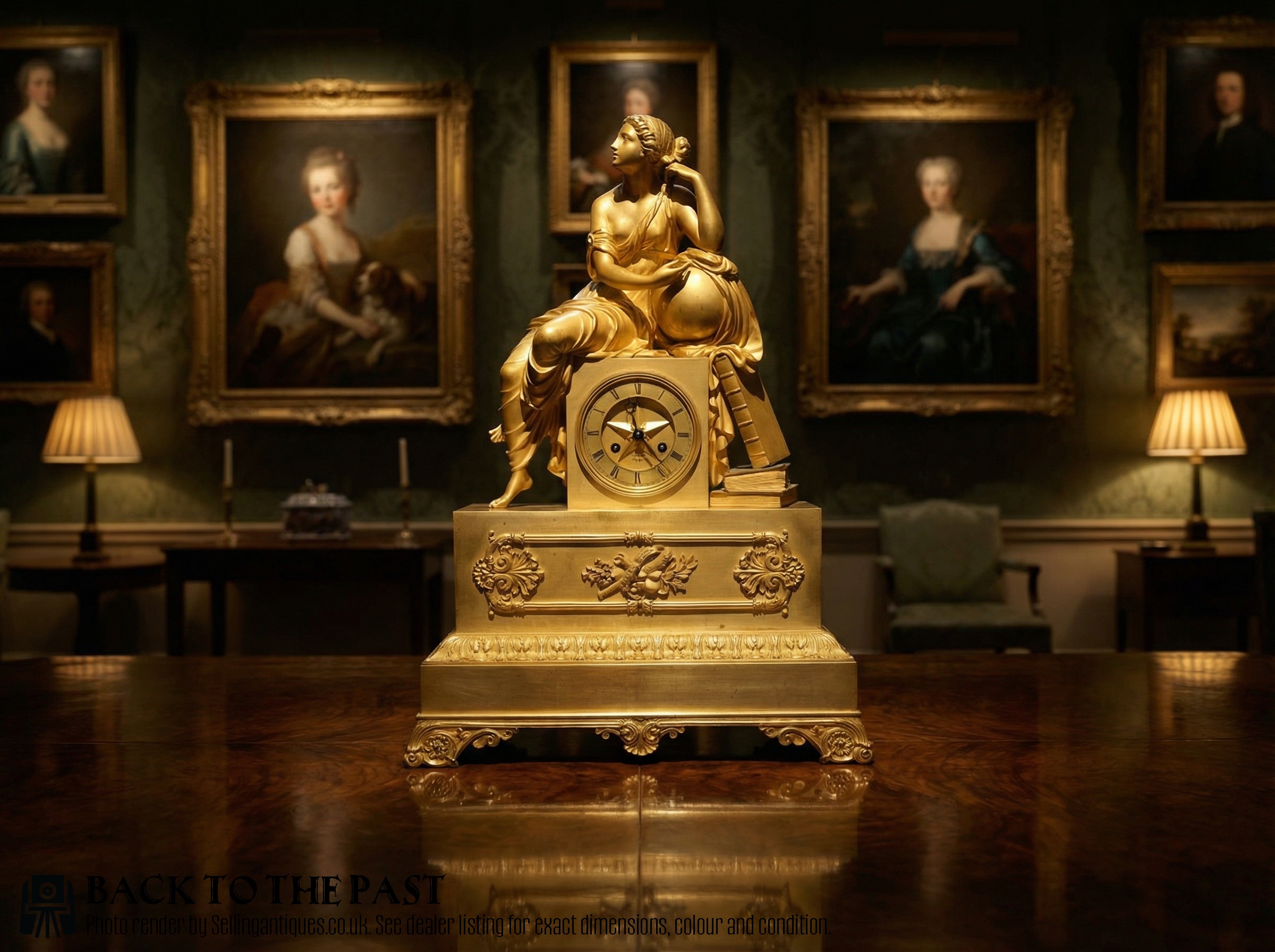
Empire Ormolu Table Clock
An empire ormolu table clock is a sculptural timepiece rooted primarily in 19th-century French design, drawing upon classicism, mythology, and allegorical themes. These horological pieces often depict figures and motifs such as astronomy, love, and trophies of war, rendered in substantial cast metals.
The most common variations encountered on this page include French mantel clocks and portico clocks spanning the 19th century, alongside Victorian interpretations and revivals. Makers combined heavy bronze castings with contrasting materials to anchor these substantial domestic timekeepers on mantelpieces and sideboards.
Materials and Construction
Gilt bronze and ormolu form the visual foundation of these timepieces, providing a rich golden surface finish that highlights the detailed relief work of the castings. Patinated bronze often acts as a dark contrast to the bright gilding, emphasising sculptural figures and architectural elements.
Enamel, marble, porcelain, and cut crystal complete the construction of many pieces, serving as dial faces, bases, and structural columns. These supporting materials introduce varied textures and colours, from green and rouge marbles to delicate hand-painted porcelain panels.
Empire Ormolu Table Clock Retail Price Guide 2026
Typical asking prices for empire ormolu table clock among the pieces listed under this phrase on Sellingantiques today, from the lower quarter to the upper quarter. They describe what is for sale here now, not the wider market.
Timepieces bearing celestial and mythological themes bring quiet philosophical observation to the room, measuring hours beneath the gaze of ancient astronomers.
Assessing Craftsmanship
The sophistication of the bronze casting and the crispness of the chasing separate standard timepieces from superior examples. Master artisans hand-chiseled the raw cast metal after removal from the mould, sharpening architectural details, hair, and drapery folds.
The integration of the movement with the case, including signed mechanical components by established makers and the inclusion of painted porcelain or miniature panels, indicates higher ambition and skill in the workshop.
Japy Freres·Samuel Marti·Canaillor of Paris·Siffel and Cartier·Rodier
The Empire Ormolu Table Clock Glossary
- Ormolu
- Gilded bronze produced by applying a mercury and gold amalgam to a bronze object and heating it to vaporise the mercury. This historic technique yields a durable, deep golden lustre unique to period metalwork.
- Portico clock
- A distinct architectural clock style featuring a dial suspended between two vertical pillars, often constructed from marble, wood, or ormolu. The pendulum typically swings openly within the central space.
- Garniture
- A set consisting of a central clock flanked by matching decorative objects such as vases or candelabra. These matched assemblies were designed to create a balanced centrepiece display.
- Patinated bronze
- Bronze treated with chemical solutions to produce a controlled dark surface finish. This contrasting dark tone highlights adjacent bright ormolu sections.
- Fusee
- A conical pulley used in clock movements to equalize the declining power of a mainspring as it unwinds. This mechanism helps maintain consistent timekeeping accuracy.
Empire Ormolu Table Clock: Frequently Asked Questions
How do I wind an empire ormolu table clock?
Most antique mechanical clocks use a dedicated winding key inserted into small holes on the enamel dial face to tension the internal springs. Care must be taken not to over-wind the mechanism.
Consulting a professional horologist for an initial inspection ensures the springs and gear trains are properly lubricated before regular operation begins.
Where should I place a heavy marble clock?
These dense pieces require a sturdy, level surface such as a heavy sideboard or a secure mantelpiece to support their considerable weight. Stability prevents accidental tipping and keeps the pendulum swinging evenly.
Avoiding areas exposed to direct sunlight or damp conditions protects the delicate enamel dials and the gilded ormolu surfaces from environmental damage.
How can I tell a 19th-century clock from a later revival?
Examining the construction of the cast metal, the mounting screws, and the backplate stamps often reveals the manufacturing era. Period pieces exhibit hand-finished chasing and specific movement maker marks associated with the 19th century.
Stylistic cues also provide guidance, as mid-century neoclassical interpretations differ perceptibly from later late-century mass-produced revivals.