





French Bronze Figural Clock
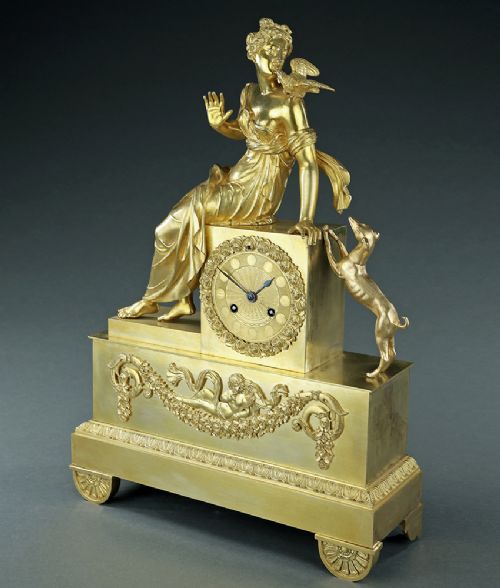
A french bronze figural clock brings nineteenth-century foundry skill and narrative sculpture together on the mantelpiece.
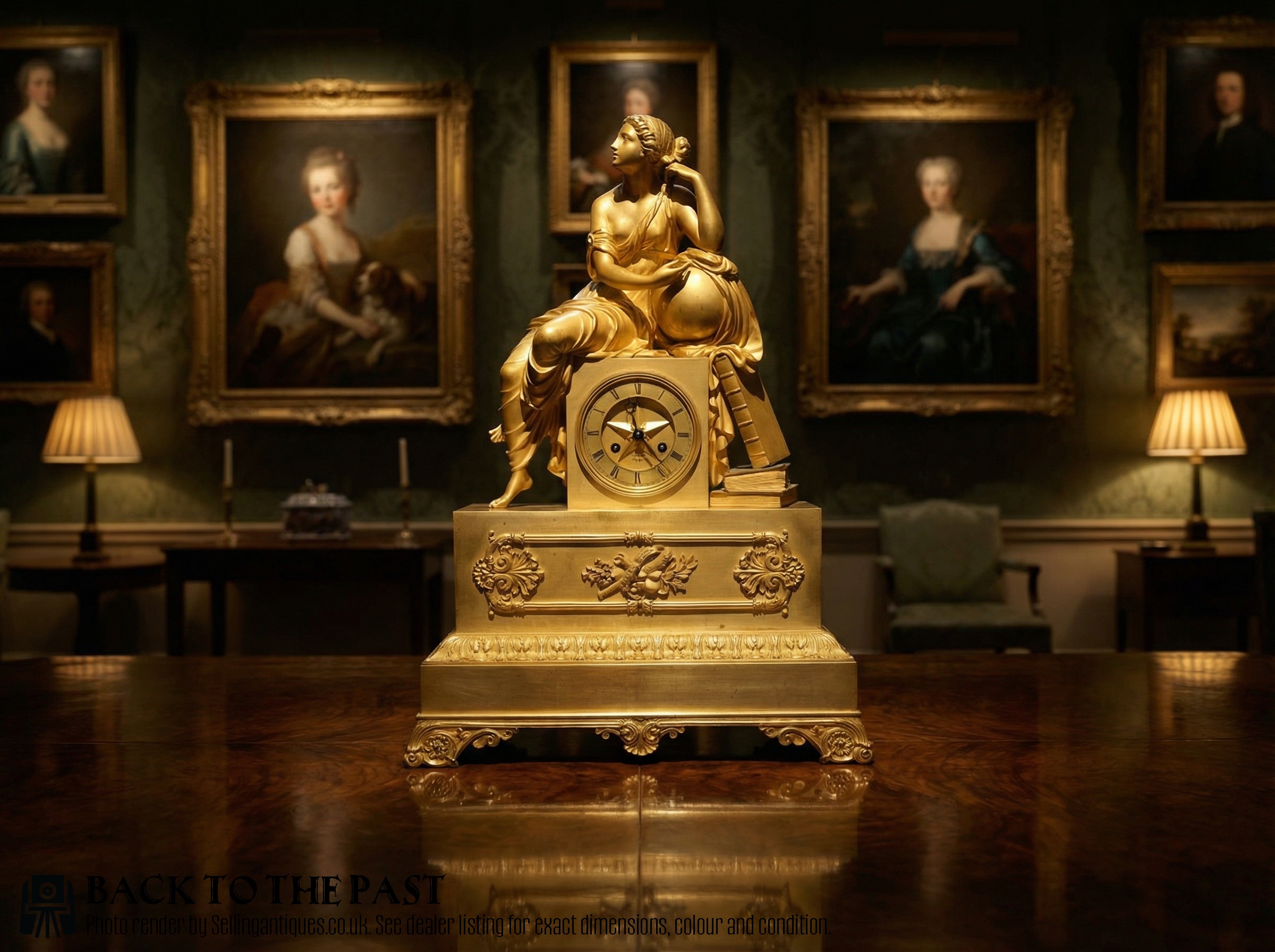
French Bronze Figural Clock
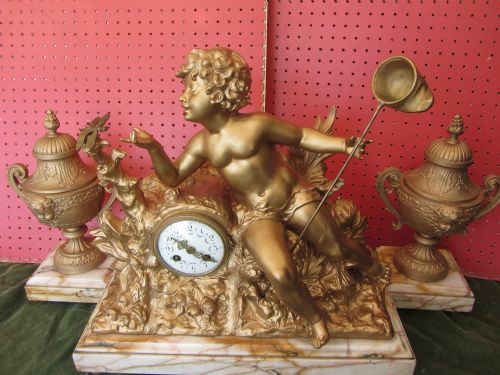
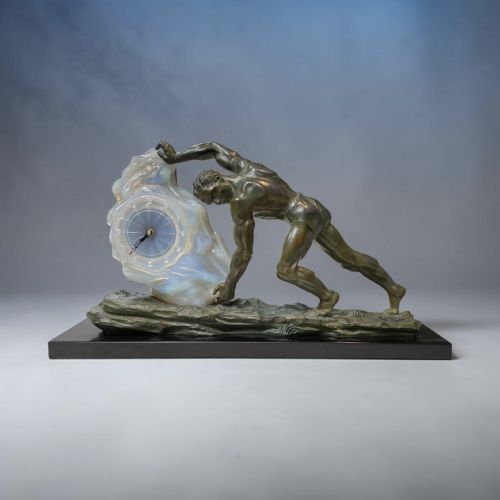
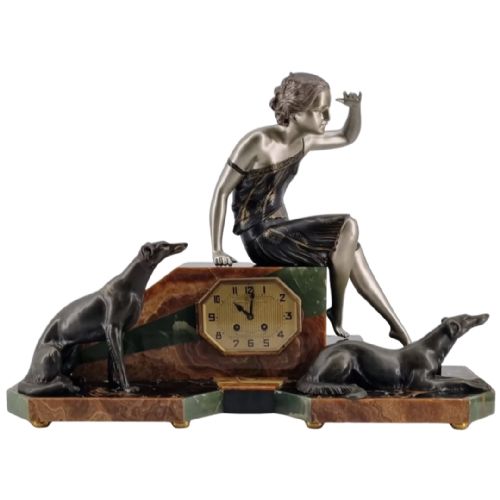
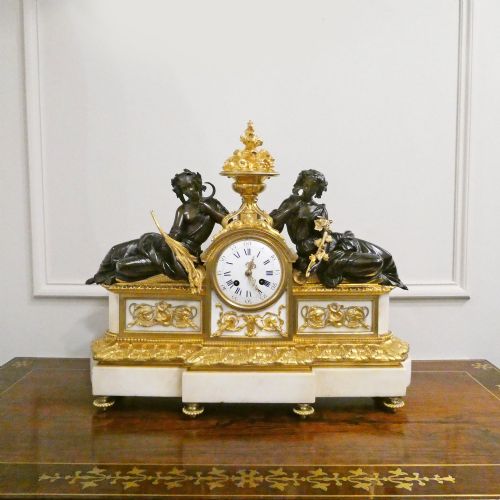
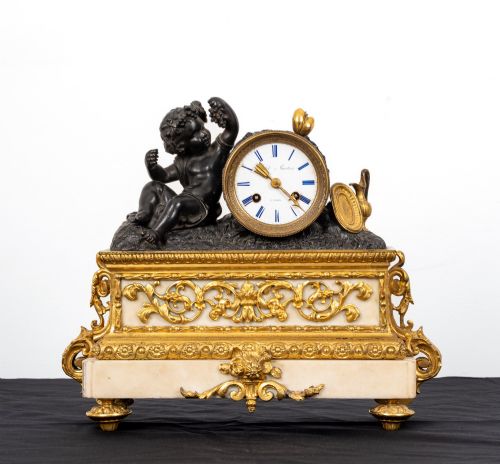
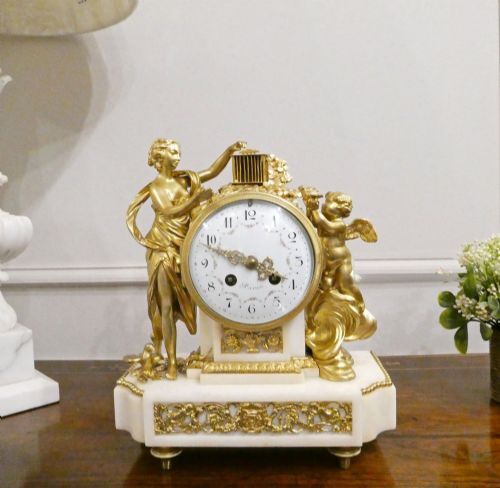
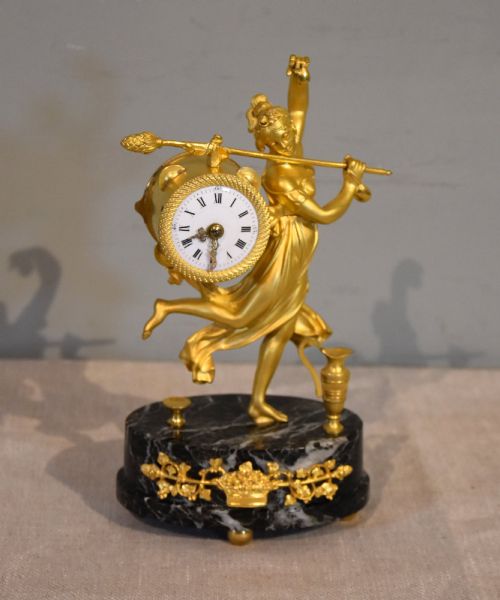
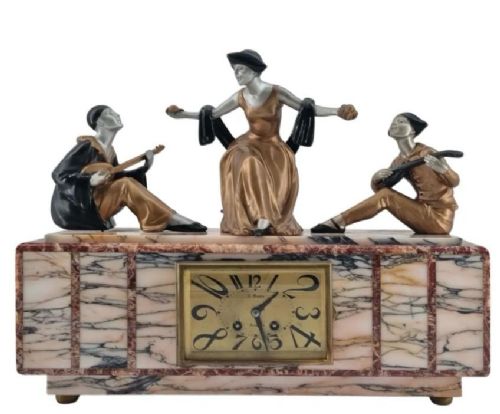
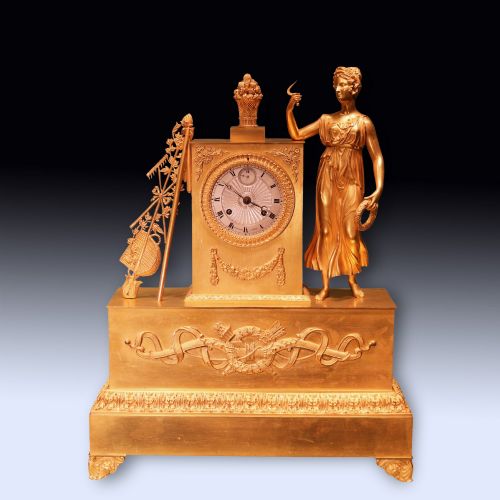
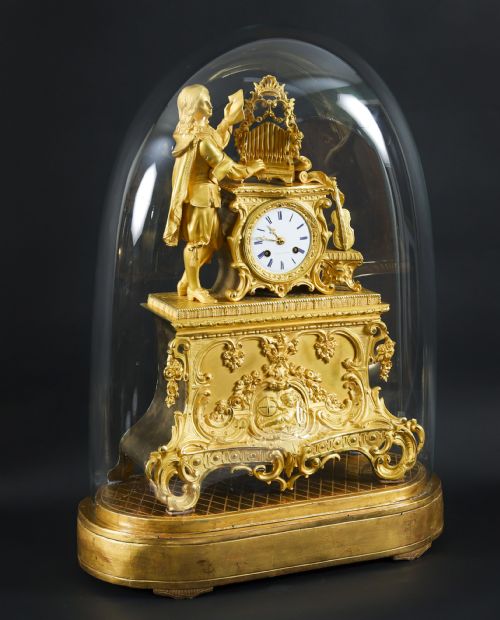
A french bronze figural clock combines timekeeping with sculptural subjects ranging from classical mythology and medieval knights to allegorical figures like love, fidelity, and poetry. These pieces appear primarily as mantel clocks, table clocks, and multi-piece clock garnitures accompanied by matching side ornaments.
Most examples originate from the nineteenth century, spanning periods such as the French Empire, French Second Empire, and French Rococo Revival. Buyers frequently encounter designs incorporating marble bases, patinated bronze figures, and gilt ormolu mountings.
How They Were Made
Foundries utilised bronze, patinated bronze, and mercury-gilt ormolu to cast the sculptural figures and architectural cases, often mounting them upon contrasting green, white, or dark marble plinths. Mechanical movements sat within these metal housings, paired with enamelled or hand-painted dials that recorded the hours.
Craftsmen combined metal-casting, chasing, and gilding techniques to achieve varied surface textures, contrasting dark patinated bronze against bright ormolu details. Cases incorporated glass face covers, brass components, and occasionally porcelain or onyx elements.
French Bronze Figural Clock Retail Price Guide 2026
Typical asking prices for french bronze figural clock among the pieces listed under this phrase on Sellingantiques today, from the lower quarter to the upper quarter. They describe what is for sale here now, not the wider market.
Object forms span standard mantel clocks, table clocks, and multi-piece garniture sets featuring subjects from poets to medieval knights.
What Varies In Quality
The crispness of the bronze chasing and the depth of the mercury gilding determine the visual hierarchy of these objects, distinguishing sharp sculptural definition from softer, worn casting. Superior examples exhibit harmonious proportions between the central figure, the marble plinth, and the decorative mounts.
The reputation of the maker and the complexity of the movement, such as fusee mechanisms or specialised striking trains, separate standard production pieces from exceptional horological works. The integration of high-grade materials like matched marble and finely painted enamel dials further elevates the standing of an individual piece.
Vincenti·Siffel and Cartier·Canaillor of Paris·Japy Freres·Leroy Paris·Auguste Moreau·Lemerle Charpentier
The French Bronze Figural Clock Glossary
- Ormolu
- Gilded bronze produced by applying a mercury and gold amalgam to a bronze base and heating it to drive off the mercury. This technique creates a durable, luminous golden finish characteristic of many nineteenth-century pieces.
- Clock garniture
- A set comprising a central mantel clock flanked by matching decorative side pieces such as candelabra, vases, or urns. These sets were designed to create a symmetrical display on a mantelpiece.
- Patinated bronze
- Bronze treated with chemical solutions to produce a controlled surface colour, typically dark brown, green, or near-black. This dark finish provides visual contrast against bright ormolu mounts.
- Fusee
- A conical pulley used in clock movements to maintain an equal driving force as the mainspring unwinds. Its inclusion indicates higher mechanical sophistication.
- Enamel dial
- A clock face made by fusing powdered glass onto a metal plate at high temperatures, often featuring hand-painted numerals. These dials provide a durable, glossy surface resistant to discolouration.
French Bronze Figural Clock: Frequently Asked Questions
How do I wind a French mantel clock?
Most mechanical clocks require a specialised key inserted into the winding arbors on the dial face. Turn the key gently until resistance indicates the mainspring is fully wound.
Take care not to over-wind the movement, as this can damage the internal springs. Consult the specific striking or time-only requirements of the mechanism before adjusting the time.
What is a clock garniture set?
A clock garniture consists of a central mantel clock accompanied by two matching side pieces, which are typically urns, vases, or candelabra. These sets were created to provide a balanced, decorative arrangement on a mantel or sideboard.
The side ornaments share the materials, motifs, and metal finishes of the main clock case, such as matching marble bases and ormolu mounts.
How are bronze and ormolu cleaned?
Dust bronze and ormolu surfaces gently with a soft, dry microfibre cloth to prevent the accumulation of grime. Avoid chemical cleaners, polishes, or abrasive cloths that can strip the delicate mercury gilding or alter the bronze patina.
Marble bases can be wiped with a damp cloth and dried immediately. Professional maintenance is recommended for internal mechanical servicing.
What subjects do figural clocks depict?
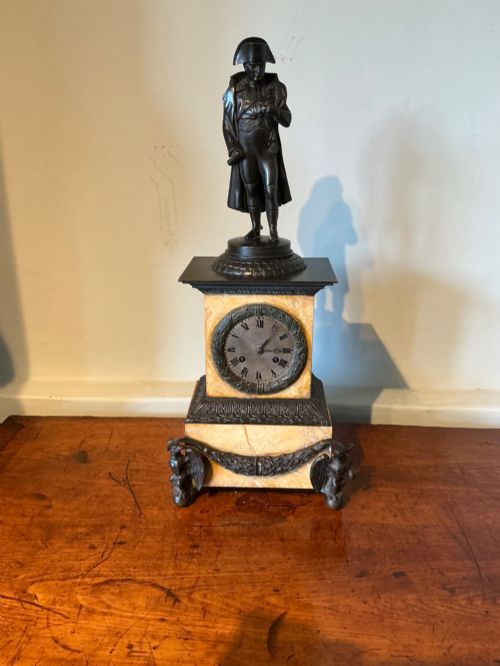
Figural clocks frequently portray classical deities, historical figures such as Napoleon, literary characters, and allegories of concepts like love, fidelity, astronomy, and poetry. Animals, including lions and goats, also appear as central sculptural subjects or case supports.
Sculptural subjects often reflect the prevailing artistic movements of their time, shifting from formal neoclassical allegories to romantic and theatrical designs.