

Empire Mahogany Side Table
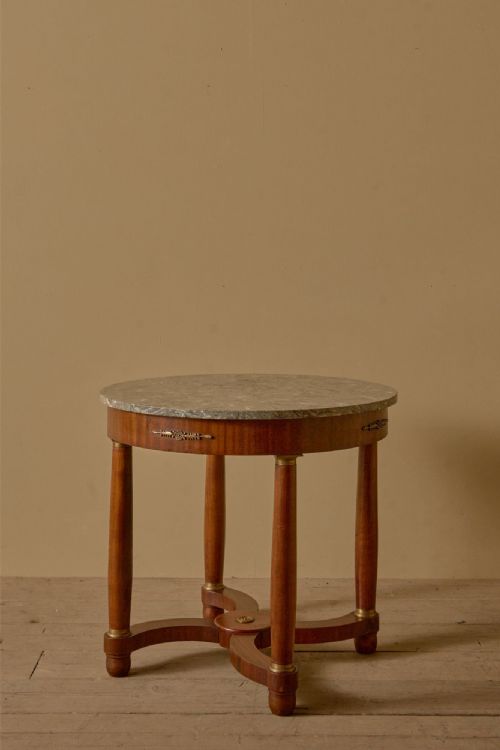
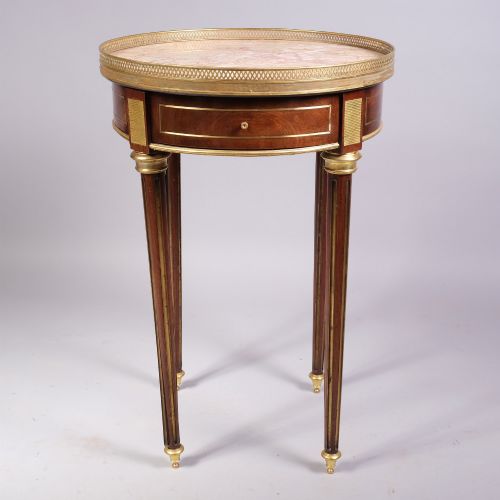
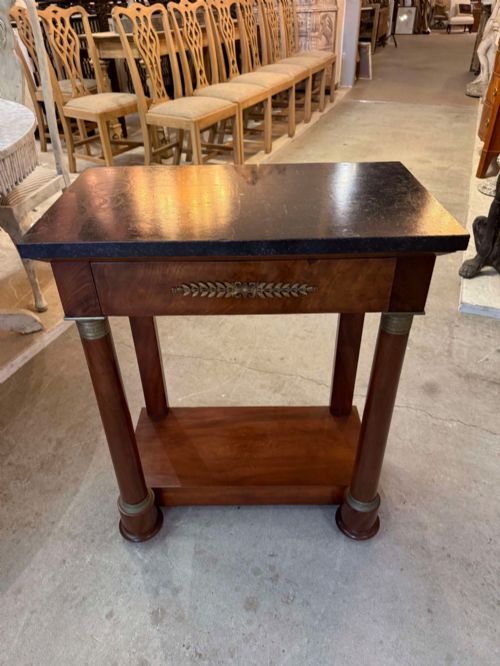
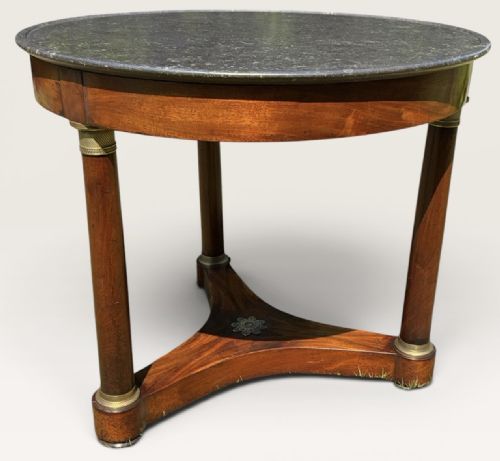
An empire mahogany side table commands attention with architectural bronze mounts and deep, figured timber.
Empire Mahogany Side Table
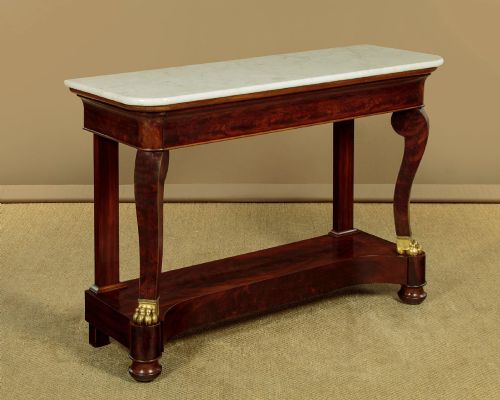
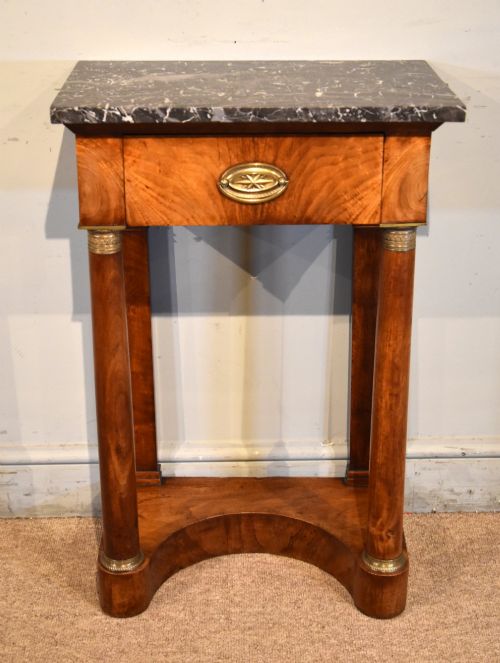
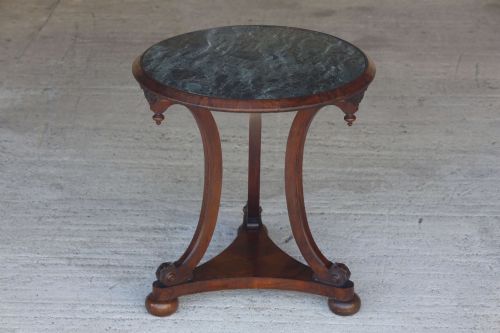
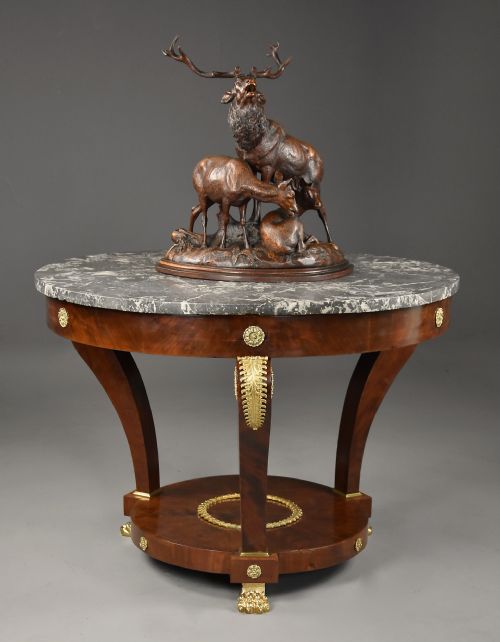
An empire mahogany side table is a formal piece built during the nineteenth century, drawing on neoclassical design traditions from France, Britain, and Italy. You will most frequently encounter round gueridon tables, wall-mounted console tables, and compact bedside cabinets originating from French workshops.
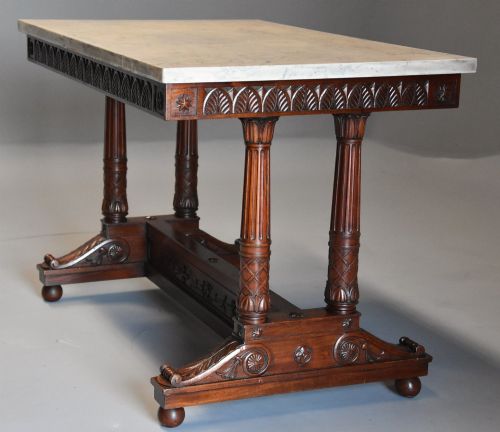
The inventory on this page spans console tables, occasional tables, and sofa tables produced across the nineteenth and early twentieth centuries. Makers applied French Empire, Regency, and Louis XVI revival styles to solid mahogany and flame mahogany foundations.
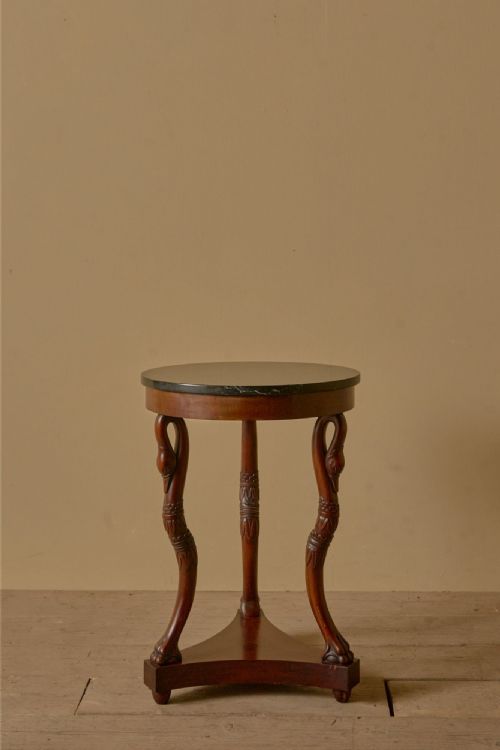
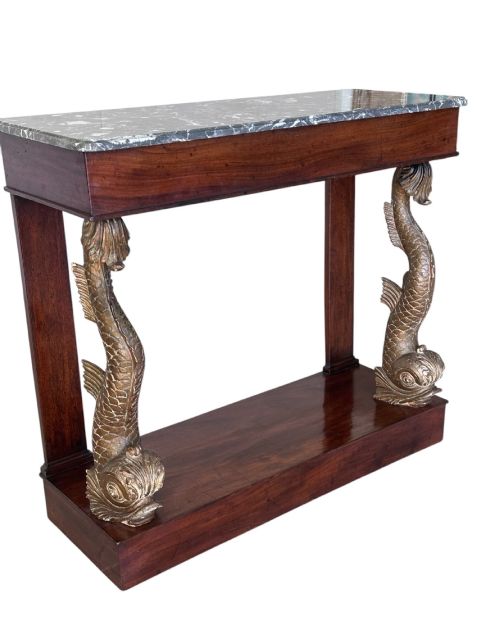
These forms served practical household functions in drawing rooms, salons, and bedchambers, often holding lamps, books, or decorative objects. Their silhouettes rely on strong geometry, frequently supported by central pedestals, swan motifs, or dolphin carvings.
How they were made
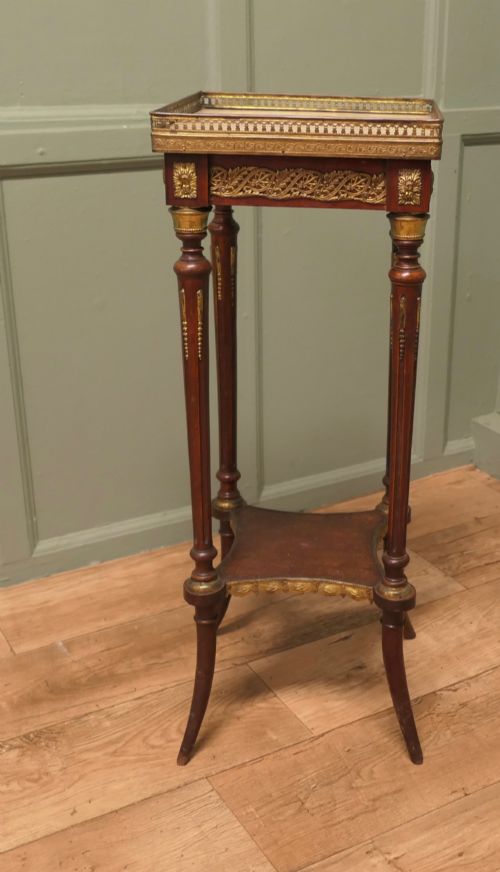
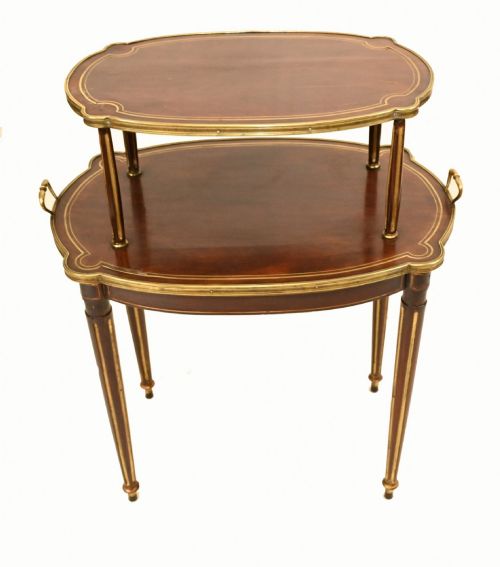
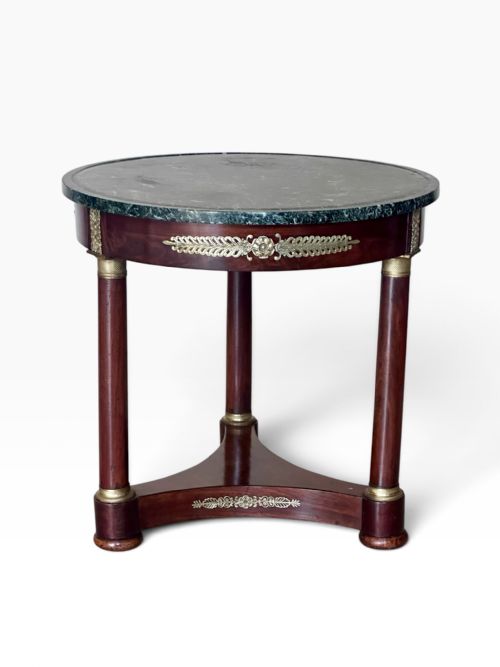
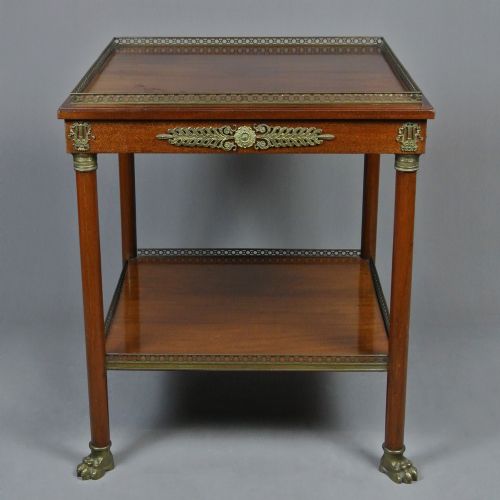
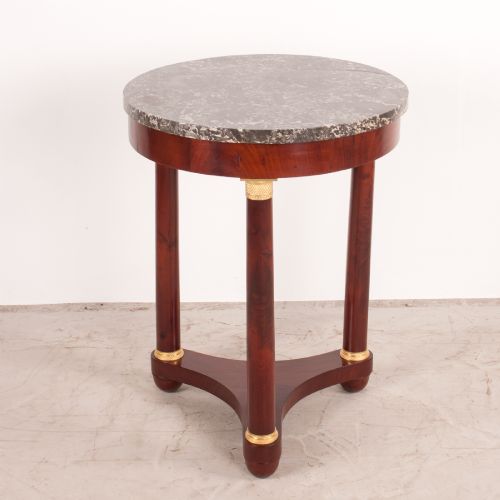
Cabinetmakers constructed the primary carcases using solid mahogany and figured veneers like flame mahogany, laying them over secondary timbers to achieve stable, rich surfaces. Tops were frequently finished with heavy slabs of white, grey, or fossil marble, sometimes bordered by pierced brass galleries.
Mounts made from cast brass or ormolu provided the characteristic neoclassical ornamentation, depicting motifs such as rams' heads and classical foliage. These metal elements were typically fire-gilded or polished and secured directly to the timber frame with small pins or screws.
Empire Mahogany Side Table Retail Price Guide 2026
Typical asking prices for empire mahogany side table among the pieces listed under this phrase on Sellingantiques today, from the lower quarter to the upper quarter. They describe what is for sale here now, not the wider market.
Listings feature nineteenth-century forms including console tables, gueridons, and bedside cabinets constructed from mahogany, marble, and ormolu.
What varies in quality
The standard of an empire mahogany side table is dictated by the depth of grain in the timber veneer and the crispness of the bronze or ormolu mounts. Finer examples display hand-chased metalwork with sharp detail, whereas simpler pieces rely on unadorned mahogany or standard brass mouldings.
Structural integrity and the originality of the stone tops define the upper tier of surviving examples. Tables retaining their original marble slabs, leather inserts, and maker stamps demonstrate superior workshop provenance compared to later revival pieces.
Jean-Jacques Werner·Krieger Paris·Jean-Joseph Chapuis·Linke
The Empire Mahogany Side Table Glossary
- Gueridon
- A small round table supported by a central pillar or column. These were commonly used as lamp tables or occasional stands in French interiors.
- Ormolu
- Gilt-bronze ornamentation applied to furniture. The technique involves treating bronze with a mixture of mercury and gold.
- Console table
- A table designed to stand against a wall, frequently secured with brackets. They often feature elaborate front legs or architectural supports.
- Flame mahogany
- A veneer cut from the fork of the mahogany tree where the branch joins the trunk. It creates a distinctive flamy, swirling grain pattern.
- Gallery
- A raised decorative border surrounding the edge of a tabletop. They are frequently pierced from sheet brass or cast in metal.
Empire Mahogany Side Table: Frequently Asked Questions
How do I use an empire mahogany side table?
These tables fit naturally beside seating arrangements in a living room or as a statement piece in a hallway. Their sturdy marble or timber tops accommodate lamps, books, and decorative objects with ease.
For bedside use, smaller cabinets offer concealed storage paired with classic neoclassical styling. Ensure the height matches adjacent furniture before placing them in your room.
What is a gueridon table?
A gueridon is a circular table typically resting on a central column and a tripartite base. Nineteenth-century examples often incorporate marble tops and heavy bronze mounts.
Cabinetmakers designed them as versatile centre tables or lamp stands for Parisian salons. Their compact footprint allows them to sit comfortably in the middle of a room or tucked beside a sofa.
How do I identify French Empire style?
French Empire furniture relies on bold classical proportions, dark mahogany timbers, and contrasting ormolu mounts. Look for architectural motifs such as columns, pilasters, and mythological creatures.
This aesthetic developed during the Napoleonic era and inspired subsequent revivals later in the nineteenth century. The integration of marble tops and cast bronze details remains a central hallmark of the look.
How do I care for antique mahogany?
Keep mahogany furniture away from direct sunlight and heat sources to prevent the wood and veneer from drying out. Dust the surface regularly with a soft, dry cloth rather than using silicone sprays.
Marble tops require simple wiping with a damp cloth and mild soap to avoid staining from acidic liquids. Professional waxing preserves the patina of the underlying timber over time.