
Empire Gilt Bronze Clock
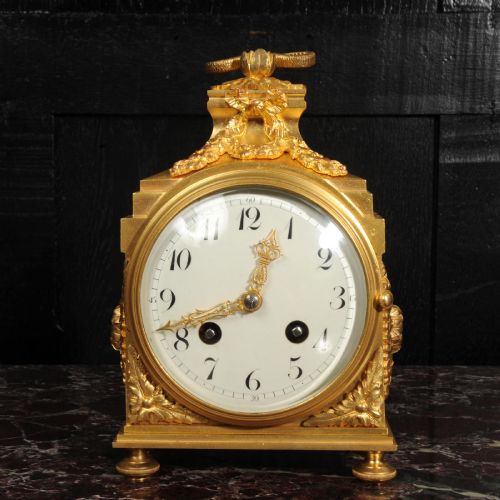
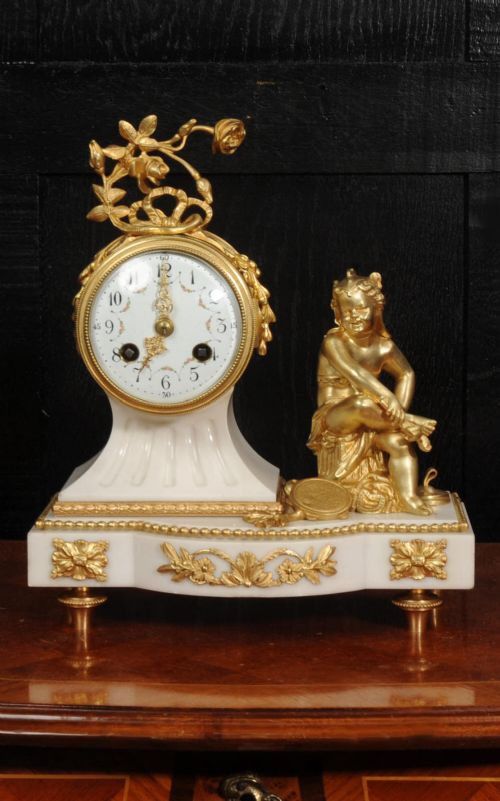
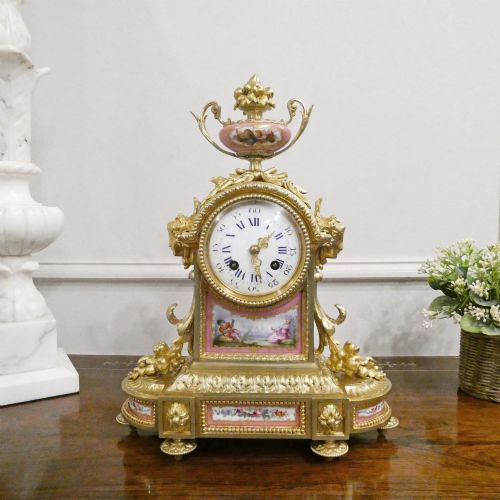
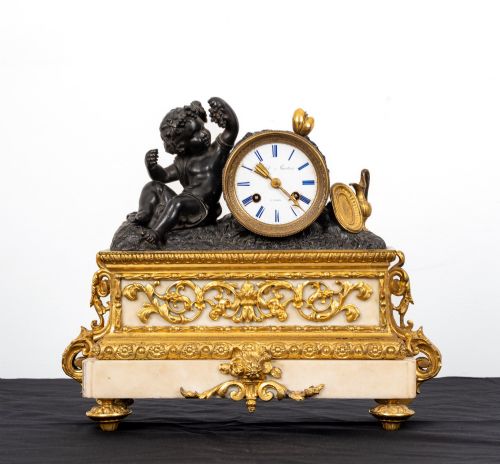
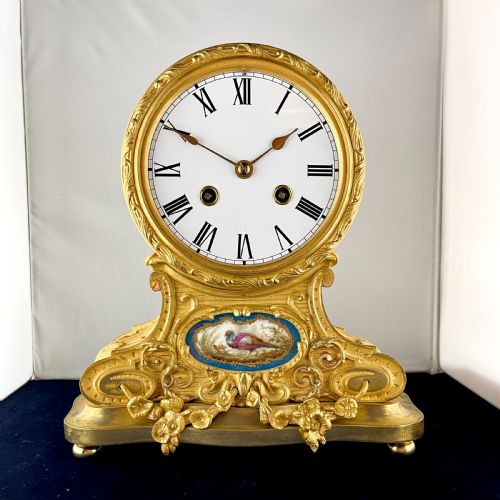
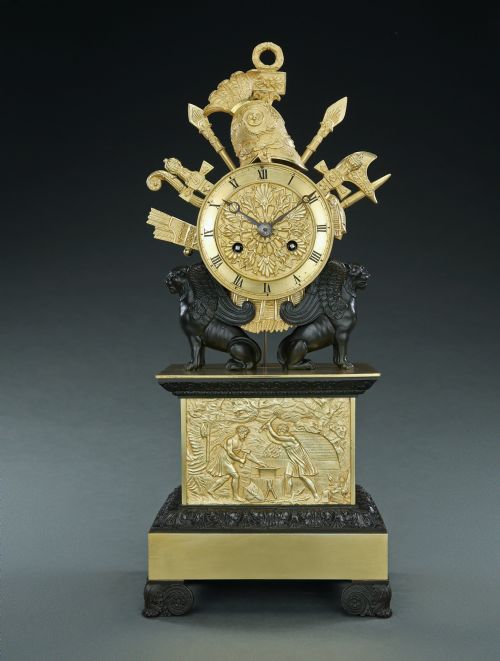
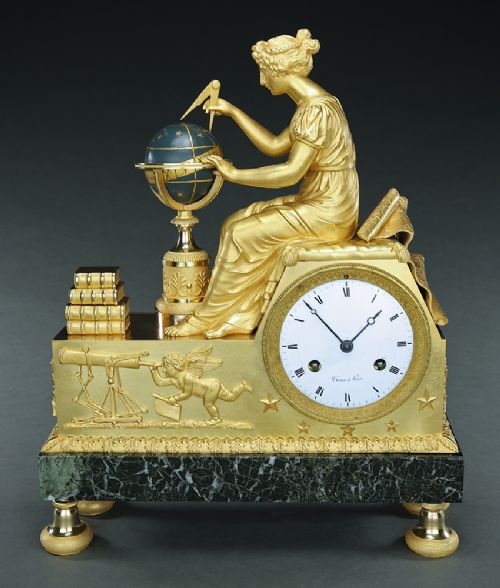
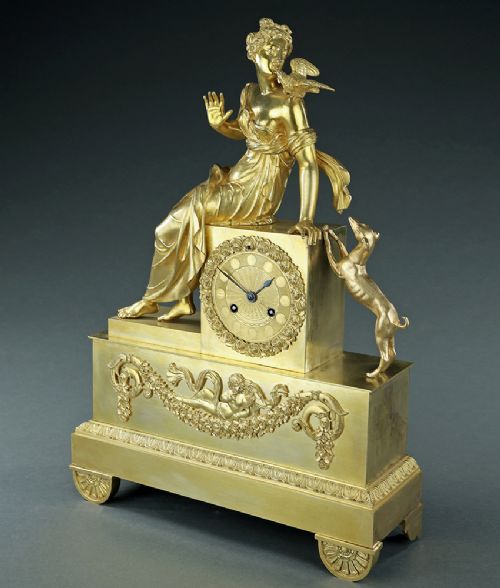
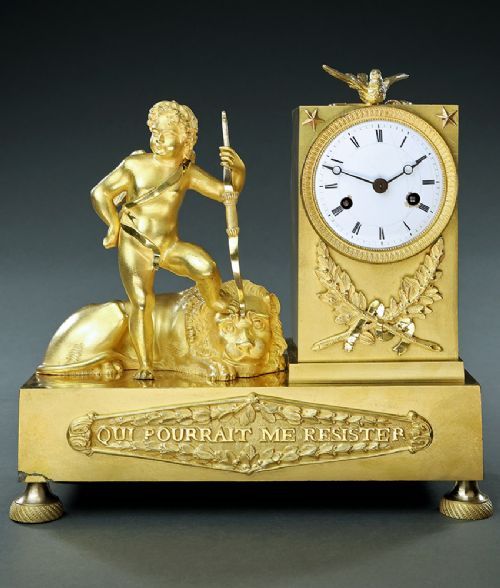
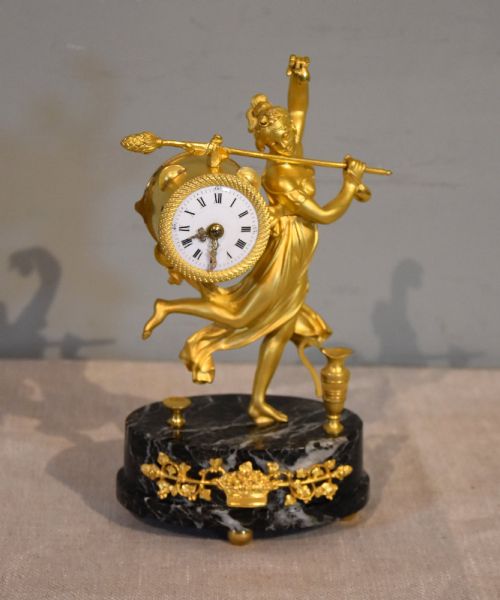
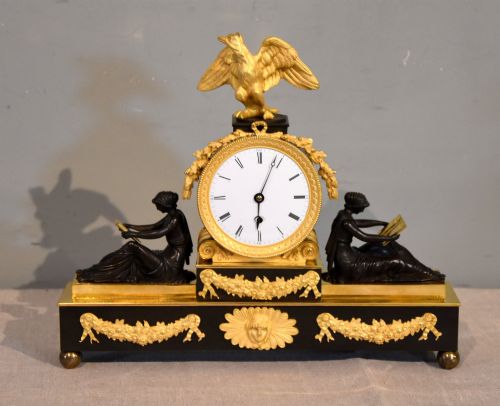
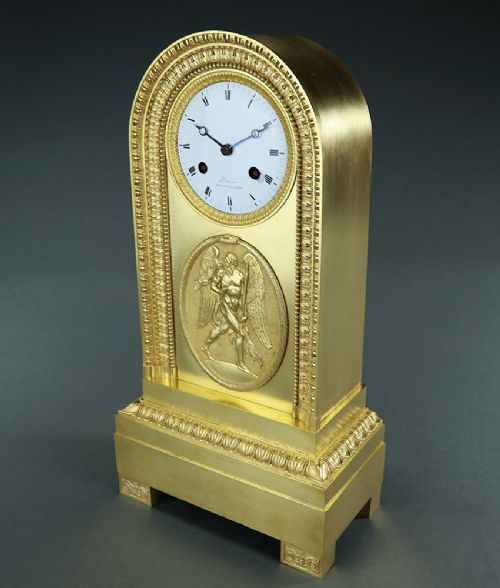
An empire gilt bronze clock brings the heavy, classical theatre of the nineteenth century straight onto the mantelpiece.
Empire Gilt Bronze Clock
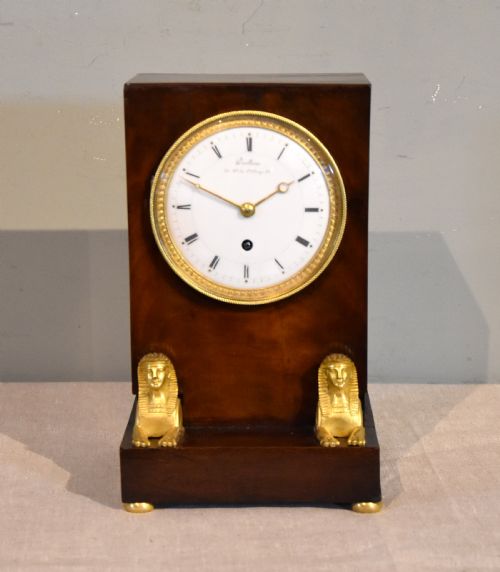
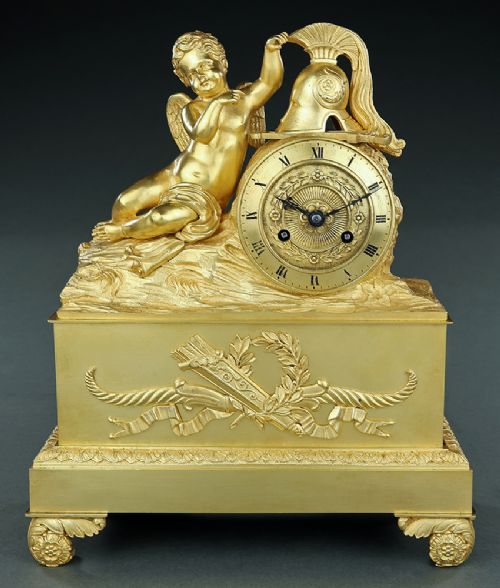
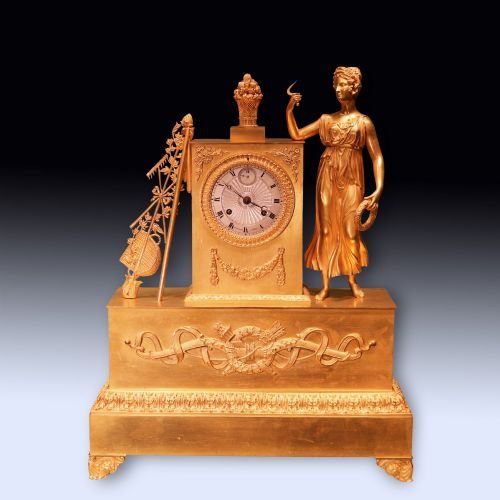
An empire gilt bronze clock sits heavily on the mantelpiece, drawing on French Empire, Charles X, and Regency styles. These pieces combine sculptural bronze figures with architectural cases built for formal rooms.
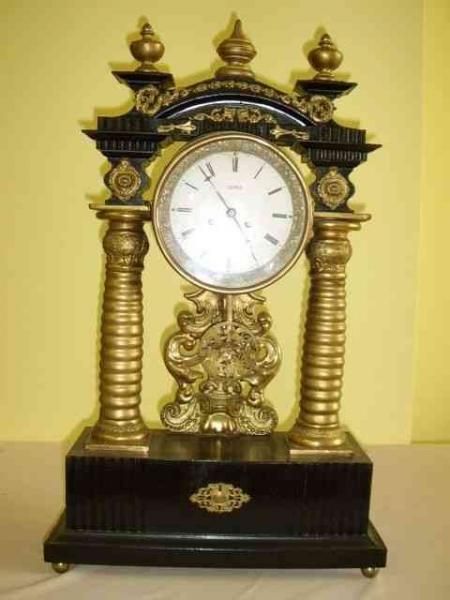
Mantel clocks and portico clocks dominate the selection, often appearing alongside matching clock garniture sets. The forms range from classical astronomical themes to military trophies and romantic allegories.
Most examples originate from nineteenth-century France, alongside English Regency pieces that share the same heavy use of ormolu and marble. The dial faces commonly feature enamel numerals protected by glass bezels.
Materials and technique
Foundries shaped these cases in gilt bronze and ormolu, often contrasting the bright gold finish with dark patinated bronze or coloured marble. Makers paired these metals with enamel for the clock dials and fitted cut crystal into portico columns.
Movements relied on brass gear trains, sometimes driven by fusee or silk suspension systems. Cabinetmakers added mahogany, ebonised wood, and delicate brass inlay to complete the structural housing.
Listings feature nineteenth-century French and English pieces utilising gilt bronze, marble, porcelain, and cut crystal.
What separates the grades
The crispness of the bronze chasing dictates the visual sharpness of figures and foliate mounts. Heavy mercurial gilding holds a deep, warm lustre that marks out superior workshop output.
Movement complexity and signature dials separate standard production from high-end pieces by known makers. Original matching garniture sets and undamaged marble bases elevate the preservation grade.
Japy Freres·Siffel and Cartier·Baetens London·Canaillor of Paris·Rodier·Berger Paris·Breguet·Cleret of Paris
The Empire Gilt Bronze Clock Glossary
- Ormolu
- Gilt bronze produced by applying a mercury and gold amalgam to a bronze base and heating it. This historic fire-gilding technique yields a deep, durable metallic sheen.
- Portico clock
- A mantel clock built with an architectural frame supported by four or more columns. These tall, upright designs frequently incorporate crystal or marble elements.
- Garniture
- A set of matching decorative objects, typically a central clock flanked by matching vases or candelabra. These sets were designed to sit symmetrically on a mantelpiece.
- Pendule d'Officier
- A portable military-style officer's clock fitted with a carrying handle on top. They are typically compact and housed in robust metal cases.
- Silk suspension
- A clock movement mechanism where the pendulum hangs from a narrow strip of woven silk. This delicate arrangement is characteristic of earlier nineteenth-century French timepieces.
Empire Gilt Bronze Clock: Frequently Asked Questions
How do I wind the clock?
Use the designated winding key on the dial face to turn the arbors clockwise or counter-clockwise depending on the train. Take care not to over-wind the mainspring.
Keep a consistent routine for winding to ensure the mechanical movement maintains accurate timekeeping.
Where should I place a portico clock?
Position the clock on a stable, level mantelpiece or heavy sideboard away from direct sunlight and drafts. Portico clocks are top-heavy due to their architectural marble and crystal columns.
Ensure the surface does not vibrate from heavy foot traffic to keep the pendulum swinging evenly.
What is a clock garniture set?
A garniture set pairs a central mantel clock with two matching side ornaments such as urns or candelabra. These pieces were designed to create a balanced display across a fireplace opening.
The side pieces usually mirror the materials and motifs of the main clock case.