


Emerald Green Glassware
Emerald green glassware brings deep colour and brilliant light to a table, spanning centuries of skilled craftsmanship from Georgian wine glasses to Art Deco vases.

Emerald Green Glassware
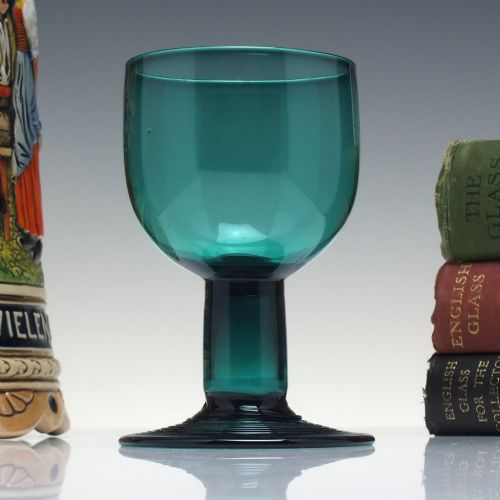
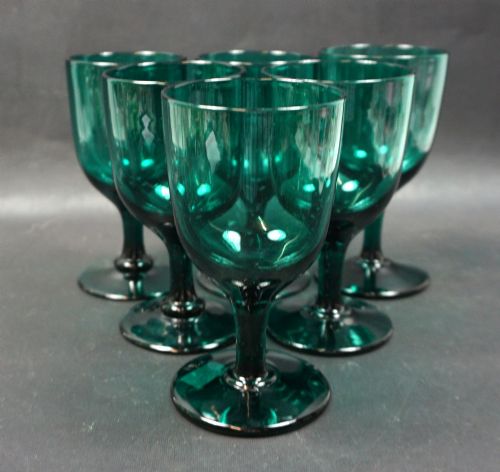
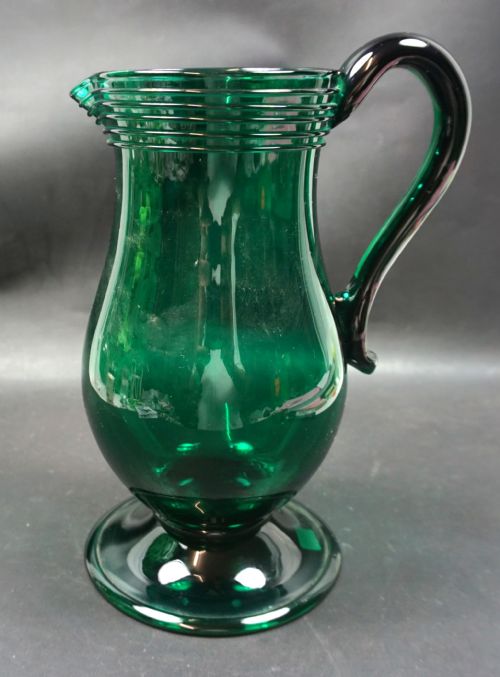
When you search for emerald green glassware, you encounter objects designed for both display and daily service, including wine glasses, decanters, vases, jugs, and dressing table sets. The selections span periods from the mid-eighteenth century through the Victorian era and into the twentieth century.
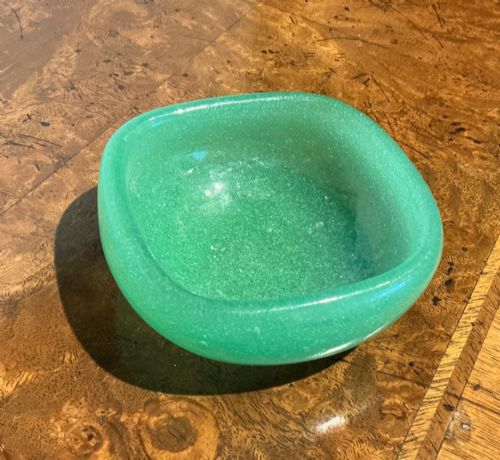
The pieces on this page most commonly include nineteenth-century Victorian drinking vessels and twentieth-century Continental decorative bowls. English table glass sits alongside Bohemian cut vessels and Belgian crystal creations.
Forms range from humble pickling jars to elaborate garniture sets and perfume bottles. Each object reflects the prevailing aesthetic of its decade, shifting from Georgian simplicity to ornate Victorian enamel work and geometric Art Deco lines.
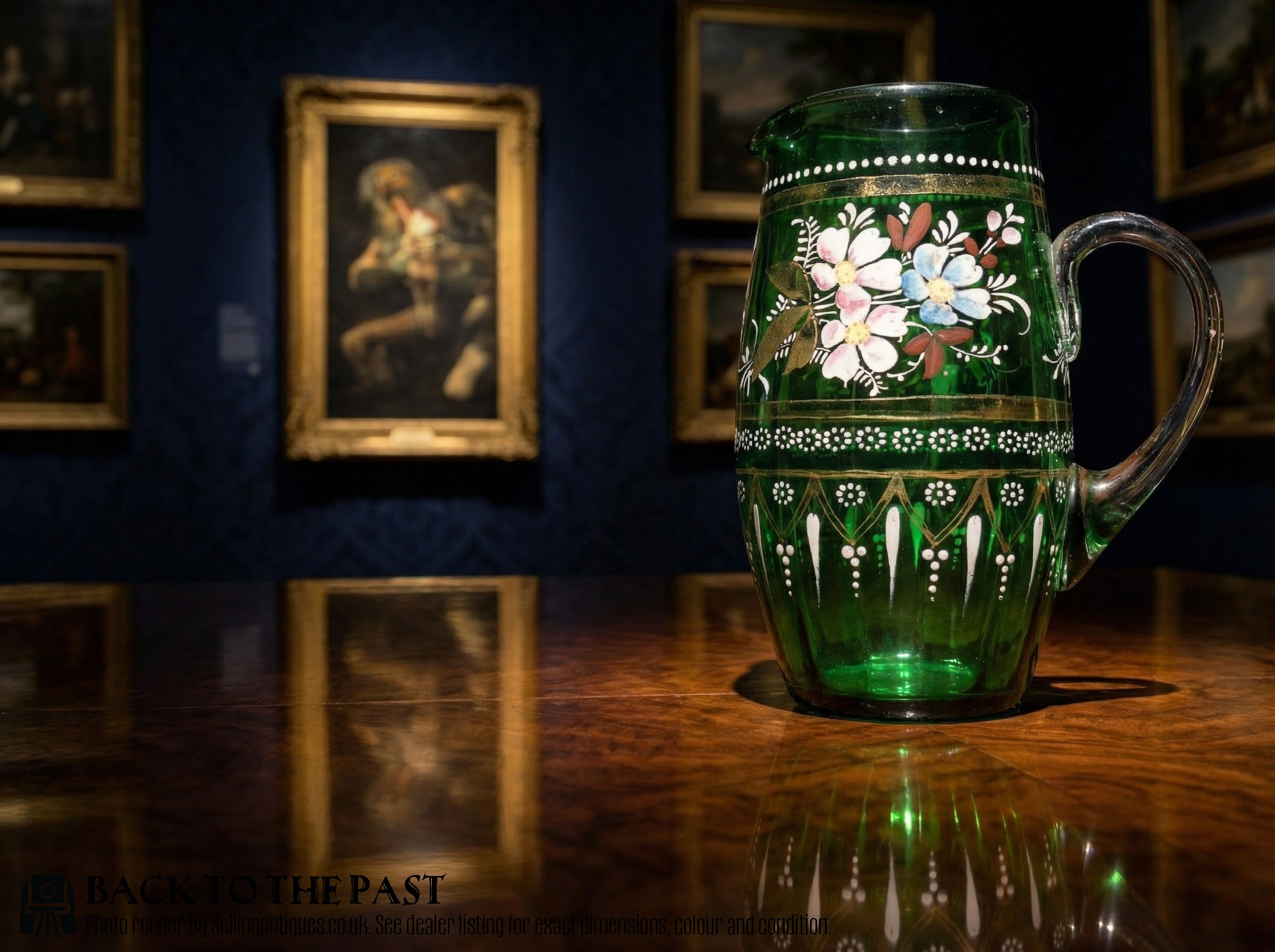
Materials and construction
Makers shaped glass by hand, utilising traditional blowing and moulding techniques to achieve the desired forms. Lead crystal provided weight and clarity, while coloured glass formulas incorporated metallic oxides to secure the rich green tone.
Surface ornamentation involved several distinct methods, including enamel painting, gold leaf application, and silver overlay. Cased glass required fusing layers of different coloured glass together before cutting through the outer layer to reveal the contrasting hue beneath.
The listings span the eighteenth, nineteenth, and twentieth centuries, incorporating both English lead crystal and Continental glass forms.
Assessing quality and execution
The division between standard production pieces and superior examples rests on the crispness of the cut, the precision of the hand-painted enamel, and the purity of the metal. Fine pieces exhibit balanced proportions, even colour saturation, and careful hand-finishing on rims and bases.
Signatures, factory marks, and attribution to known designers or makers elevate certain items above unmarked domestic wares. The complexity of the technique, such as multi-layered cased glass or intricate silver metalwork overlays, indicates the skill invested by the original workshop.
Charles Graffart for VSL·Joseph Simon for Val St. Lambert·Karl Palda·René Lalique·Stuart
The Emerald Green Glassware Glossary
- Cased glass
- A method where a layer of coloured glass is fused over a clear or contrasting base layer. Craftsmen then cut through the exterior layer to create patterns.
- Mary Gregory glass
- Victorian glassware decorated with white enamel silhouettes depicting children in natural settings. The style gained popularity during the second half of the nineteenth century.
- Bristol green
- A dark, intense shade of green traditionally associated with English glasshouses. The colour became a staple for wine glasses and serving jugs.
- Garniture set
- A matched group of three decorative vessels, typically comprising a central vase flanked by two smaller companions. They adorned mantelpieces in nineteenth-century interiors.
- Overlaid glass
- A technique involving the application of metal decoration or an additional glass layer to the surface. Silver overlay was particularly fashionable during the early twentieth century.
Emerald Green Glassware: Frequently Asked Questions
How do I date antique green glass?
Dating relies on observing pontil marks, manufacturing styles, and the specific shade of the green material. Georgian and Victorian pieces often show pontil scars on the base and heavier lead content.
Twentieth-century items introduce modern acid stamps, factory marks, and stylistic cues from Art Nouveau and Art Deco movements. Comparing the object type and decorative motifs to documented examples secures the period.
Was green glass used for dining?
Yes, green glassware served functional roles on the dining table, particularly for wine service. Sets of wine glasses, dram glasses, and jugs formed part of formal table settings.
Wealthy households utilised coloured glass to distinguish between different wines or simply to add visual contrast to white linen tablecloths.
What is Bohemian green glass?
Bohemian glass originates from the historic regions of Bohemia, now part of the Czech Republic, renowned for skilled glassmaking traditions. Workshops there specialised in heavy cut glass, layered colours, and elaborate surface engraving.
Pieces often featured distinctive floral motifs, overlaid portraits, or silver metal ornamentation that set them apart from English production.