




Emerald Diamond Pin
An emerald diamond pin brings together vibrant green gems and brilliant stones in wearable forms spanning Victorian to mid-century eras.
Emerald Diamond Pin
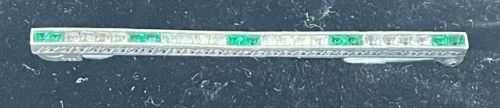
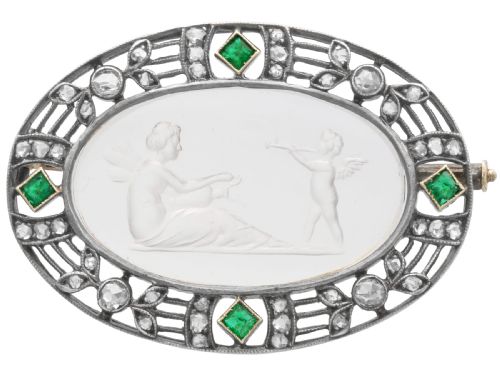
When searching for an emerald diamond pin, buyers encounter an array of antique and vintage brooches, often functioning as pendants or bar brooches. These pieces span periods from the late nineteenth century through to the mid-twentieth century, capturing distinct design movements.
The selection ranges from figural subjects like monkeys, frogs, butterflies, and cupids to geometric Art Deco bar brooches and crown coronets. French origins and continental craftsmanship appear frequently alongside domestic pieces.
Materials extend beyond the core pairing to include gold, silver, platinum, sapphire, ruby, paste, and crystal. Buyers find both delicate multi-gemstone settings and substantial statement brooches.
Materials and construction
Goldsmiths and jewellers utilised yellow gold, white gold, and platinum to set diamonds and emeralds, frequently combining silver and gold in earlier pieces. These metals provided sturdy housing for precious stones while allowing intricate wirework and granulation.
Craftsmen shaped gemstones into cuts that maximised brilliance and colour, securing them within claw settings, collets, and pavé arrangements. Secondary stones such as rubies, sapphires, and paste additions enriched the polychromatic effect.
Listings feature yellow gold, white gold, platinum, and silver alongside emerald, diamond, sapphire, ruby, and paste materials across various decades.
Assessing quality
The distinction between tiers rests upon stone size, clarity, and the finesse of the metalwork. Substantial carat weights in emeralds and diamonds elevate a piece, as do well-executed figural details like feathered wings or carved limbs.
Provenance and maker attribution influence standing, particularly when works originate from notable firms or bear original presentation boxes. The integration of supporting gems like sapphires and rubies adds complexity to the composition.
Gubelin·E. Wolfe & Co.·Asprey's
The Emerald Diamond Pin Glossary
- Bar brooch
- A horizontal pin designed to fasten garments, popular across various antique periods.
- Crown coronet
- A small crown-shaped ornament often utilised in royal or noble-inspired jewellery designs.
- Pavé
- A setting technique where small stones are placed closely together to cover the metal surface in a continuous field of sparkle.
- Paste
- Faceted glass cut and polished to imitate gemstones in historical jewellery pieces.
Emerald Diamond Pin: Frequently Asked Questions
What periods do these pins cover?
The pieces span multiple eras including the Victorian, Edwardian, Belle Epoque, Art Deco, Retro, and Mid-Century periods.
Designs reflect the aesthetic shifts from nineteenth-century naturalism to twentieth-century geometric and modernist forms.
Can these brooches double as pendants?
Certain examples are constructed with integrated loops or fittings that allow them to be worn on a chain as well as pinned to garments.
This dual functionality was common in pieces designed for versatility.
What metals support the stones?
Jewellers mounted these gems in yellow gold, white gold, platinum, and silver, sometimes combining silver and gold in nineteenth-century examples.
Metal choices often align with the prevailing fashions of the manufacturing decade.
Are other gemstones present besides emerald and diamond?
Many designs incorporate accent stones such as sapphires, rubies, aquamarines, citrines, pink topaz, and paste.
These supplementary materials contribute to colourful multi-gemstone compositions.