




Edwardian Bar Pin
When you search for an edwardian bar pin, you enter a refined world of delicate gold and platinum fasteners set with diamonds, pearls and vibrant gemstones.
Edwardian Bar Pin
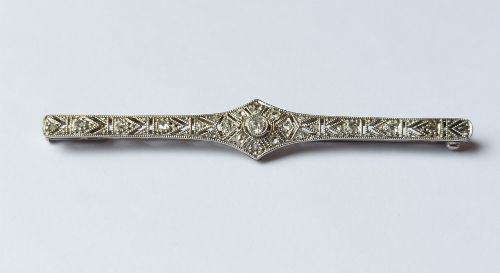
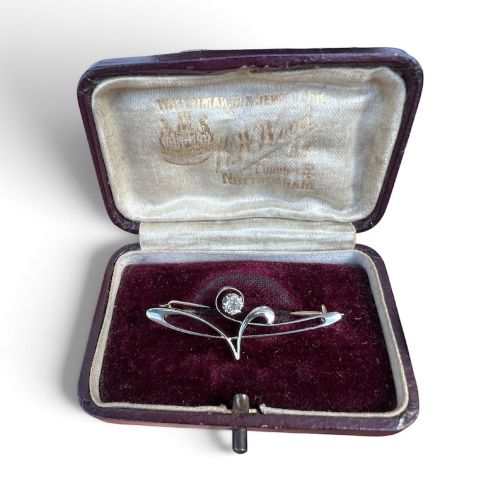
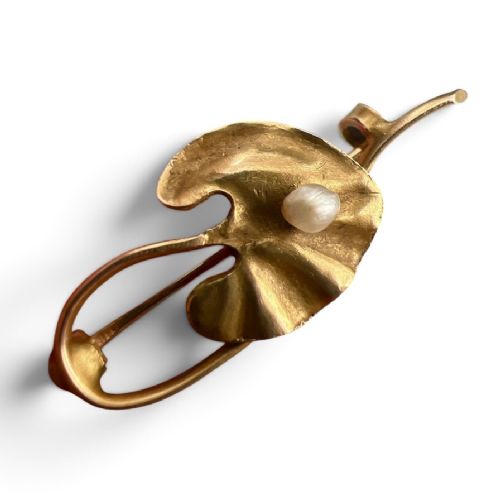
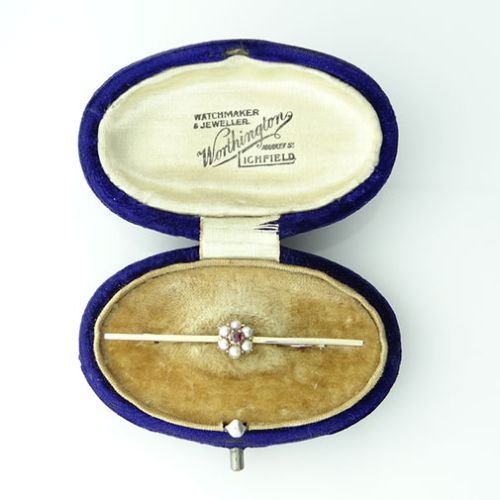
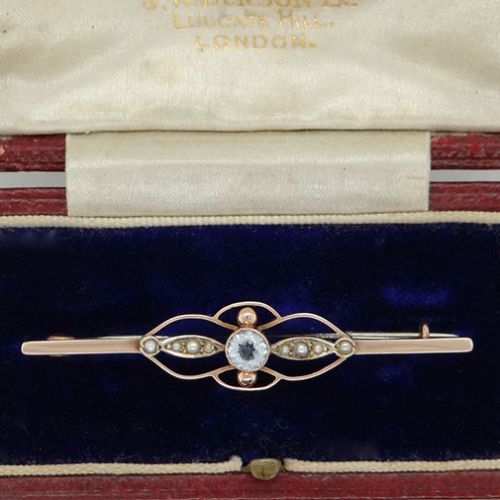
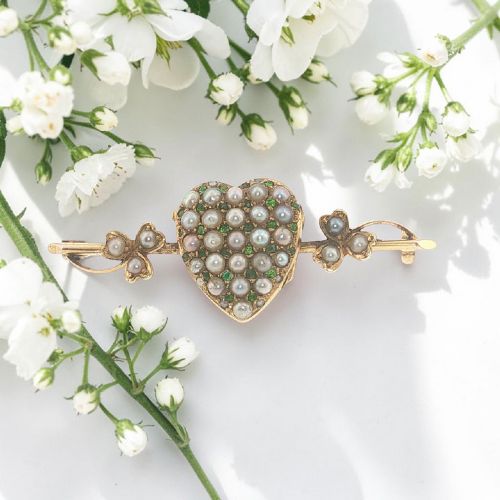
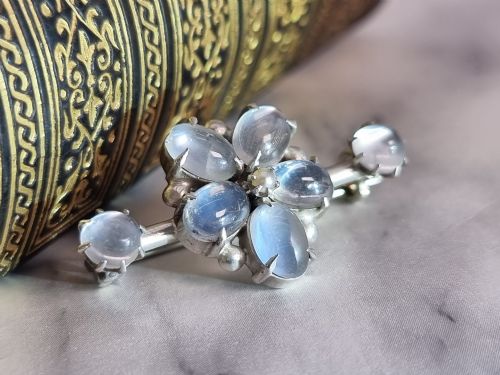
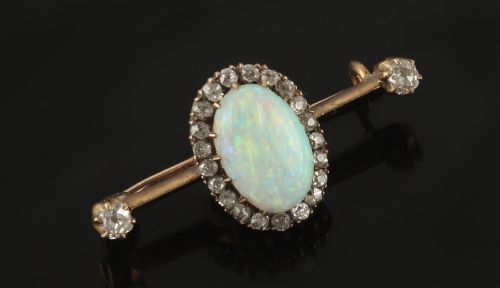
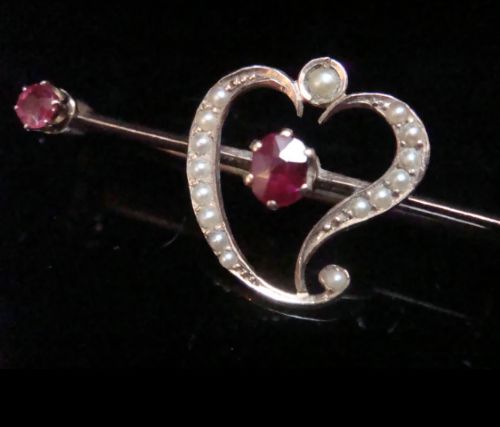
An edwardian bar pin is a slender decorative brooch designed to secure garments or simply adorn a lapel, crossing periods from late Victorian through to the Art Deco era. The versions most commonly found here pair a straight metal bar with central floral, insect, or heart motifs.
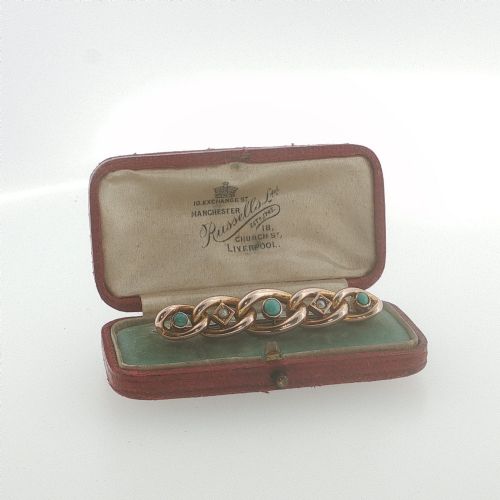
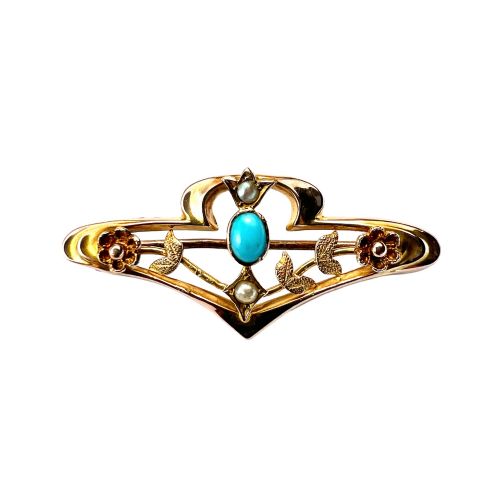
The materials span from 9ct and 15ct yellow and rose gold to platinum and silver, often combining metals to highlight specific stones. Gems such as aquamarine, peridot, ruby, turquoise and seed pearls appear frequently in these linear compositions.
Makers utilised various stylistic influences ranging from naturalistic Art Nouveau curves to geometric Art Deco layouts. These jewels reflect the craftsmanship of the early twentieth century, combining utility with decorative refinement.
Materials and Technique
Goldsmiths fabricated the linear foundations from solid 9ct or 15ct gold, alongside platinum and silver-topped gold which provided a bright white surface for diamond settings. These metals were drawn into wire, pierced into intricate floral or insect shapes, and channelled or collet-set with gemstones.
Gemstone selection dictated the mounting technique, with old-cut diamonds and pearls secured using delicate grain and bezel settings. Seed pearls and turquoise beads frequently accent the central designs, wired or pegged securely into place.
Among the delicate floral sprays and geometric lines, whimsical insect motifs including bees, dragonflies, and swallows perch upon the metal bars.
Separating the Grades
Quality rests in the crispness of the metalwork and the uniformity of the set gems. Superior examples display finely pierced gallery work and secure stone settings without excess solder.
The choice of materials also divides the range, with platinum and high-carat gold mountings paired with matched diamonds or natural pearls commanding greater attention than standard 9ct gold and lesser stones.
The Edwardian Bar Pin Glossary
- Seed pearl
- A very small, naturally formed or cultured pearl used in clusters or delicate floral arrangements. They are typically threaded or pegged onto fine wire within the design.
- Old-cut diamond
- A diamond cut prior to the standardisation of the modern brilliant cut, typically characterised by a smaller table and larger culet. These stones exhibit a softer, candlelit sparkle under low light.
- Platinum
- A dense, durable white metal utilised extensively in fine jewellery during the Edwardian and Art Deco periods. Its strength allowed jewellers to create gossamer-thin wirework and secure tiny diamonds safely.
- Collet setting
- A metal collar that wraps around the girdle of a gemstone to hold it securely in place. This traditional technique frames the stone with a clean, defined edge.
Edwardian Bar Pin: Frequently Asked Questions
How do I wear an edwardian bar pin today?
These pieces suit modern wardrobes wonderfully when fastened to the lapel of a blazer, pinned to a silk scarf, or used to close a cardigan. Their slender profiles make them versatile ornaments for everyday wear or evening gatherings.
Ensure the safety catch functions correctly before wearing the piece on heavier fabrics. Securing the pin through a woven knit or reinforced lapel prevents the slender shaft from bending during movement.
How do I distinguish Edwardian from Art Deco pieces?
Edwardian designs lean towards organic motifs, garlands, bows and naturalistic floral sprays executed in yellow gold, silver and platinum. They emphasise delicate lace-like metalwork and softer gemstone arrangements.
Art Deco pieces embrace symmetry, geometric lines, and strong contrasts utilising platinum and white gold set with calibrated rubies and diamonds. The transition from flowing curves to rigid angles marks the shift between these two distinct eras.
Were these pins used for anything other than fastening clothes?
While primarily worn as dress ornaments or garment fasteners, many Edwardian pins doubled as central components for modular jewellery sets. Some examples were engineered to convert into pendants with the addition of a hidden loop.
They also served as sentimental gifts, incorporating birthstones, turquoise hearts, or lover's knots to mark special occasions. The inclusion of pearls and garnets often carried specific romantic or protective symbolism for the original recipient.