



Embroidered Hearth Screen
An embroidered hearth screen guards a room against the fierce glare of an open coal fire while displaying exceptional needlework.
Embroidered Hearth Screen
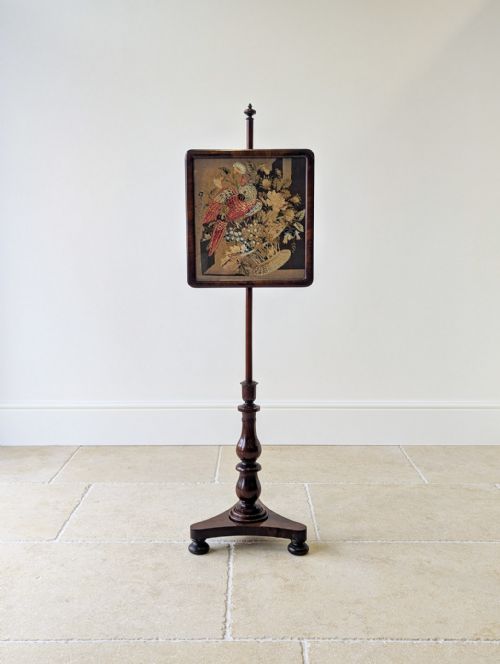
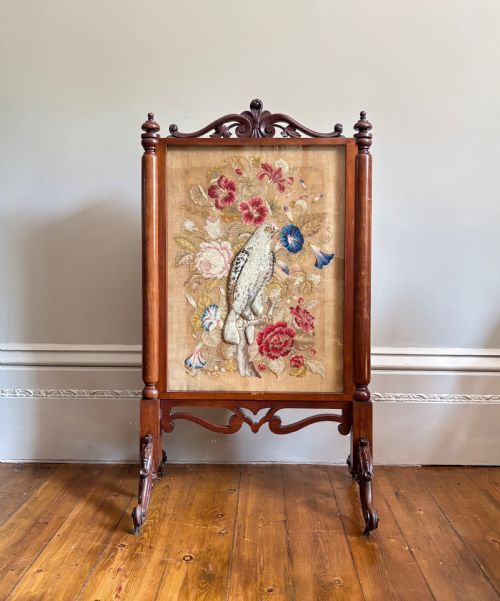
The embroidered hearth screen is primarily represented here by nineteenth century pole screens and cheval frames. These pieces were designed to stand directly before a fireplace to deflect radiant heat from the faces of seated guests.
Most examples feature a framed textile panel mounted on a vertical wooden stand or supported by folding legs. You will regularly find adjustable shields that slide up and down a central column to suit the height of the hearth.
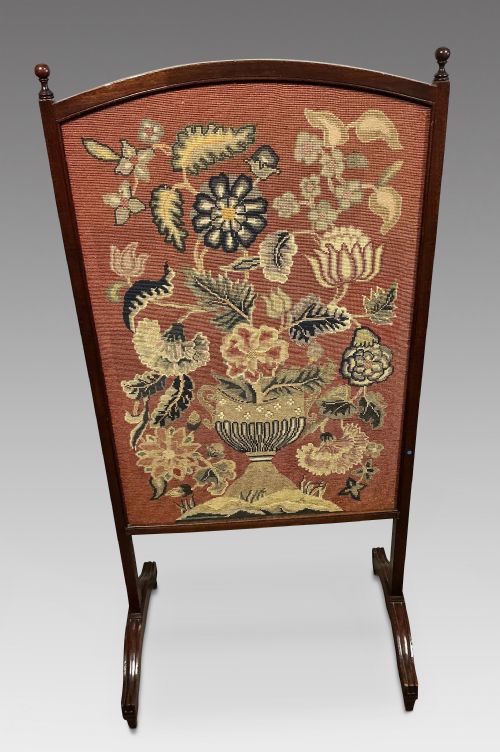
The styles span the Georgian, Regency, William IV and Victorian eras, shifting from rectilinear mahogany frames to ornate giltwood and carved walnut structures. Needlepoint, woolwork and silk embroidery dominate the panel inserts.
Materials and construction methods
Frames are constructed from dense cabinet timbers such as mahogany, rosewood and walnut, alongside gilded or giltwood finishes. Joinery involves turned pedestals, tripod bases and carved scrolling supports.
Panels incorporate wool, silk and textile needlepoint, often worked in petit point or Berlin work techniques. Brass mechanisms frequently allow the shield or reflector panel to adjust along the pole.
Listings span George III, Regency, William IV and Victorian styles, constructed in mahogany, rosewood, walnut and giltwood.
Judging quality in screens
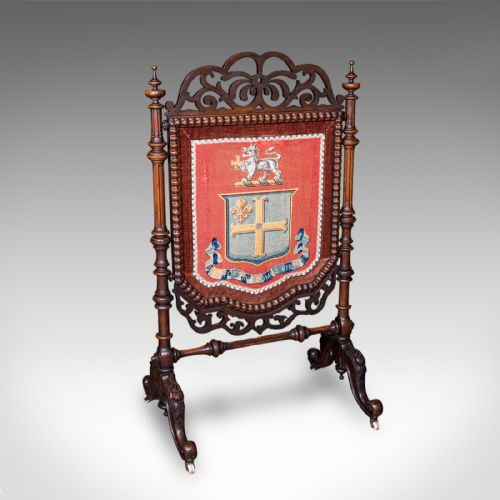
Quality rests heavily on the fineness and preservation of the embroidery within the panel. Dense, intricate needlework depicting heraldry, florals or tapestries indicates superior workshop output.
Cabinetwork precision distinguishes finer examples, seen in crisp carved bases, substantial timber figuring and smoothly functioning brass adjustment screws.
The Embroidered Hearth Screen Glossary
- Pole screen
- A freestanding fire screen featuring an adjustable panel mounted on a vertical wooden pillar with a tripod base. This design allowed the screen to be rotated and positioned precisely where the heat was most intense.
- Berlin work
- A style of counted-thread embroidery popular in the nineteenth century using wool on canvas. It was produced from printed and hand-coloured grid patterns sold in shops.
- Needlepoint
- A type of canvas work embroidery stitched with a needle, encompassing techniques like petit point and gros point. It forms the decorative image or coat of arms on many screen panels.
- Cheval screen
- A standing frame supported by two vertical pillars on feet rather than a central pole. These larger screens often accommodate wider textile panels.
- Reflector
- A glass or polished panel incorporated into certain pole screens to bounce light and warmth back into the room. They serve a dual purpose of illumination and thermal shielding.
Embroidered Hearth Screen: Frequently Asked Questions
What is an embroidered hearth screen?
An embroidered hearth screen is a decorative wooden frame holding a textile panel, designed to sit in front of a fireplace.
They were placed strategically to shield people sitting near the hearth from the intense heat of open fires.
How do pole screens work?
Pole screens utilise a sliding collar mechanism fitted to a central wooden upright.
This lets you raise, lower and rotate the embroidered shield to block radiant heat at different seating heights.
What materials are used?
Frames are built from cabinet timbers including mahogany, walnut and rosewood, alongside giltwood and brass.
The inset panels consist of wool, silk and textile needlepoint mounted within the wooden borders.
How do I date a screen?
Dating relies on stylistic shifts in the timber framing, from Regency rosewood to Victorian walnut and giltwood.
Needlework techniques and motifs like Berlin work or armorial crests also help place the piece in its nineteenth century context.