



Embossed Silver Jewellery Casket
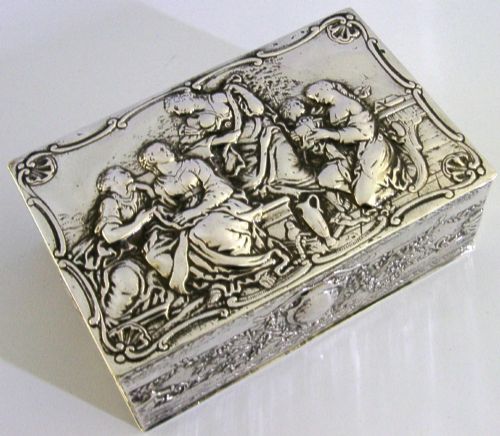
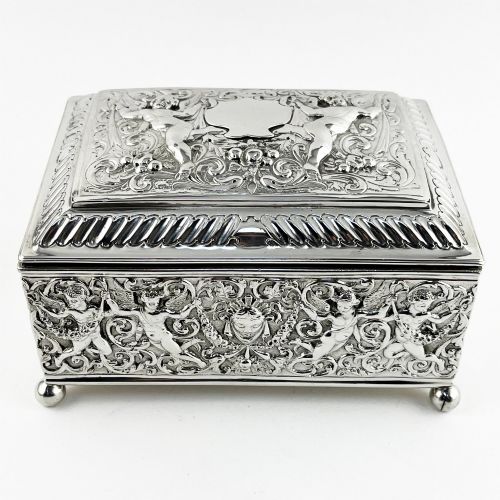
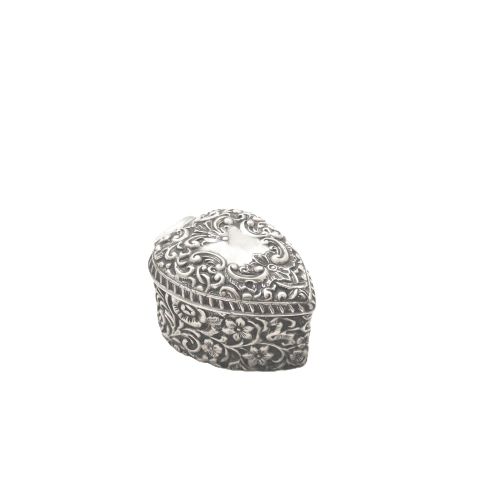
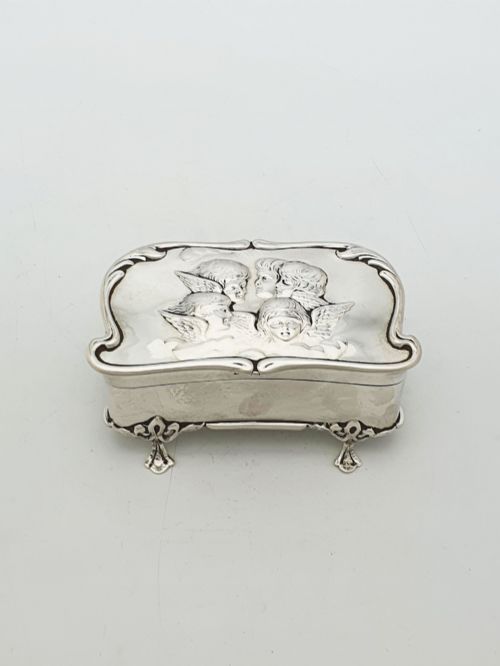
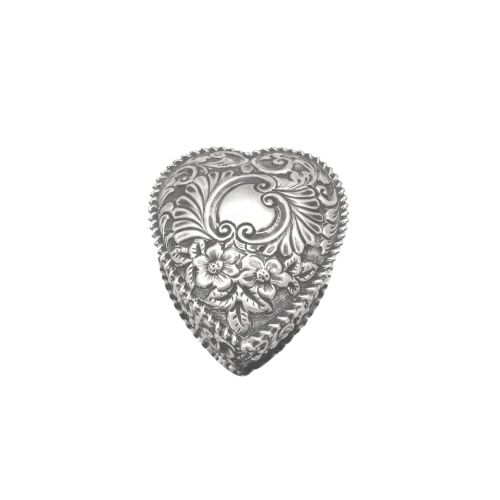
These embossed silver jewellery caskets are small, decorative containers designed to hold precious keepsakes and rings on a dressing table.
Embossed Silver Jewellery Casket
An embossed silver jewellery casket is a small container designed for storing rings and trinkets on a dressing table or desk. When you search for an embossed silver jewellery casket, you encounter pieces spanning the Victorian and Edwardian periods, alongside nineteenth-century Indian and Continental examples.
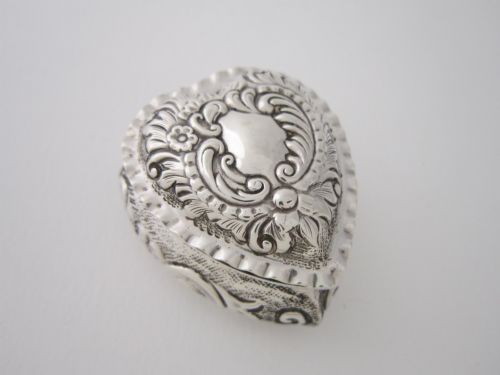
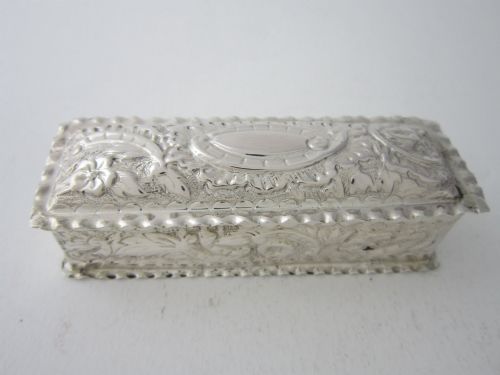
The versions most commonly met on this page are sterling silver trinket boxes and heart-shaped boxes bearing raised decoration. These items range from plain oval formats to substantial caskets carrying detailed repoussé work.
Makers and origins vary widely, encompassing British provincial assays alongside German Hanau and Anglo-Indian workshops. Each piece reflects the decorative tastes of the late nineteenth and early twentieth centuries.
How they were made
The construction of an embossed silver jewellery casket relies on hammering, chasing, and repoussé techniques applied to sterling silver or silver plate. Artisans worked sheet metal from the reverse to push out raised floral or figurative motifs, then refined the details from the front.
Interiors frequently feature velvet linings or gold gilt washes to protect delicate items placed inside. Hinges and feet were soldered to the main body to complete the box structure.
Heart-shaped trinket boxes were popular romantic tokens, often given to hold small keepsakes long before plastic packaging existed.
What varies in quality
The distinction between standard commercial boxes and finer caskets rests on the depth and crispness of the repoussé work. Superior examples display sharply defined motifs without excessive thinning of the silver sheet from aggressive hammering.
The quality of the interior fittings, such as intact velvet padding and well-fitted gilt washes, separates utilitarian containers from dressing table pieces intended for display.
William Comyns·William Comyns and Sons·William Neale and Sons·H Matthews
The Embossed Silver Jewellery Casket Glossary
- Repoussé
- A metalworking technique where the artisan hammers the metal from the reverse side to form a raised design on the front. This method creates the three-dimensional patterns seen on many nineteenth-century boxes.
- Sterling silver
- An alloy consisting of ninety-two point five percent silver and seven point five percent other metals, typically copper. This standard was widely used across British boxes and caskets.
- Silver gilt
- Silver objects that have been coated with a thin layer of gold on the interior or exterior surfaces. This finish provides a warm contrast to the bright silver exterior.
- Pandan box
- A traditional box format originating from South and Southeast Asia, used for holding betel nut leaves or valuables. These items often feature dense hand-carved or embossed ornamentation.
- Hallmark
- A series of official marks stamped on precious metals indicating the purity standard, assay office, and year of manufacture. British pieces frequently display these stamps on the base or rim.
Embossed Silver Jewellery Casket: Frequently Asked Questions
What is a jewellery casket?
A jewellery casket is a small decorative box designed to hold rings, brooches, and small trinkets on a dressing table. These containers range from simple oval trays to substantial repoussé boxes.
Most examples date from the Victorian and Edwardian eras, reflecting the domestic habits of the period.
How do I date a silver box?
Dating a silver box relies on reading the hallmarks stamped onto the metal, which indicate the assay office and the year of manufacture. Stylistic clues such as Neo-Rococo scrollwork or Edwardian proportions also help place the piece.
Unmarked or continental pieces require comparison of their decorative motifs and construction techniques with known examples.
What was inside these boxes originally?
These boxes originally held rings, pins, and personal trinkets used in daily grooming and dressing. Interiors were often fitted with velvet linings or divided compartments to keep items secure.
Some specialised forms, such as pot pourri boxes, held scented dried plant materials to fragrance a room.
How do I care for silver boxes?
Silver boxes require gentle cleaning with a soft cloth to avoid flattening the raised embossed details. Commercial polishes should be used sparingly, particularly around velvet linings to prevent staining.
Keeping the boxes in stable humidity conditions protects both the metal exterior and any internal fabric fittings.