
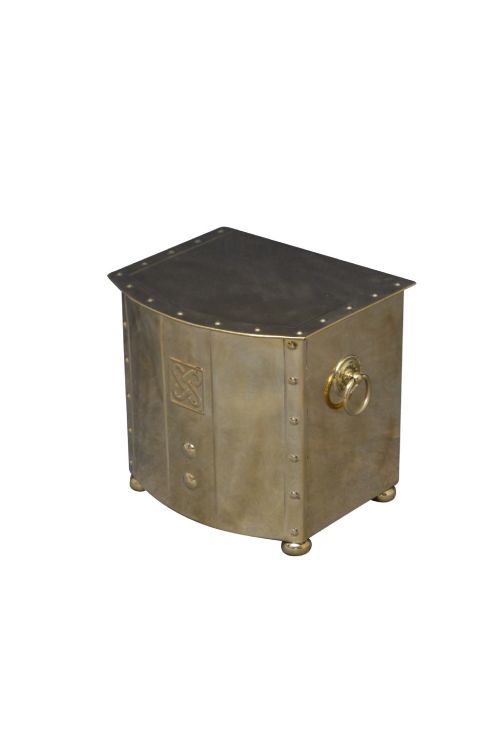


Embossed Brass Coal Box
These embossed brass coal boxes are robust fireside containers designed to hold fuel with decorative metalwork.
Embossed Brass Coal Box
An embossed brass coal box provides a practical fireside container shaped as a bucket, bin or box to store fuel. When you search for embossed brass coal box, you meet nineteenth-century and early twentieth-century examples ranging from Victorian and Edwardian periods to Art Nouveau designs.
The objects appear under various titles including coal scuttles, log bins and fireside stores. Most pieces on this page originate from the Victorian period, whilst others span Regency, Edwardian, and Art Deco eras.
Makers utilised brass frequently, often combined with copper, oak, iron, and ebonised wood. Forms vary from double-lidded coal scuttles and helmet buckets to French provincial log boxes and slipper boxes.
How they were made
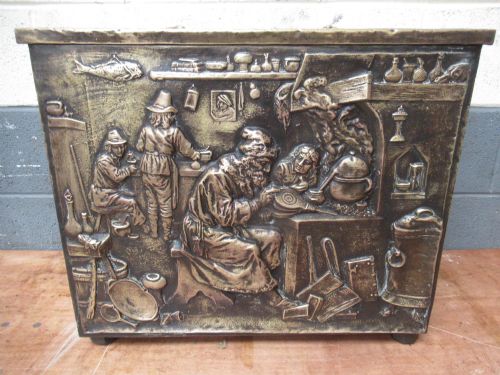
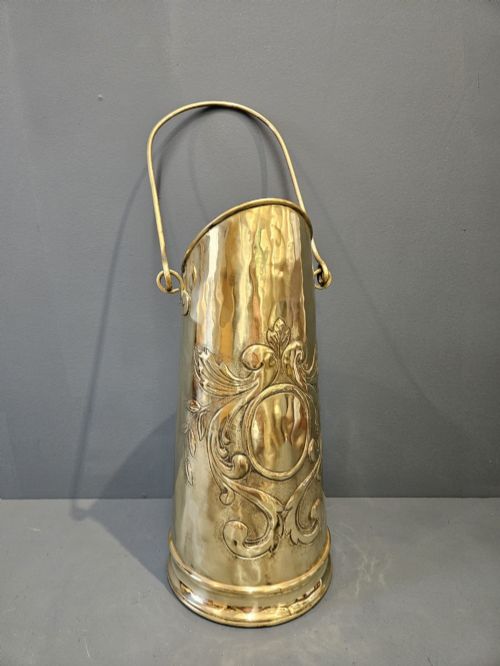
Artisans constructed these fireside containers using sheet brass and copper, hammering designs into the metal from behind in the technique known as embossing. This raised relief work often depicts figurative scenes, tavern motifs, or floral patterns across the surface.
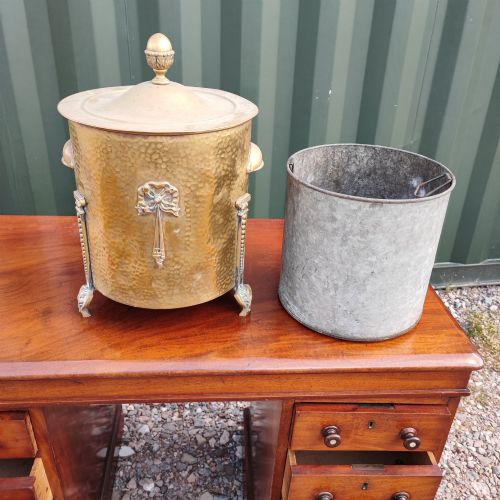
Carpenters paired the metal bodies with wooden elements, incorporating oak, ebonised wood, and internal galvanised metal or iron liners to hold the fuel safely. Handles and fixings were cast or riveted securely to withstand regular lifting.
Some nineteenth-century coal boxes feature detailed tavern scenes embossed into the brass, giving your logs an audience.
What varies in quality
Depth and clarity of the metal embossing separate standard examples from finer pieces, where crisp relief work demonstrates skilled handcraft. The thickness of the brass sheet dictates the structural rigidity of the container over years of use.
Integrity of internal metal liners and the quality of timber framing, such as solid oak construction, distinguish superior items. Maker attribution, such as work by Benham and Froud or Henry Loveridge, elevates a piece.
Benham & Froud·Henry Loveridge
The Embossed Brass Coal Box Glossary
- Coal Scuttle
- A metal bucket or box designed for carrying and storing domestic coal near a fireplace. Many feature a hinged lid and a sturdy carrying handle.
- Embossing
- The technique of raising a design in relief against a flat background by hammering metal from the reverse side. This creates tactile decorative patterns on the brass body.
- Slipper Box
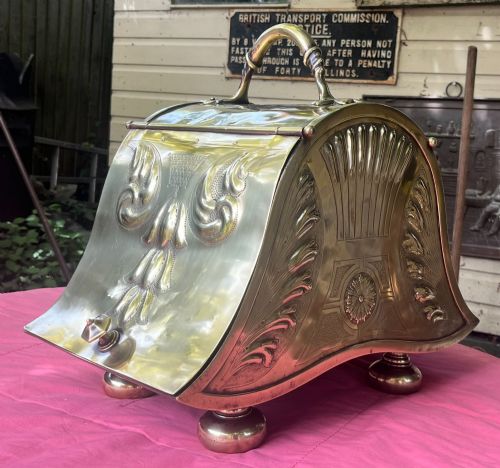
- A covered wooden box with a brass exterior historically used near firesides for warming slippers or storing fuel. The distinctive sloping shape resembles a shoe.
- Helmet Bucket
- A coal bucket featuring a flared rim and pointed spout reminiscent of a classical helmet, designed to pour fuel cleanly. These typically include a swing handle at the top.
- Galvanised Metal
- Protective zinc-coated iron used for internal removable liners inside coal boxes. This coating prevents moisture from the fuel from rusting the outer metal.
Embossed Brass Coal Box: Frequently Asked Questions
What are embossed brass coal boxes?
These items are functional fireside containers made primarily from sheet brass with hammered decorative relief patterns. They were designed to hold coal or logs beside a fireplace.
Most surviving examples date from the nineteenth and early twentieth centuries, encompassing Victorian, Edwardian, and Art Nouveau styles.
How were they used?
Households used them to transport coal from outdoor stores to the hearth and keep fuel tidy inside the living room. Removable inner liners helped contain dirt and moisture from the coal.
They sat beside fireplaces as decorative furniture pieces as well as practical storage containers.
How do I live with one?
You can place them beside an open fire or wood burner to store logs, kindling, or magazines. Their polished brass surfaces reflect firelight and complement traditional or modern interiors.
Maintenance involves occasional dusting and gentle cleaning to preserve the metal shine without removing character.
How do I tell periods apart?
Victorian pieces often feature heavy ornamentation and tavern or floral tavern scenes, whilst Art Nouveau items display flowing organic lines. Edwardian and later twentieth-century boxes tend towards simpler geometric forms. Nomenclature in titles often reflects the reign or design movement prevalent at the time of manufacture.