
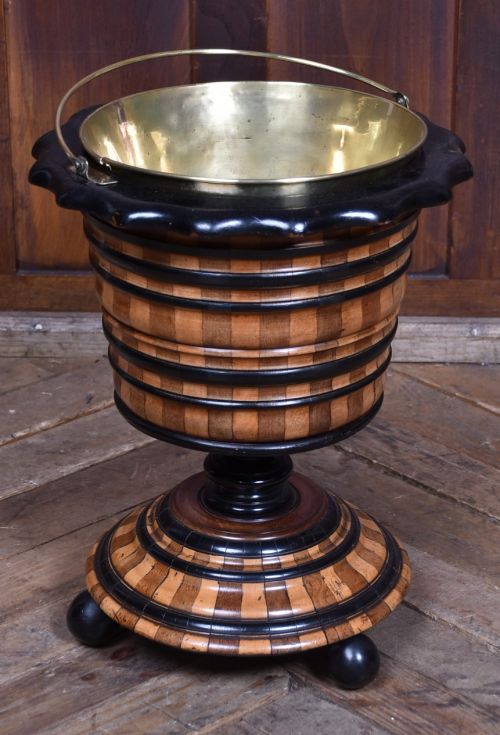
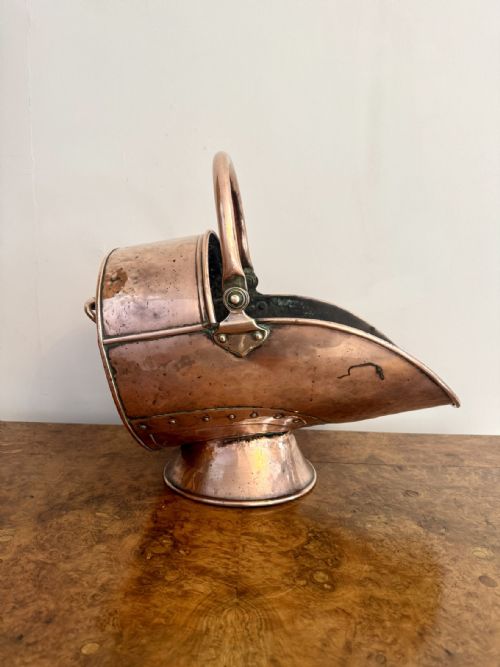


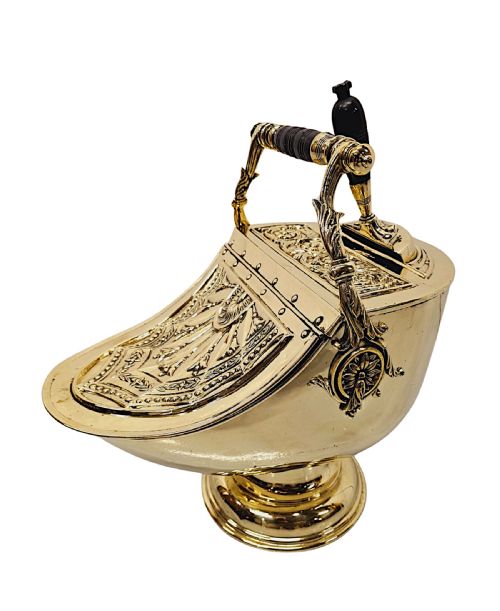


Pedestal Brass Coal Bucket
These pedestal brass coal bucket examples bring enduring fireside utility, combining sturdy metalwork with classic period design.
Pedestal Brass Coal Bucket
A pedestal brass coal bucket sits beside the hearth to hold fuel, drawing on forms produced across the nineteenth century and earlier periods like Regency and George III. Buyers searching for a pedestal brass coal bucket will encounter various related fireplace accessories, including helmet coal scuttles, coal hods, peat buckets, and lidded vessels.
The selection on this page leans heavily toward nineteenth-century Victorian and Edwardian examples, alongside earlier George III and Regency designs. Alongside brass, pieces frequently incorporate copper, ebonised wood, and walnut, reflecting the varied materials used by makers of these fireside furnishings.
How they were made
These items rely primarily on sheet brass and copper, shaped through hammering and seaming to create durable containers for domestic fuel. Metal components are often paired with mixed hardwoods, walnut, or ebonised wood for handles, liners, and pedestals.
Detailing ranges from simple polished surfaces to Adam style ornamentation, showing how metalworkers applied decorative motifs to functional household objects.
Some nineteenth-century Dutch buckets doubling as tea warmers remind us that our ancestors liked their tea as hot as their coal.
What varies in quality
Quality in these fireside pieces reveals itself in the weight of the metal and the firmness of the construction where the pedestal meets the body. Superior examples maintain balance and proportion, keeping the structure stable even when filled.
Finishing also sets pieces apart, as better items show careful polishing of the brass and tight joining of wooden elements such as walnut or ebonised trim.
Benham and Froud
The Pedestal Brass Coal Bucket Glossary
- Coal scuttle
- A container designed to hold coal for a fireplace, often featuring a sloping mouth or a hinged lid for easy access. They frequently include a swinging handle for carrying fuel from the cellar to the hearth.
- Helmet coal scuttle
- A specific form of coal container shaped like a classical helmet, with a flared lip at the front and a handle at the back. This design directs the coal smoothly into the grate.
- Coal purdonium
- A box-style coal container that sits upright on the floor, often housing a removable metal liner inside a wooden or brass outer case. It typically includes a shovel stored in a compartment at the back or side.
- Pedestal
- The raised base or foot upon which certain coal buckets and scuttles are mounted, elevating the container off the hearth floor. This elevation protects the floor and adds a classical silhouette to the fireside.
- Teestoof
- A traditional Dutch warming vessel, sometimes constructed with wood and liners, associated with domestic heating practices. These pieces share period origins with nineteenth-century Dutch coal buckets.
Pedestal Brass Coal Bucket: Frequently Asked Questions
What is a pedestal brass coal bucket?
A pedestal brass coal bucket is a fireside container raised on a base, designed to store coal near a fireplace.
These pieces combine functional metal storage with period decoration, often featuring swinging handles and matching shovels.
How were coal buckets used?
Households used them to transport coal from outdoor storage to the hearth and to keep fuel close at hand during winter.
The lidded designs helped contain dust and kept the hearth area looking neat.
How do I date a brass coal bucket?
Dating relies on identifying stylistic markers such as Adam style motifs, Regency proportions, or Victorian manufacturing methods.
Materials like ebonised wood, walnut, and copper also provide clues to the period of manufacture.
How do I clean brass and copper?
Maintenance involves gentle cleaning with appropriate metal polishes to preserve the finish without stripping the historical surface.
Avoid abrasive pads that can scratch the soft brass and copper plates.