



Embossed Brass Box
An embossed brass box delivers practical utility with decorative hand-worked metalwork, spanning fireside coal scuttles, log bins, and smaller tabletop storage.
Embossed Brass Box
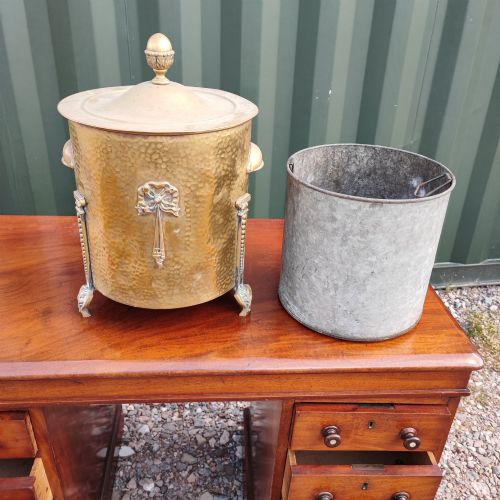
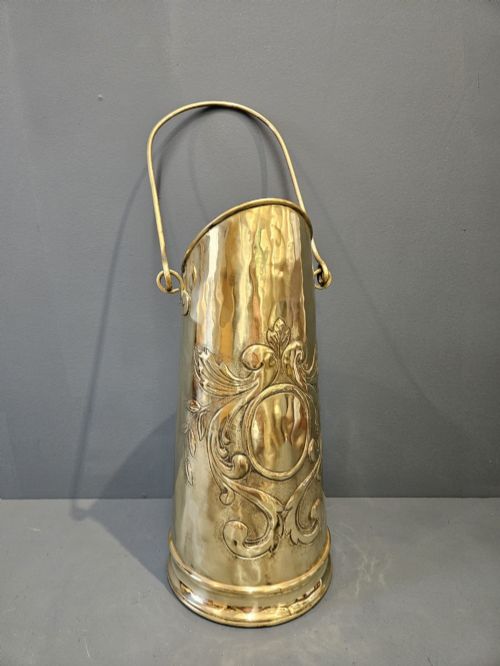
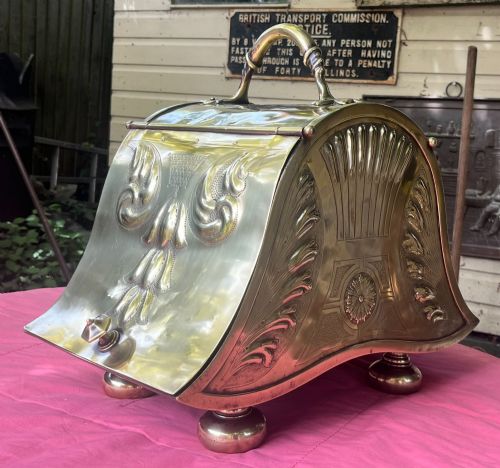
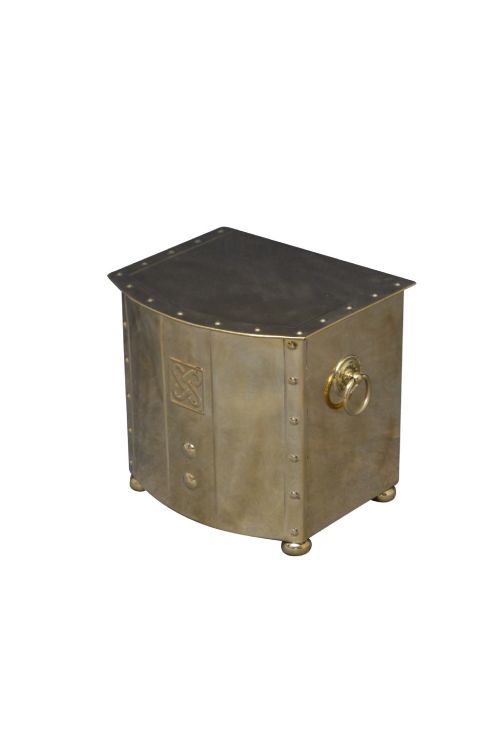
When you search for an embossed brass box, you encounter a range of functional containers dominated by fireside accessories such as coal scuttles, log bins, and coal boxes. These items serve both utility and display, designed to hold fuel next to the hearth.
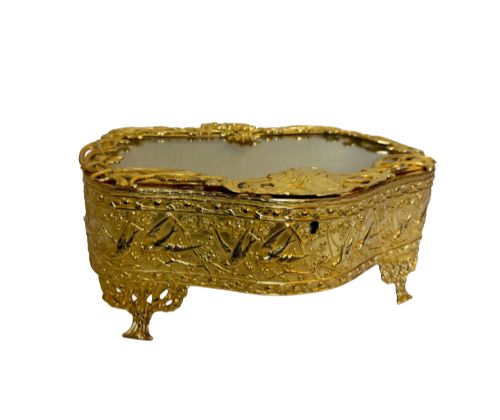
Beyond the fireside, the selection includes smaller tabletop items like stationery boxes, document cases, jewellery boxes, and foot stoves. The primary material is brass, frequently accompanied by copper, wood, or glass components.
The pieces on this page originate predominantly from the nineteenth and early twentieth centuries, encompassing Victorian, Edwardian, Arts and Crafts, and Art Nouveau styles. Larger storage containers sit alongside compact desktop pieces.
How they were made
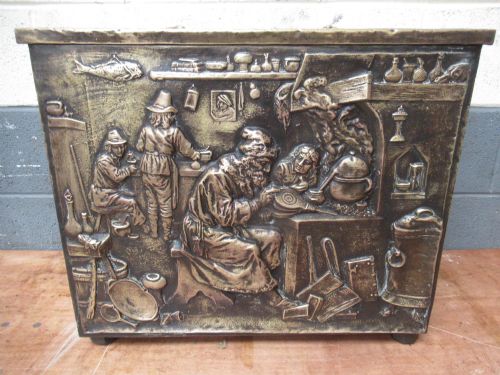
Maker construction relies heavily on sheet brass and copper worked by hand using repousse and embossing techniques to raise designs from the reverse side. Artisans shaped floral motifs, tavern scenes, coats of arms, and geometric patterns onto the metal surfaces.
Larger coal boxes and log bins frequently incorporate wooden carcases, often oak or camphor wood, clad in decorated brass sheets. Smaller items utilise hinged brass framing combined with glass panels, velvet linings, or leather components.
Listings feature oak, copper, and glass alongside primary brass construction.
What varies in quality
The distinction between standard utility items and finer examples rests on the crispness and depth of the metal embossing. Superior pieces display sharply defined motifs executed by skilled hands rather than shallow, mechanically pressed patterns.
Structural integrity also separates the range, observed in the thickness of the brass sheet, the sturdiness of wooden linings, and the original quality of hinges, handles, and fixings. Pieces retaining matching components and solid internal construction represent the upper tier.
Benham and Froud·Henry Loveridge
The Embossed Brass Box Glossary
- Repousse
- A metalworking technique where the artisan hammers designs from the reverse side to create raised patterns on the front. This method defines the surface decoration of many fireside and desk pieces.
- Coal Scuttle
- A specialised container designed for holding and transporting household coal to a fireplace. These utilitarian objects often featured hinged lids and robust carrying handles.
- Foot Stove
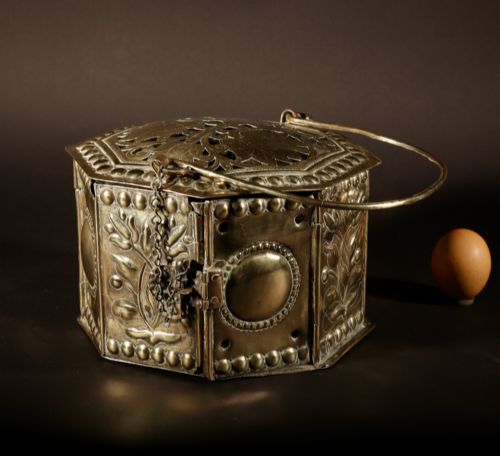
- A small perforated box containing a container for hot embers, historically used to warm the feet. Early Dutch examples often feature intricate hand-punched brass patterns.
- Jardiniere
- An ornamental pot or stand designed to hold growing plants or floral arrangements. Many nineteenth-century versions utilise embossed brass bodies with integrated liners.
- Art Nouveau
- A design style characterised by flowing, organic lines and floral motifs that gained prominence around nineteen hundred. This aesthetic heavily influenced the decoration of decorative brass boxes and stationery holders.
Embossed Brass Box: Frequently Asked Questions
How were brass coal boxes used?
These containers sat beside the fireplace to store coal or logs out of sight until needed for the fire. Their hinged lids and robust construction allowed housemaids to carry fuel cleanly across the room.
Over time, many of these utilitarian hearth containers transitioned into decorative interior pieces or log storage bins in period homes.
How do I clean an antique brass box?
Dust the surface gently with a soft, dry cloth to remove loose particles without disturbing the aged patina. Avoid harsh chemical polishes that strip away the dark oxidation valued by collectors.
If cleaning is necessary, use a mild, non-abrasive metal cleaner specifically formulated for historical brass surfaces. Apply sparingly and buff gently with a clean cloth.
How can I tell Victorian from Edwardian pieces?
Victorian examples frequently display heavier proportions, ornate heraldic themes, and traditional revival styles influenced by Gothic or Renaissance motifs. Their construction emphasises durability for daily household service.
Edwardian and later pieces often incorporate lighter forms, cleaner lines, and stylized floral patterns derived from the Arts and Crafts and Art Nouveau movements.