
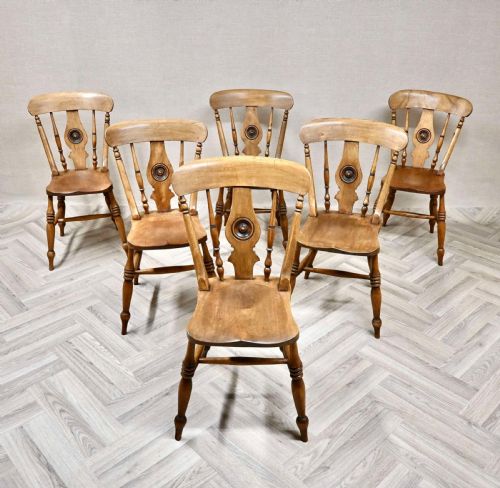
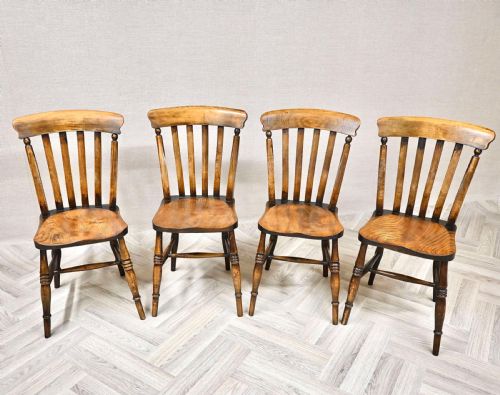
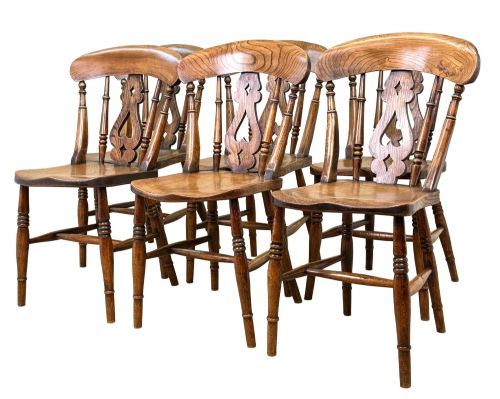
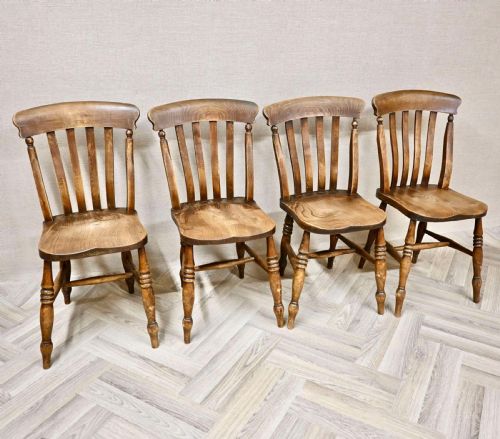
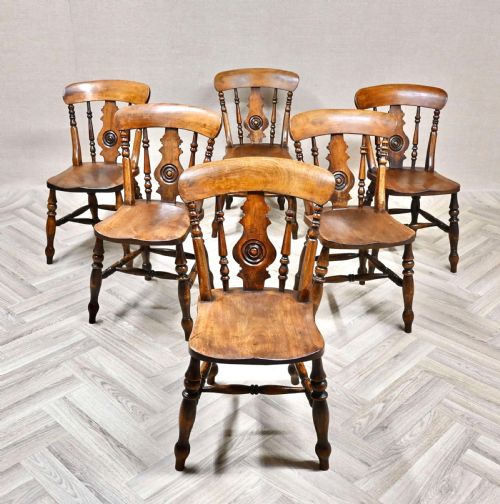

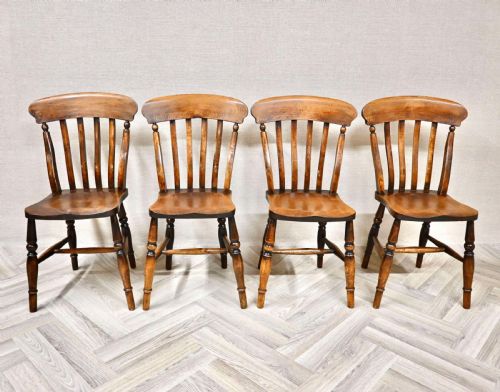

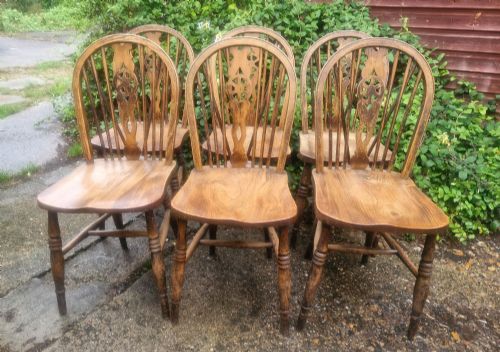
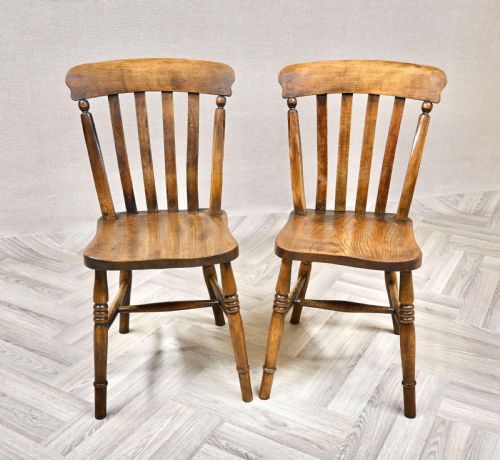
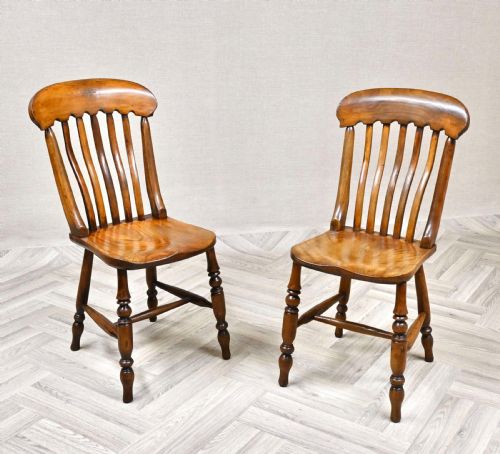
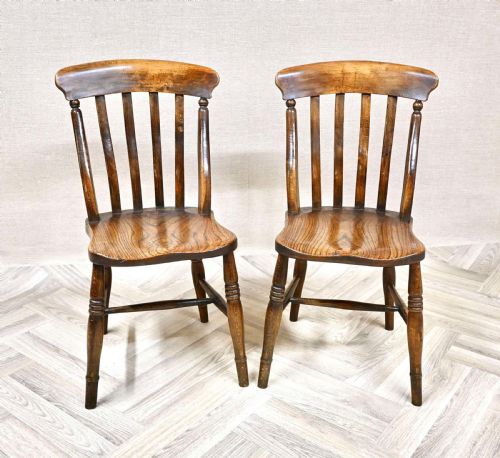
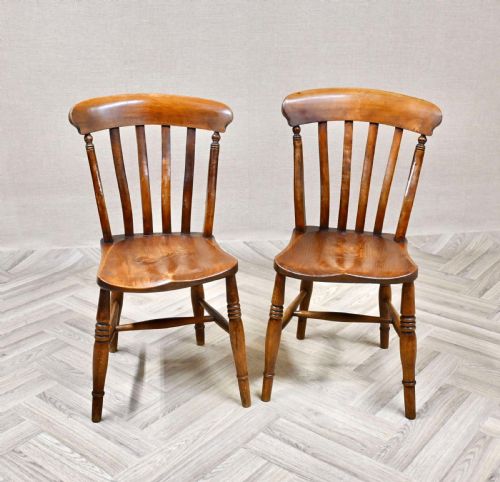
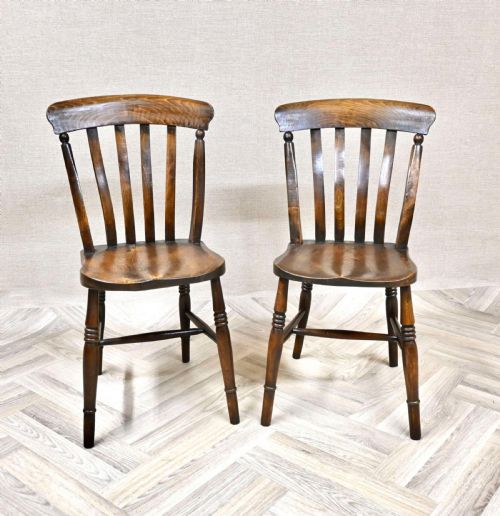
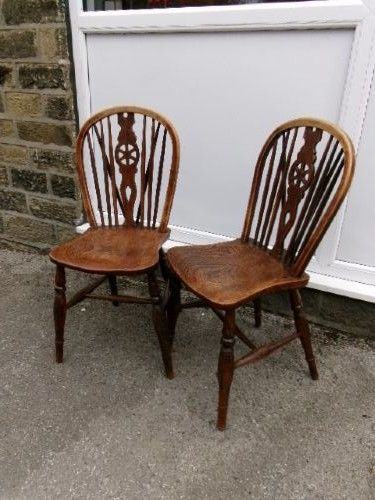
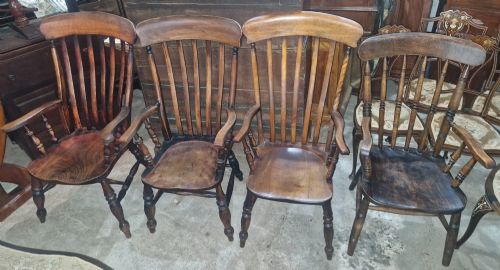
Elm Windsor Kitchen Chairs
These elm windsor kitchen chairs are traditional wooden seats combining carved elm saddles with steam-bent frames, prized for domestic utility.
Elm Windsor Kitchen Chairs
Elm windsor kitchen chairs are traditional wooden seating forms originating from British vernacular furniture production. Buyers searching this phrase typically encounter sturdy dining chairs and carvers fashioned from regional timbers for farmhouse and domestic use. The pieces span the nineteenth century through the early twentieth century, reflecting standard domestic seating across rural and provincial settings.
Most examples found on this page belong to nineteenth-century and Victorian traditions, including matched sets and harlequin groups. Common regional formats involve Thames Valley designs alongside general English country and farmhouse variants. Surviving pieces exist as single items, pairs, and larger matched dining sets intended for everyday domestic service.
How They Were Made
Makers constructed these chairs by combining solid plank seats with turned legs and steam-bent components. The saddle-shaped seat was traditionally carved from native elm to provide a comfortable surface, while supporting spindles and bows utilised tougher timbers like ash, beech, or yew. Frameworks relied on wedged mortise and tenon joints to secure the uprights directly into the thick wooden base.
The combination of woods served a structural purpose in traditional chairmaking. Elm resisted splitting under the downward pressure of the wedged legs, whereas ash and beech possessed the flexibility required for the continuous steam-bent hoops and arched backs.
Many elm seats still display faint adze marks left by the maker's hand tools over a century ago.
What Varies in Quality
Quality in these chairs relates directly to the depth of the seat carving and the balance of the proportions. A well-shaped elm saddle displays smooth, scooped contours that demonstrate careful hand-adzing rather than flat mechanical shaping. The turnings on the legs and stretchers also indicate the maker's skill, ranging from simple tapered spindles to complex baluster forms.
The integrity of the structural joinery separates standard utility examples from finer workshop productions. Superior pieces maintain tight wedging at the seat underside and retain matching timber selections across the spindle backs and arm rails.
The Elm Windsor Kitchen Chairs Glossary
- Hoop back
- A continuous steam-bent wooden rail that forms the top and sides of the chair back. This curved component is secured directly into holes bored through the solid seat.
- Crinoline stretcher
- A bent metal or wooden cross-brace connecting the legs of an armchair in a continuous curve. It provides extra lateral stability to the underframe.
- Wheelback
- A chair back featuring a pierced wooden splat carved in the shape of a cartwheel. This decorative motif is central to many nineteenth-century vernacular designs.
- Thames Valley
- A regional style of chairmaking associated with Buckinghamshire and surrounding counties. These pieces often incorporate rich elm seats combined with yew wood components.
- Lathback
- A chair back constructed with several horizontal flat wooden slats rather than vertical spindles. It represents a common variation within farmhouse seating.
Elm Windsor Kitchen Chairs: Frequently Asked Questions
How do I care for elm windsor kitchen chairs?
Maintain these wooden chairs by applying occasional beeswax to nourish the dry elm and ash surfaces. Keep them away from direct heat sources to prevent the historic timbers from shrinking and loosening the joints.
Avoid using modern liquid polishes that build up silicone layers over the aged patina. Gentle dusting with a soft cloth preserves the original finish.
Were these chairs used only in kitchens?
While designated as kitchen furniture, these pieces served multiple roles throughout nineteenth-century homes. Their robust construction suited them for farmhouses, cottages, and provincial dining rooms alike.
Armchair variants often stood by hearths or in parlours, while smaller dining chairs accommodated large families around scrubbed pine tables.
How can I tell different regional styles apart?
Regional attribution depends largely on timber selection and turning details found on the underframes. Thames Valley makers frequently utilised yew wood alongside elm, incorporating crinoline stretchers and refined spindle arrangements.
Other provincial workshops relied on simpler beech or ash frameworks with standard H-stretchers, reflecting local material availability rather than London workshop practices.
What is a harlequin set of chairs?
A harlequin set consists of individual chairs sharing similar overall forms and materials but featuring subtle variations in their turnings or back designs. These groupings formed over time as owners gathered compatible seating pieces rather than purchasing a factory-made matching set.
Such sets commonly unite nineteenth-century wheelback or stickback variants that share a uniform height and elm seat construction.