



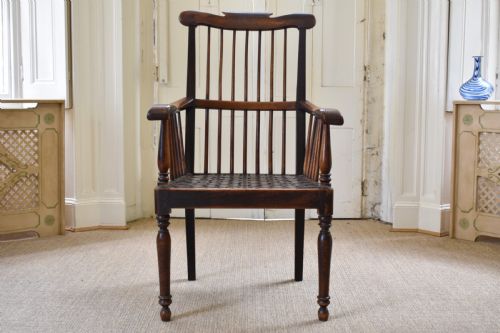
Elm Seat Carver Chair
An elm seat carver chair brings tactile English country craftsmanship into a room through shaped timber and robust vernacular joinery.
Elm Seat Carver Chair
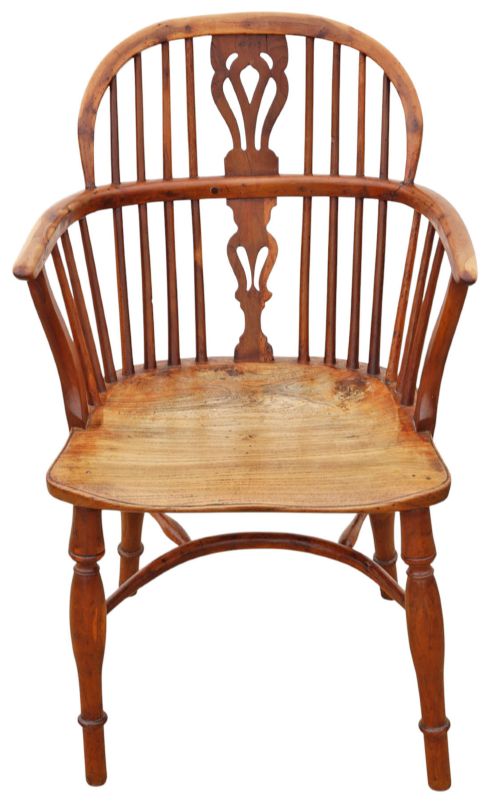
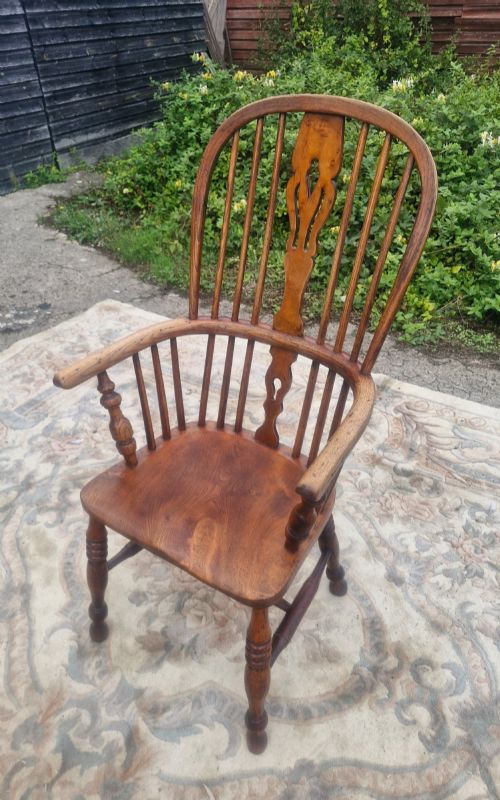
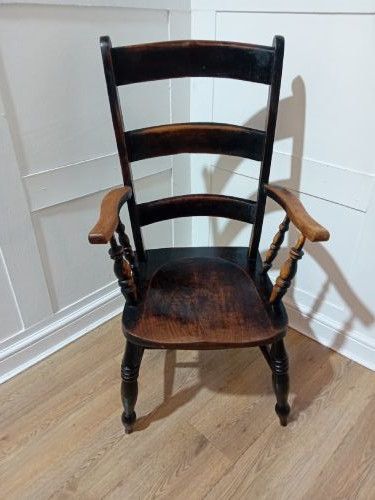
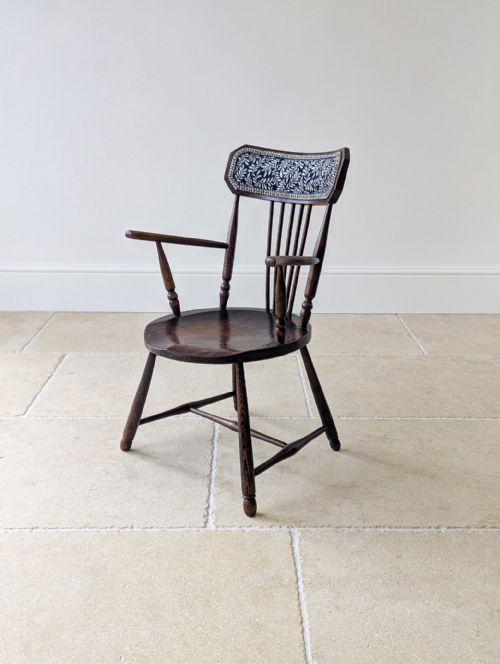
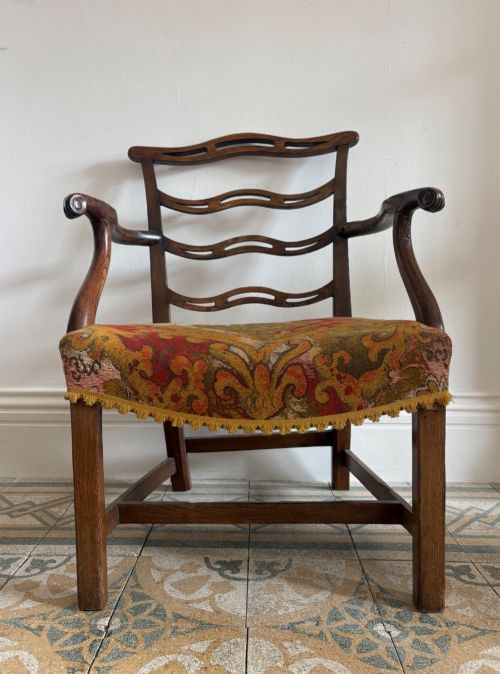
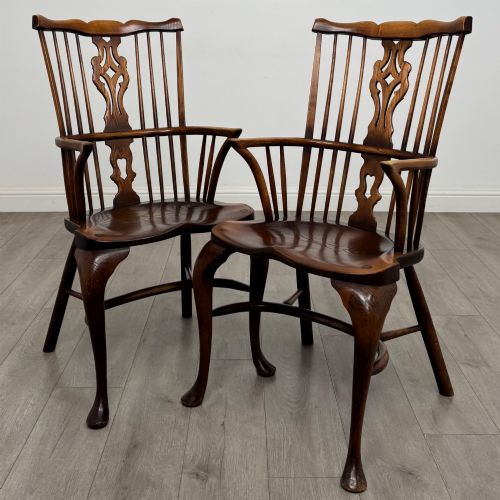
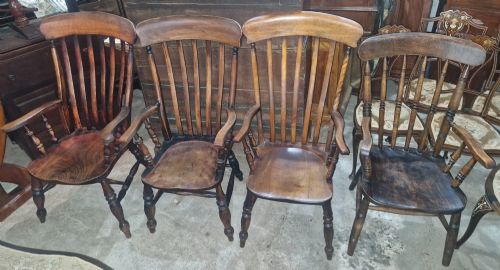
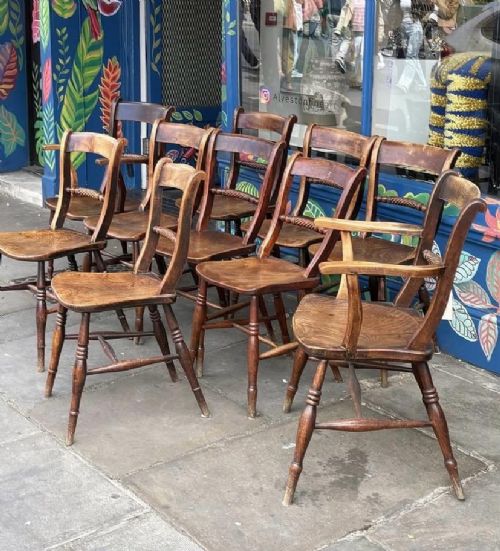
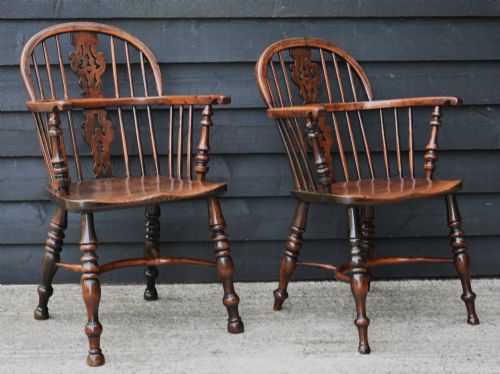
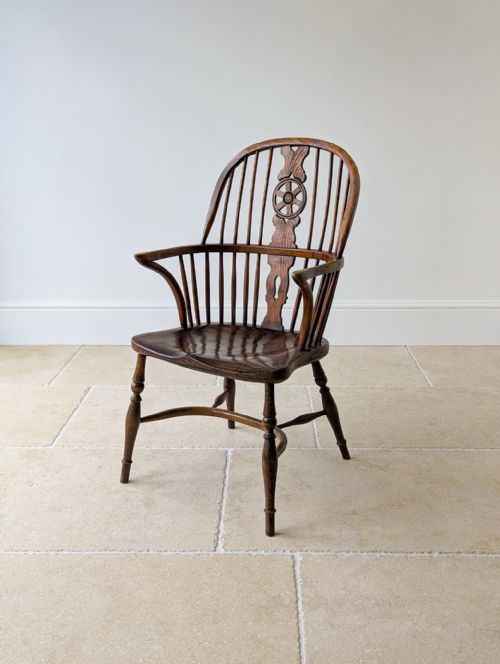
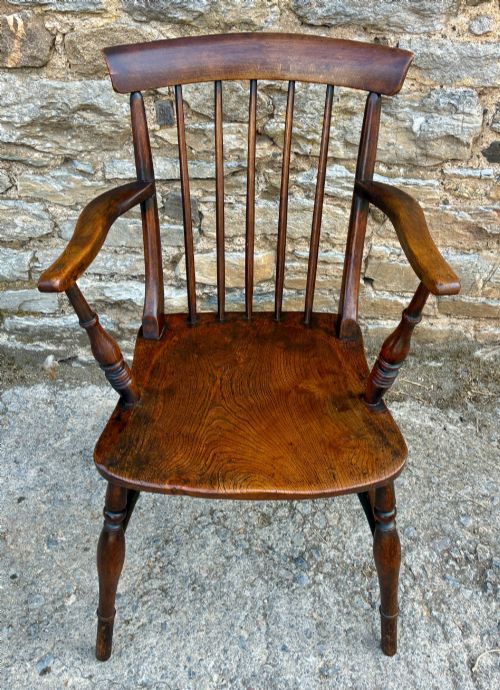
An elm seat carver chair is a sturdy country armchair featuring a solid, concave timber seat paired with an upright back and scrolling armrests. You will most frequently encounter Windsor and ladderback forms originating from Georgian and Victorian farmhouse contexts.
The phrase encompasses multiple regional variations, including Thames Valley, Nottinghamshire, and Lancashire styles. These seating pieces served as principal chairs at dining tables or beside hearths in English country homes.
Makers utilised local timbers, framing heavy elm plank seats with contrasting woods for spindles and legs. The resulting chairs balance functional utility with expressive regional turning and bending techniques.
Materials and construction methods
Elm provided the ideal material for thick, saddle-shaped seats because its interlocking grain resisted splitting when bodgers bored holes for legs and spindles. Chairmakers combined this durable base with ash, beech, or fruitwood for steam-bent bows and turned legs.
Constructors employed traditional greenwood working techniques, driving wedged tenons straight through the elm seat slab to lock uprights in place. Rush seating also appears on ladderback variants, woven tightly over internal frames.
Surface finishes relied on natural wax or oil applications that deepened the timber tone over decades of domestic use. Original patination frequently survives on Victorian and Georgian examples without modern stripping.
Elm Seat Carver Chair Retail Price Guide 2026
Typical asking prices for elm seat carver chair among the pieces listed under this phrase on Sellingantiques today, from the lower quarter to the upper quarter. They describe what is for sale here now, not the wider market.
Elm grain twists so stubbornly that generations of carpenters muttered curses whenever their chisels met the knotty heartwood.
Assessing quality and character
Quality rests in the sculptural depth of the seat adzing and the graceful sweep of the arm bows. Thicker, deeply dished elm slabs matched with well-proportioned spindles create superior visual balance.
The integrity of the structural joints dictates longevity, with tightwedged undercarriages showing minimal movement. Original surface finishes without excessive sanding preserve the historical character of the wood.
The Elm Seat Carver Chair Glossary
- Carver
- An armchair designed with elbow rests, traditionally used by the head of the household at a dining table. They share stylistic traits with smaller side chairs in matching sets.
- Windsor
- A chair constructed with a solid wooden seat into which the legs, back, and arms are separately inserted. They often feature steam-bent bows and spindle arrays.
- Ladderback
- A chair back composed of several horizontal wooden slats positioned between two vertical uprights. These frames frequently incorporate woven rush seats.
- Adze
- A traditional cutting tool with a curved blade used by chairmakers to hollow out timber seats for ergonomic comfort. Visible tool marks indicate manual shaping.
- Spindle
- A slender, turned wooden rod used vertically to fill the back or sides of a chair frame. Makers shaped these on lathes from straight-grained ash or beech.
Elm Seat Carver Chair: Frequently Asked Questions
What is a carver chair?
A carver chair is an armchair intended for use at the head of a dining table or as a fireside seat. These pieces feature integrated armrests connected to the structural frame.
In country houses, they often accompanied sets of matching side chairs. The elm seat variety provides a heavy, supportive base designed for daily utility.
How do I identify a Windsor chair?
Windsor chairs are defined by their construction method, where legs and back spindles fit directly into holes bored through a thick solid wooden seat. They typically incorporate bentwood bows or high stick backs.
Regional variations display distinct turning patterns on the legs and spindles. Common versions include wheelback, comb back, and low back configurations.
Where were these chairs made?
These chairs originated primarily in rural workshops and regional furniture centres across England, including the Thames Valley, Nottinghamshire, and Lancashire. Country craftsmen utilised locally available timber.
Rural bodgers turned components in woodlands before assembling them in local shops. This regional production creates the distinct stylistic variations seen today.
How should I care for elm timber?
Maintain elm furniture by applying natural beeswax sparingly to nourish the grain and protect the surface from drying out. Keep chairs away from direct heat sources and radical humidity shifts.
Gentle dusting with a soft cloth preserves the historic patination. Avoid harsh chemical cleaners that strip the original finish.